

2025 Hyundai Elantra near Conway, SC
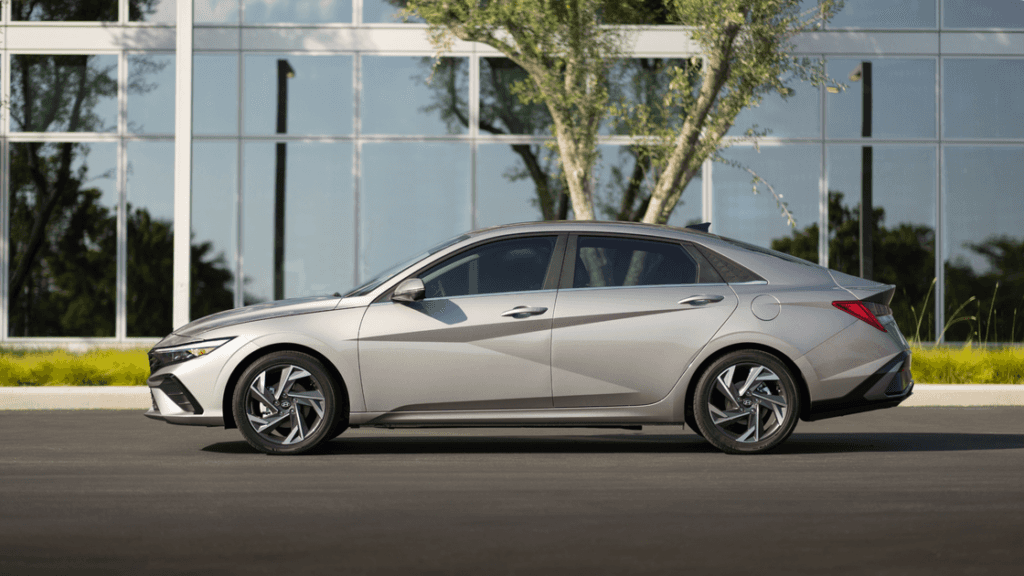
The 2025 Hyundai Elantra presents a combination of mechanical strength, aerodynamic structure, and modern engineering. Each configuration, from SE and SEL to Limited, Hybrid, and N Line, is designed for efficiency and performance with technology that supports accuracy in driving and control. The 2025 Hyundai Elantra lineup offers multiple engine systems, transmission options, and body refinements that define its technical development and functional capabilities.
Engine Systems and Mechanical Design
The 2025 Hyundai Elantra offers several powertrains focused on output consistency and fuel performance. The SE and SEL trims operate with a 2.0-liter MPI Atkinson DOHC 16-valve inline four-cylinder engine producing 147 horsepower at 6,200 rpm and 132 pound-feet of torque at 4,500 rpm. The block and head are both aluminum, designed to reduce weight while improving thermal efficiency. Dual Continuous Variable Valve Timing ensures the engine maintains balanced intake and exhaust control.
The hybrid configuration uses a 1.6-liter GDI Atkinson Cycle DOHC 16-valve inline four-cylinder engine paired with an interior permanent magnet synchronous motor. The hybrid system delivers 104 horsepower from the gasoline engine and an additional 32 kilowatts, or 43 horsepower, from the electric motor, creating a total combined output of 139 horsepower and 195 pound-feet of torque. The hybrid battery is a 240-volt lithium-ion system with a 1.32-kilowatt-hour capacity for consistent electric energy flow and minimal loss.
The N Line variant is powered by a 1.6-liter turbocharged GDI DOHC 16-valve CVVD inline four-cylinder engine generating 201 horsepower at 6,000 rpm and 195 pound-feet of torque between 1,500 and 4,500 rpm. For the highest output, the N trim features a 2.0-liter turbocharged direct-injection four-cylinder engine producing 276 horsepower between 5,500 and 6,000 rpm and 289 pound-feet of torque from 2,100 to 4,700 rpm. The turbo system supports strong acceleration without sacrificing engine efficiency.
Each configuration uses a specific compression ratio to support its performance category. The standard 2.0-liter engine operates at 12.5:1, the hybrid at 13.0:1, and the turbocharged engines at 10.0:1 and 9.5:1. These ratios contribute to improved combustion and thermal balance. The valve systems include 16-valve swing arms with hydraulic lash adjusters for reduced friction and improved valve timing precision.
Transmission Systems and Drive Configurations
The 2025 Hyundai Elantra offers several transmission types matched to specific trim levels. The SE and SEL use a Smartstream® Intelligent Variable Transmission that delivers smooth power delivery and maintains fuel economy through a continuously adjusted gear ratio. The hybrid configuration features a 6-speed EcoShift® Dual Clutch Transmission that transfers combined power efficiently between electric and gasoline drive sources.
The N Line trim is equipped with a seven-speed dual-clutch transmission using a dry double plate with a diaphragm spring for fast gear engagement and durability. The N trim employs an eight-speed wet dual-clutch transmission designed for higher torque output and rapid gear response.
All configurations use a front-wheel drive system with manual shift capability through SHIFTRONIC® operation. The available drive modes include Normal, Sport, and Smart for most trims, with the hybrid adding Eco mode and the N model including N Custom modes for individualized performance settings.
Steering, Suspension, and Handling
The handling systems of the 2025 Hyundai Elantra are built for stable steering feedback and controlled suspension geometry. All trims employ rack-and-pinion steering systems with either column-mounted or rack-mounted motor-driven power steering, depending on the trim. The steering ratio varies from 12.9:1 in standard models to 12.2:1 in performance trims, resulting in faster steering response.
The suspension system uses a MacPherson® strut setup at the front across all trims. Rear configurations vary according to trim level. The SE, SEL, and Hybrid models use a coupled torsion beam axle design for balanced comfort and economy, while the N Line and N use a multi-link independent rear suspension that provides enhanced cornering stability and reduced body roll. Electronic Controlled Suspension is available on higher trims to continuously adjust damping force based on driving conditions.
Braking precision is achieved through ventilated front disc systems and solid or ventilated rear discs depending on configuration. The SE and SEL feature 11-inch ventilated front rotors and 10.3-inch solid rears. The N Line increases the dimensions to 12-inch front discs, while the N uses 14.2-inch ventilated front and 12.4-inch rear rotors. Each model includes four-wheel ABS with Electronic Brake-force Distribution and Brake Assist for consistent braking pressure and response.
Exterior Construction and Aerodynamics
The exterior structure of the 2025 Hyundai Elantra uses a unibody design composed primarily of high-tensile steel. Its 185.4-inch overall length and 71.9-inch width maintain aerodynamic balance supported by a coefficient of drag rated at 0.28 for most trims. Ground clearance ranges from 5.3 to 5.5 inches depending on the configuration.
Wheel options include 15-inch alloys on the SE, 16-inch on the SEL, 17-inch on the Limited and Hybrid, 18-inch on the N Line, and 19-inch alloy wheels on the N trim. The N trim is equipped with Michelin® Pilot Sport 4S summer tires sized 245/35R19.
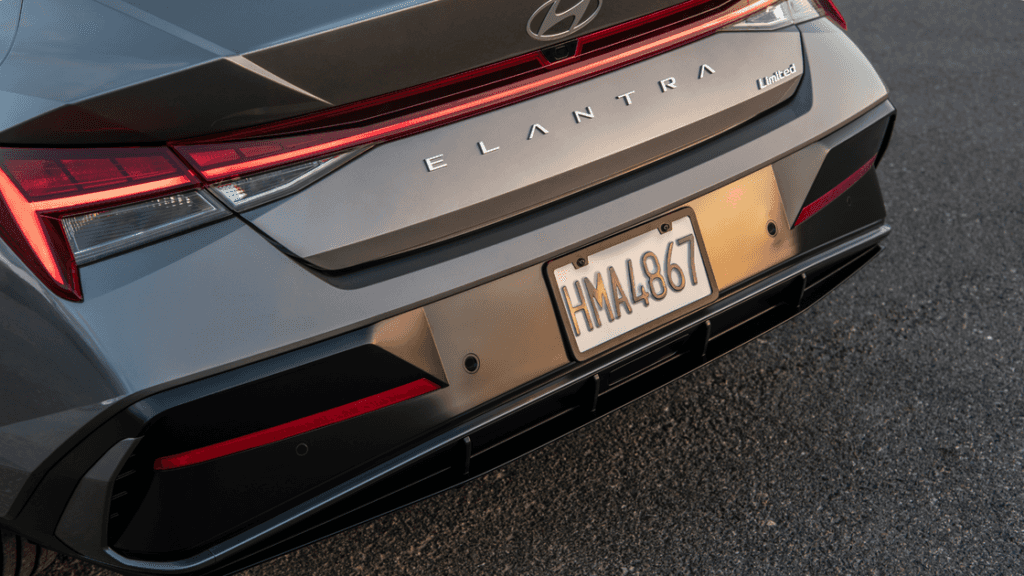
All trims include LED daytime running lights, automatic high beam assist, and dual LED projector headlights. Rear lighting configurations progress from standard bulb taillights on base trims to full LED taillights with turn and hazard functions on premium models. Heated and power-adjustable exterior mirrors, solar glass, and available sunroof options are standard or optional depending on trim.
Interior Configuration and Functional Systems
The interior of the 2025 Hyundai Elantra is built with a focus on technical layout and occupant comfort. Cabin capacity accommodates five passengers with a passenger volume of 99.4 cubic feet and a cargo area of 14.2 cubic feet, combining for a total interior space of 113.6 cubic feet. Front headroom measures 40.6 inches without the sunroof and 38.7 inches with it, while legroom extends to 42.3 inches in front and 38.0 inches in the rear.
Seat materials include premium cloth in SE and SEL trims, leatherette in Limited trims, and sport seats with microsuede in the N Line. All models include 6-way driver and 4-way passenger seat adjustments, with higher trims adding power lumbar support and memory settings. Heated and ventilated seats are included in Limited configurations. The rear seat uses a 60/40 split-folding design for expanded storage flexibility.
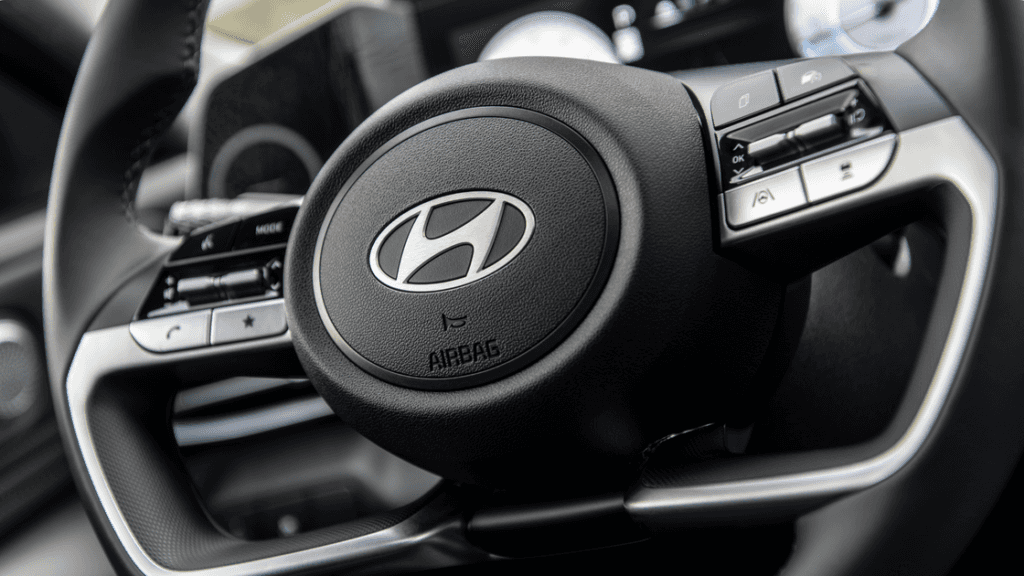
Instrumentation systems include a digital display with speedometer, tachometer, trip odometer, and temperature indicators. N models add performance gauges displaying turbo pressure, throttle percentage, oil temperature, and coolant levels. All configurations include adjustable illumination, driver attention alerts, and standard warning indicators for system functions.
Technology and Infotainment
Technology integration across the 2025 Hyundai Elantra lineup includes an 8-inch display audio system with wireless Apple CarPlay® and Android Auto™ compatibility on standard trims. Upper trims feature a 10.25-inch touchscreen navigation system with HD Radio™, SiriusXM® data services, and integrated voice recognition. Connectivity extends to Bluetooth® hands-free systems and dual USB ports with additional rear USB-C charging outlets.
An 8-speaker Bose® audio system, wireless device charging, and Wi-Fi hotspot capability are included on higher trims. The digital infrastructure of the 2025 Hyundai Elantra is managed through the brand’s Bluelink® connected services for remote operation and system monitoring.
Safety and Structural Integrity
The 2025 Hyundai Elantra integrates a reinforced body frame constructed from high-tensile steel and includes front and rear crumple zones, side impact beams, and a straightened front crash structure for improved collision absorption.
Standard airbags include dual front, side, and curtain units with occupant classification systems and seatbelt pretensioners. All trims include a tire pressure monitoring system, electronic stability control, traction control, hill start assist, and vehicle stability management.
Driver assistance technology includes Forward Collision-Avoidance Assist with pedestrian and cyclist detection, Lane Keeping and Lane Following Assist, Blind-Spot Collision Warning, Rear Cross-Traffic Collision-Avoidance Assist, and Intelligent Speed Limit Assist. Additional features on select trims include Smart Cruise Control with Stop and Go, Highway Drive Assist, and Parking Distance Warning.
Dimensions and Capacities
The wheelbase of the 2025 Hyundai Elantra measures 107.1 inches, with front and rear track widths ranging between 62.2 and 63.1 inches depending on wheel size. The vehicle height averages 55.7 inches, with curb weights ranging from 2,725 pounds for IVT models to 3,296 pounds for the N trim. Fuel tank capacity is 12.4 gallons for standard models and 11.0 gallons for hybrids.
Schedule a Test Ride near Conway, SC
The 2025 Hyundai Elantra demonstrates technical consistency across every trim level with engines tuned for performance, transmissions designed for efficient power delivery, and safety systems that reinforce driver confidence. Its structural precision, interior configuration, and connected technology create a comprehensive design built on tested engineering standards. Schedule a test drive with ALM Hyundai Florence near Conway, SC, to experience the controlled acceleration of the turbocharged engines, the seamless operation of the Intelligent Variable Transmission, and the advanced safety systems designed for modern driving. Each trim in the 2025 Hyundai Elantra range offers specific technical strengths that can be observed best through direct evaluation. Contact the dealership to arrange a test experience and review the full technical capability of this model.