

2025 Hyundai Kona near Columbia, SC
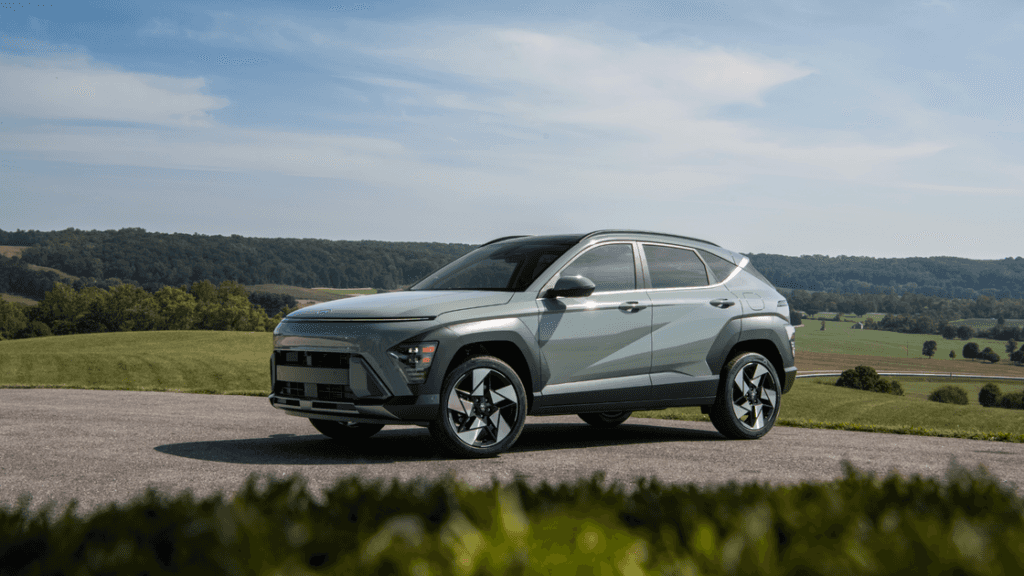
The 2025 Hyundai Kona presents a range of technical specifications designed to deliver balanced performance, efficiency, and driving control in a compact SUV format. It offers multiple engine configurations, advanced transmission systems, and a robust chassis structure that contribute to its driving dynamics and functional versatility.
Dual Engine Choices Tailored for Driving Demands
The 2025 Hyundai Kona provides two engine configurations aimed at different performance requirements. The SE and SEL trims use a 2.0-liter MPI Atkinson-cycle inline 4-cylinder engine. This powerplant produces 147 horsepower at 6200 rpm and 132 pound-feet of torque at 4500 rpm. It incorporates dual continuously variable valve timing and a 12.5:1 compression ratio, which supports fuel efficiency and steady power delivery. The engine is built with an aluminum block and head to reduce weight.
The sportier N Line and Limited trims are equipped with a turbocharged 1.6-liter Gamma II inline 4-cylinder engine delivering 190 horsepower at 6000 rpm and 195 pound-feet of torque from 1700 to 4500 rpm. This engine uses gasoline direct injection with a 10.0:1 compression ratio. It features a semi-full engine cover and aluminum construction similar to the base engine. Exhaust configurations vary between dual tips on the N Line and a single tip on the Limited.
Both engines require regular unleaded fuel and comply with the WCC + UCC / SULEV 30 emissions control standards. The naturally aspirated 2.0-liter engine uses multipoint fuel injection while the 1.6-liter turbo engine employs direct injection for enhanced combustion efficiency.
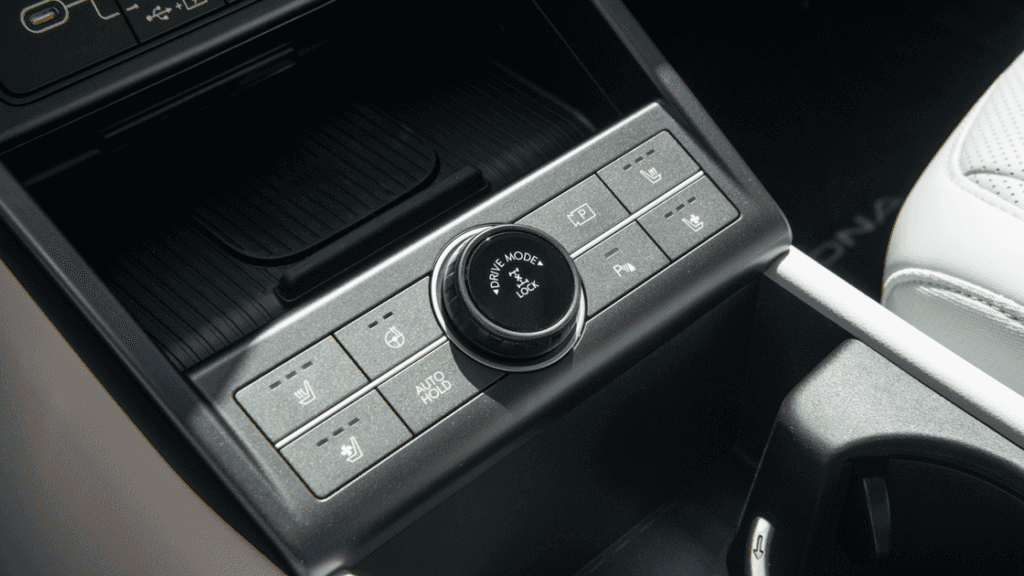
The drivetrain options include front-wheel drive (FWD) standard on all trims, with active on-demand all-wheel drive (AWD) available as an option. AWD configurations include selectable drive modes for Normal, Sport, and Snow to optimize traction. FWD models offer Normal and Sport modes. Transmission choices differ by engine and trim. The 2.0-liter models use an Intelligent Variable Transmission (IVT), a continuously variable transmission that adjusts seamlessly for efficiency and smoothness. The turbocharged 1.6-liter trims come with an 8-speed automatic torque converter transmission featuring shift-by-wire operation and paddle shifters for manual control.
Chassis Dynamics and Braking Control
The suspension system on 2025 Hyundai Kona is designed for a balance of comfort and control. The front suspension consists of MacPherson® struts with coil springs and gas-pressurized shock absorbers. Rear suspension varies with the drivetrain type: a coupled torsion beam axle is standard on FWD models, while AWD versions use a multi-link setup for improved handling. Stabilizer bars are present at both the front and rear to reduce body roll during cornering.
Braking components include ventilated front disc brakes and solid rear disc brakes. The diameter of the front rotors ranges from 11.0 to 12.0 inches depending on the trim and drivetrain. The rear discs measure 11.2 inches. The system incorporates anti-lock braking (ABS) with electronic brake-force distribution (EBD). Additional features such as downhill brake control and hill-start assist contribute to vehicle stability on inclines.
Steering is managed through a column-mounted motor-driven power steering system with a ratio of 13.6 and a turning diameter of 34.8 feet curb to curb. The steering system supports responsive handling with 2.5 turns lock to lock.
Exterior Engineering for Aerodynamics and Functionality
The exterior integrates aerodynamic and practical design elements. It rides on alloy wheels ranging in size from 17 to 19 inches. The base SE trim is equipped with 17-inch alloys paired with 215/60R17 tires, while the sport-focused N Line offers 19-inch wheels with 235/45R19 tires. Tire mobility kits or compact spare tires are provided depending on the trim and drivetrain.
Lighting systems utilize LED technology for the projector headlights, daytime running lights, and combi taillights. The vehicle features automatic headlights and high beam assist as standard across all models. The rear spoiler is integrated with the center high-mount stop lamp and available in body color or gloss black on sport trims.
Body panels are constructed using a unibody monocoque frame with high tensile steel to provide structural strength and weight reduction. Exterior trim varies with models, with body-colored or textured black moldings and claddings. Features such as active grille shutters contribute to aerodynamic efficiency and engine cooling management. The vehicle’s coefficient of drag stands at 0.302, reflecting attention to airflow optimization.
Additional exterior features include heated side mirrors with integrated turn signals, black roof rails (with cross rails available as parts options), and a shark-fin antenna. Mudguards are present at both front and rear to reduce debris spray.
Interior Space and Functional Comfort
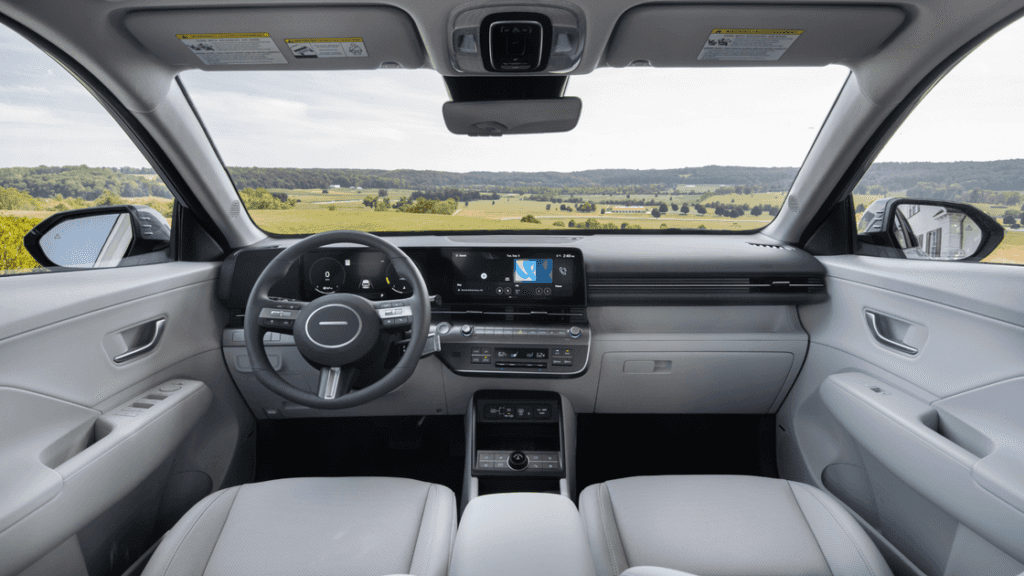
The 2025 Hyundai Kona offers seating capacity for five occupants with various upholstery options depending on trim. Cloth seats are standard on lower trims, while the N Line offers black Alcantara® combination seats. The Limited trim upgrades to H-Tex® leatherette upholstery. Front driver seats range from 6-way manual adjustment in base trims to 8-way power adjustment with lumbar support on higher trims. Heated front seats are available, with ventilated seats offered on sport trims.
Rear seating includes a 60/40 split-folding seatback with adjustable headrests. Cargo space measures 25.5 cubic feet with rear seats upright and expands to 63.7 cubic feet when folded flat. The cargo area includes a dual-level floor for improved organization.
The cabin provides ample headroom, legroom, shoulder room, and hip room to accommodate occupants comfortably. Interior trim and materials differ across models, including premium soft-touch door panels on higher trims.
Advanced Connectivity and Driver Interfaces
The 2025 Hyundai Kona features a 12.3-inch touchscreen as the main interface for audio and navigation systems, with a resolution of 1920 by 720 pixels. Audio systems range from a six-speaker setup to an 8-speaker Bose® premium system with an external amplifier on select trims. Wireless Apple CarPlay® and Android Auto™ compatibility are standard across the lineup.
Multiple USB-C ports for front and rear passengers provide power and data connectivity. Wireless charging is available on higher trims. The infotainment system supports over-the-air updates through Hyundai’s Bluelink® Connected Car System, which also enables Wi-Fi hotspot functionality on equipped models.
Driver information is displayed via a digital 12.3-inch instrument cluster on SEL Convenience trims and above, while lower trims use traditional gauge clusters with a digital multi-information display. Features such as a surround view monitor and blind-spot view monitor assist in parking and lane awareness on the Limited trim.
Comprehensive Safety Systems for Every Journey
Safety features on the 2025 Hyundai Kona are comprehensive and include a full complement of airbags, such as advanced front airbags, side thorax airbags, and side curtain airbags with rollover sensors..
Active safety technologies include Forward Collision-Avoidance Assist with pedestrian and cyclist detection, Blind-Spot Collision Avoidance Warning, Rear Cross-Traffic Collision Avoidance Assist, Lane Keeping Assist, and Lane Following Assist. Higher trims add Highway Driving Assist, Intelligent Speed Limit Assist, and Driver Attention Warning systems.
Additional safety features include Rear Occupant Alert, Safe Exit Warning, and Parking Distance Warning on the Limited trim. The vehicle stability management system integrates traction control and electronic stability control to maintain stability during adverse conditions. Tire pressure monitoring with individual tire indicators supports tire maintenance and safety.
The braking system benefits from electronic brake-force distribution and hill-start assist to enhance control. Electronic shift lock and ignition interlocks contribute to operational safety. An anti-theft system integrated with keyless entry and panic alarm rounds out the security features.
Schedule a Test Ride Today
The technical specifications and features of the 2025 Hyundai Kona provide multiple reasons to explore this compact SUV through a direct test drive. The varied powertrain options offer distinct driving characteristics, while transmission and drivetrain choices allow adaptation to specific driving conditions. Testing the capabilities at ALM Hyundai Florence near Columbia, SC, offers a practical opportunity to assess its engineering and technology in real-world conditions. This hands-on experience will provide clarity on how the powertrains, advanced safety systems, and interior functionality combine to meet modern expectations for a small SUV.