

2026 Hyundai Elantra close to Columbia SC
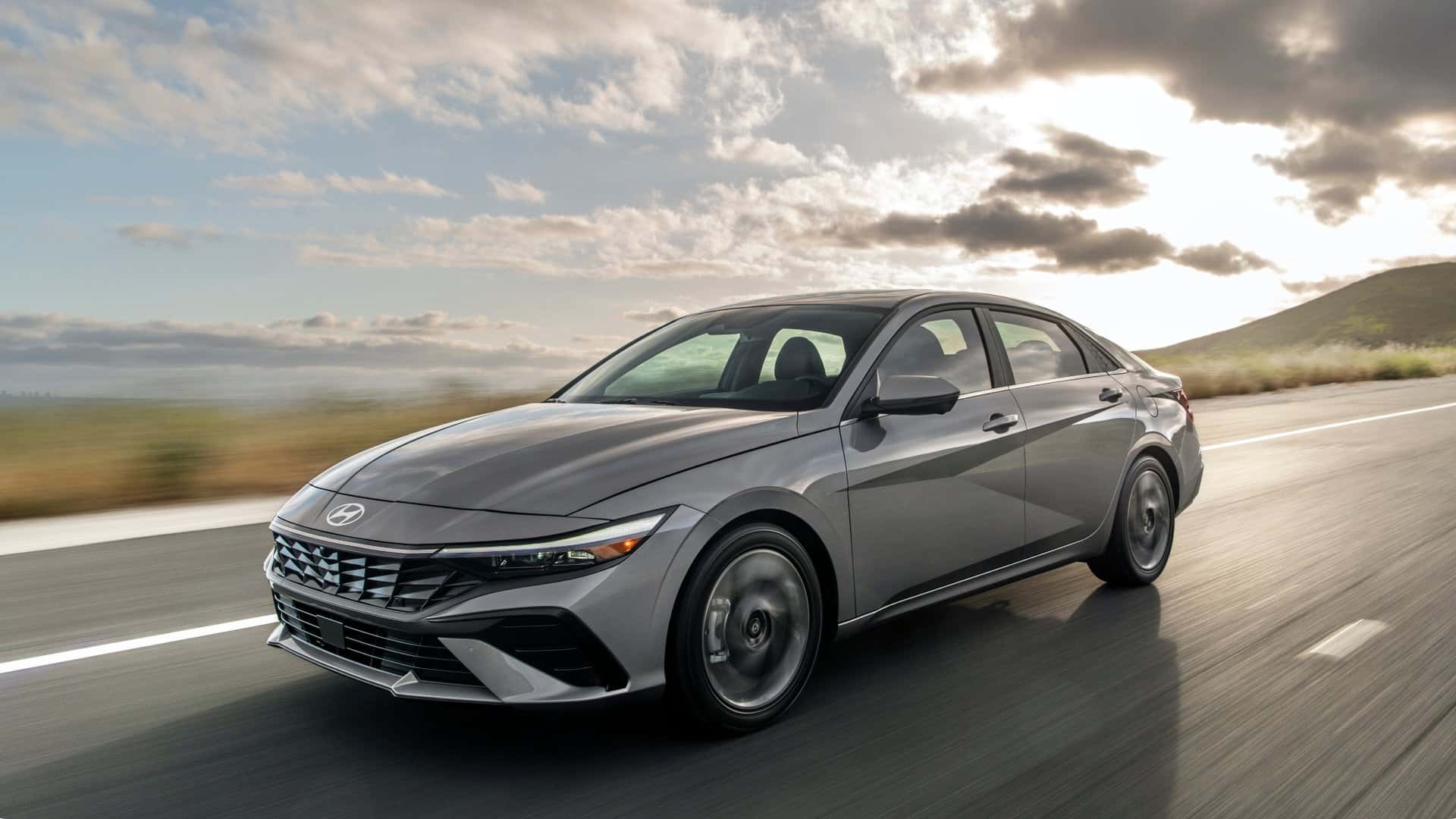
The 2026 Hyundai Elantra is engineered as a compact sedan platform that prioritizes mechanical efficiency, structural integrity, and systems integration across multiple powertrain configurations. The vehicle is built on a unibody chassis constructed primarily from high-tensile steel, supporting improved rigidity, controlled weight distribution, and predictable handling characteristics. Hyundai designed the 2026 Hyundai Elantra to accommodate gasoline, turbocharged, and hybrid drivetrains without altering the core structural dimensions, allowing consistent suspension geometry, braking architecture, and interior packaging throughout the lineup. The exterior dimensions, aerodynamic shaping, and chassis tuning collectively support fuel efficiency, directional stability, and occupant safety under a wide range of operating conditions.
Multi-Configuration Engine Design and Output Management
The 2026 Hyundai Elantra offers a diverse engine lineup, each developed to meet distinct performance and efficiency objectives while maintaining consistent mechanical standards. The standard gasoline engine is a 2.0-liter MPI Atkinson-cycle inline four-cylinder unit featuring an aluminum block and aluminum cylinder head. This engine displaces 1,999 cubic centimeters and produces 147 horsepower at 6,200 rpm with 132 lb-ft of torque at 4,500 rpm. Dual continuously variable valve timing manages intake and exhaust valve operation, contributing to efficient combustion and reduced emissions output.
Hybrid-equipped Elantra models utilize a 1.6-liter GDI Atkinson-cycle inline four-cylinder engine paired with an electric motor. The gasoline engine delivers 104 horsepower at 5,700 rpm and 109 lb-ft of torque at 4,000 rpm. Combined system output reaches 139 horsepower with 195 lb-ft of total torque. The electric motor produces 32 kilowatts of power and 125 lb-ft of torque, drawing energy from a lithium-ion battery rated at 1.32 kilowatt-hours and operating at 240 volts. This configuration supports electric-assisted acceleration and regenerative braking without altering front-wheel-drive architecture.
Performance-focused trims introduce turbocharged engines with higher output thresholds. The 1.6-liter Turbo GDI engine displaces 1,598 cubic centimeters and produces 201 horsepower at 6,000 rpm with 195 lb-ft of torque available from 1,500 to 4,500 rpm. This engine incorporates Continuously Variable Valve Duration technology, allowing dynamic adjustment of valve opening duration to balance power delivery and fuel efficiency. The highest-output engine is the 2.0-liter turbocharged direct-injection unit used in the Elantra N. It produces up to 276 horsepower between 5,500 and 6,000 rpm and delivers 289 lb-ft of torque across a wide midrange band, supporting sustained high-load operation.
Transmission Systems and Drive Configuration Precision
All versions of the 2026 Hyundai Elantra utilize a front-wheel-drive configuration engineered for predictable traction and efficient packaging. Transmission options vary based on powertrain selection and performance intent. Standard gasoline models are paired with the Smartstream® Intelligent Variable Transmission, designed to simulate stepped gear changes while maintaining continuous ratio adjustment. This system emphasizes smooth acceleration and optimized engine speed control during steady driving.
Sport-oriented trims introduce a 6-speed EcoShift® dual-clutch transmission that improves shift response and torque transfer efficiency. Manual transmission availability remains in select configurations through a 6-speed manual gearbox designed with closely spaced ratios for controlled engagement. Turbocharged variants employ more advanced dual-clutch systems, including a seven-speed dry dual-clutch transmission and an 8-speed wet dual-clutch transmission exclusive to the Elantra N. These systems support multiple drive modes that adjust throttle response, transmission logic, steering calibration, and stability control parameters.
Suspension Architecture and Structural Control
The suspension system of the 2026 Hyundai Elantra is engineered to balance ride comfort, chassis stability, and responsive handling. Standard models utilize a MacPherson® strut front suspension paired with a coupled torsion beam rear axle. This configuration supports compact packaging and consistent ride quality under typical driving conditions. Higher trims and performance variants transition to a multi-link independent rear suspension, providing improved wheel control during cornering and on uneven road surfaces.
Stabilizer bar dimensions vary by trim level, with sport-oriented models receiving increased diameters to reduce body roll. Shock absorbers range from hydraulic twin-tube units to electronically controlled suspension components on the Elantra N. The performance model also incorporates a rear chassis brace and an electronically controlled limited-slip differential designed to distribute torque more effectively during aggressive driving inputs.
Braking Systems and Steering Calibration
The braking architecture of the 2026 Hyundai Elantra includes ventilated front disc brakes across all trims, with rotor diameters increasing on higher-performance models. Rear braking systems range from solid disc configurations to ventilated discs on performance variants. All models are equipped with anti-lock braking systems, electronic brake-force distribution, and brake assist functionality. Hybrid models integrate regenerative braking through an electric brake booster system that coordinates hydraulic braking with energy recovery.
Steering systems are configured based on trim intent. Standard models utilize column-mounted motor-driven power steering, while performance-oriented trims employ rack-mounted motor-driven power steering. Steering ratios vary, with tighter ratios on sport trims reducing steering input requirements and enhancing responsiveness. Turning radius measurements remain within compact sedan norms, supporting urban maneuverability.
Exterior Dimensions and Aerodynamic Development
The 2026 Hyundai Elantra measures 185.4 inches in overall length with a wheelbase of 107.1 inches. Overall width is 71.9 inches, and overall height remains below 56 inches depending on trim and wheel selection. These proportions contribute to a stable stance while preserving efficient interior packaging. Aerodynamic optimization results in a coefficient of drag as low as 0.28 on select trims, supported by sculpted body panels, integrated spoilers, and underbody airflow management.
Wheel and tire configurations range from 15-inch alloy wheels on efficiency-focused trims to 19-inch alloy wheels fitted with high-performance summer tires on the Elantra N. Tire widths and profiles are matched to suspension tuning and braking capacity to maintain consistent handling characteristics.
Interior Configuration and Driver Interface Engineering
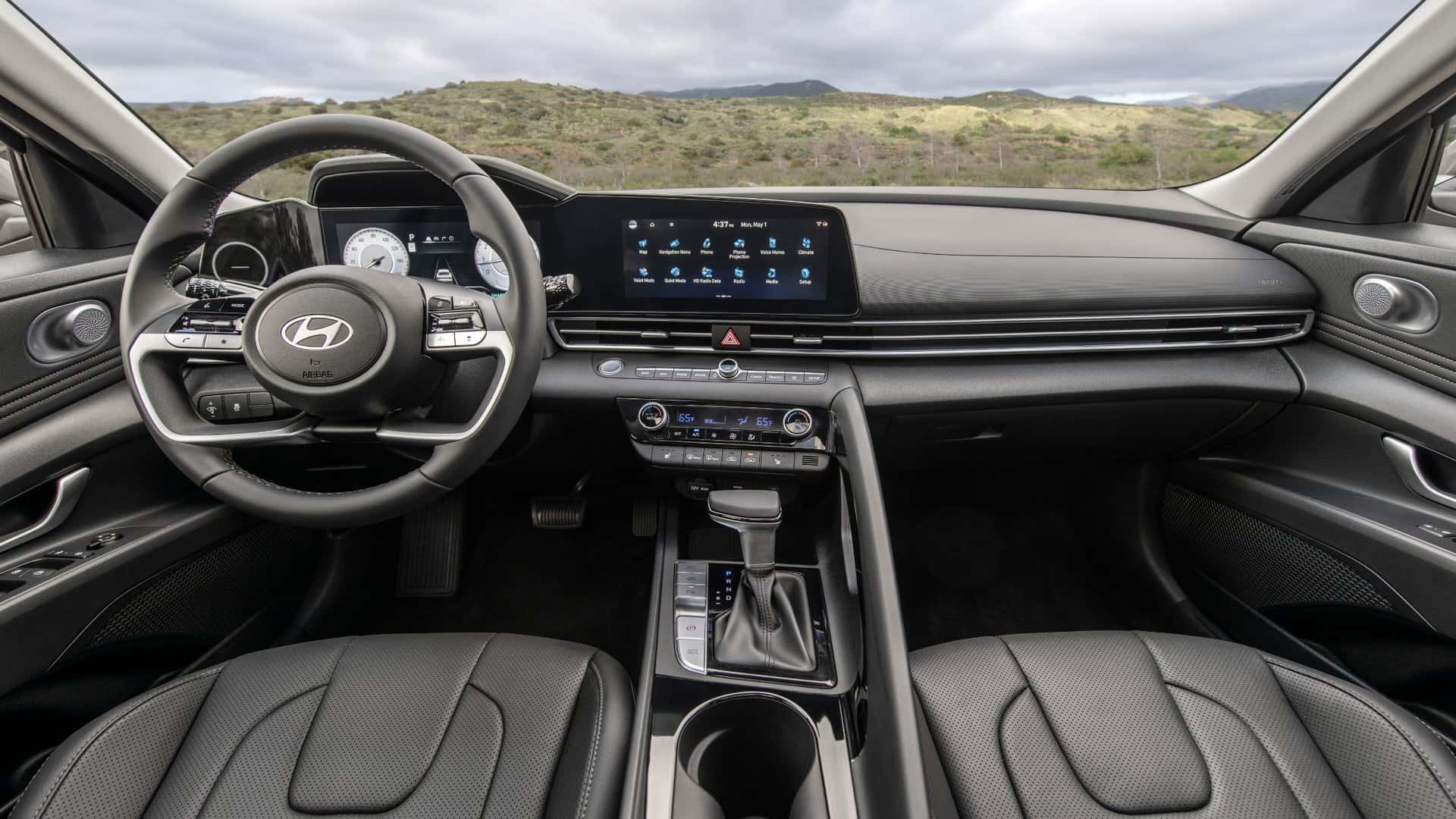
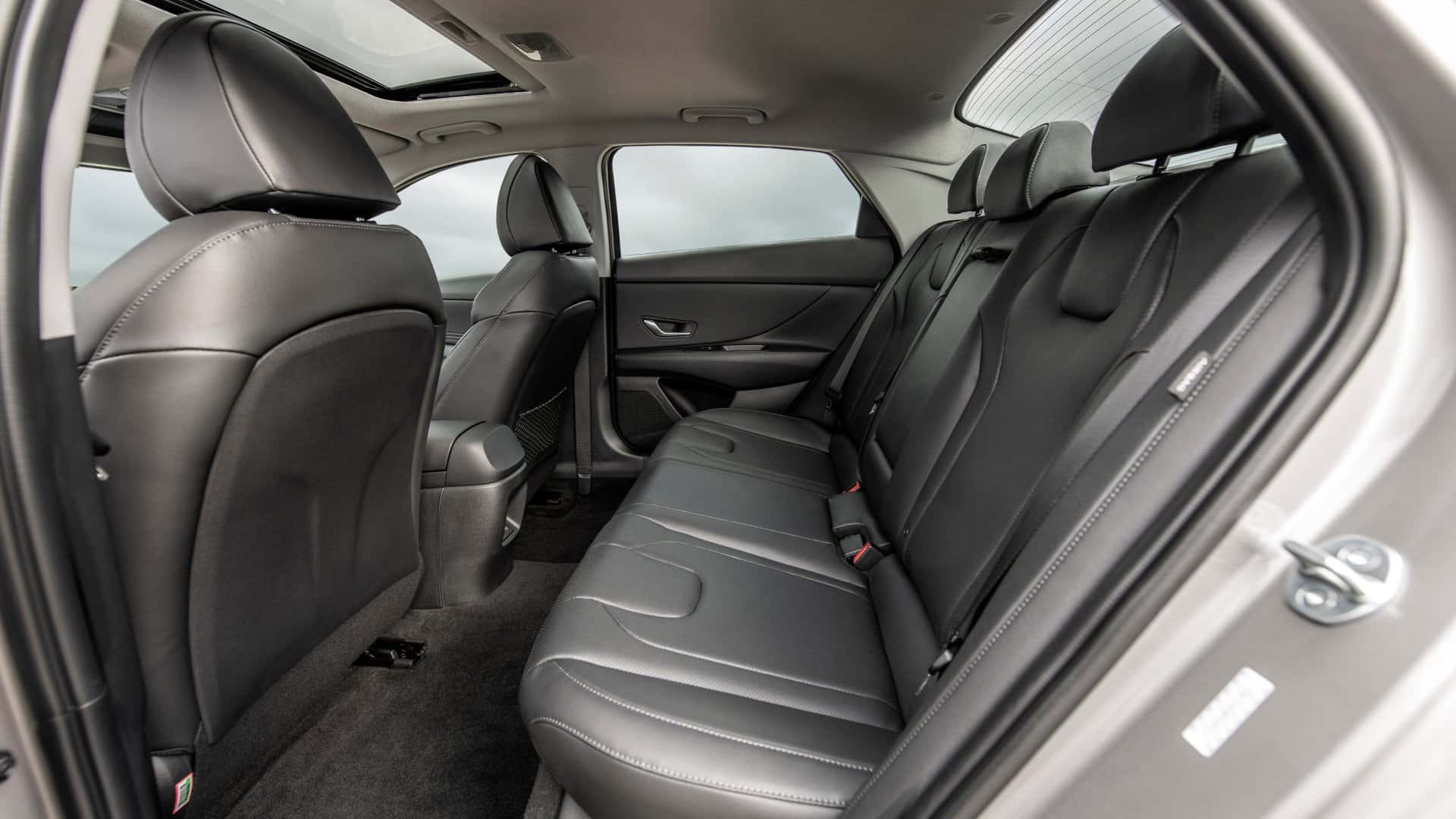
Interior engineering emphasizes functional ergonomics and system accessibility. Seating capacity remains five passengers, with front seats offering 6-way adjustment and additional power adjustment features on higher trims. Heated and ventilated front seats are available, along with integrated memory systems for seat and mirror positioning. Performance models feature sport bucket seats with reinforced bolstering and microsuede or leather-trimmed surfaces.
Instrumentation options include digital gauge clusters capable of displaying speed, engine speed, fuel level, temperature readings, and performance data. Elantra N models add dedicated performance metrics such as turbo boost pressure, oil temperature, coolant temperature, throttle input, and braking force. Steering wheels vary by trim and include integrated controls for audio, cruise control, and driver assistance systems.
Infotainment Systems and Connectivity Integration
The infotainment architecture of the 2026 Hyundai Elantra is designed around centralized touchscreen displays and digital connectivity. Standard systems feature an 8-inch high-resolution touchscreen with integrated rearview camera guidance and wireless smartphone connectivity. Upper trims receive a 10.25-inch navigation system with high-resolution graphics, satellite radio integration, and connected vehicle services.
Audio system configurations range from standard multi-speaker setups to premium Bose® audio systems with dedicated center channels and subwoofers. Wireless charging capability, multiple USB-C charging ports and in-vehicle Wi-Fi support device connectivity across seating rows. Bluetooth® hands-free functionality and voice recognition systems are integrated into the infotainment framework.
Safety Systems and Driver Assistance Engineering
The 2026 Hyundai Elantra incorporates a comprehensive safety structure supported by active and passive systems. Standard safety equipment includes multiple airbags, reinforced door beams, crumple zones, and energy-absorbing steering components. Electronic stability control, traction control, hill start assist, and tire pressure monitoring are standard across all trims.
Advanced driver assistance systems include forward collision-avoidance assist with pedestrian, cyclist, and junction detection on higher trims. Blind-spot collision warning, rear cross-traffic collision-avoidance assist, lane keeping assist, lane following assist, driver attention warning, and safe exit warning are integrated across the lineup. Higher trims introduce smart cruise control with stop-and-go capability, highway driving assist, and parking distance warning systems.
Practical Dimensions and Capacity Planning
Interior volume measures approximately 99.4 cubic feet, providing balanced passenger space for front and rear occupants. Trunk capacity is rated at 14.2 cubic feet, supporting daily cargo requirements without compromising rear seat comfort. Fuel tank capacity ranges from 11.0 to 12.4 gallons depending on powertrain configuration, while curb weight varies based on engine selection, transmission type, and suspension components.
Visit ALM Hyundai Florence to Schedule a Test Ride
Drivers interested in examining the engineering depth of the 2026 Hyundai Elantra can evaluate its performance systems, drivetrain calibration, and technology integration through a scheduled test drive at ALM Hyundai Florence close to Columbia, SC. Experiencing the vehicle firsthand allows assessment of power delivery across available engines, transmission responsiveness, braking consistency, and suspension behavior under typical driving conditions. The cabin layout, infotainment operation, and driver assistance features can also be reviewed in practical use. Scheduling a test drive provides direct exposure to how the technical specifications of the 2026 Hyundai Elantra translate into daily operation. Appointments can be arranged to allow sufficient time for a detailed evaluation of the vehicle’s systems and driving characteristics.