

2026 Hyundai Elantra close to Myrtle Beach
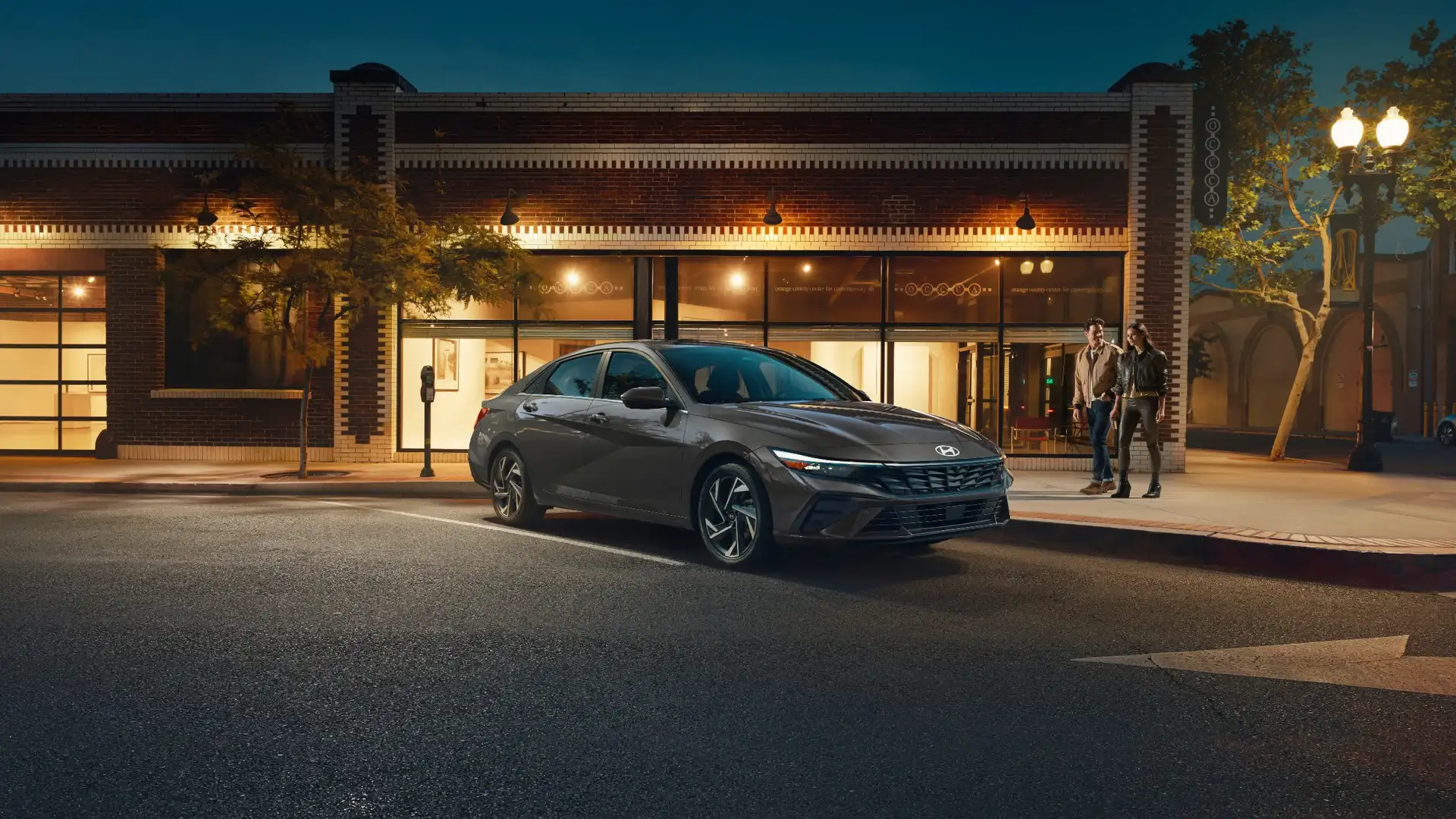
The 2026 Hyundai Elantra continues its compact sedan configuration with multiple powertrain options, advanced cabin technology, updated driver assistance systems, and several trim-specific mechanical upgrades. The lineup includes naturally aspirated gasoline engines, hybrid powertrains, and turbocharged performance-focused configurations. Hyundai structures the 2026 Hyundai Elantra range to support daily commuting efficiency, responsive acceleration, and expanded in-cabin technology while maintaining front-wheel-drive architecture across all trims.
The standard gasoline engine available on SE, SEL Sport, SEL Sport Premium, and Limited trims is a 2.0-liter MPI Atkinson-cycle DOHC 16-valve inline 4-cylinder engine with D-CVVT. This engine uses a 1,999 cc displacement with an aluminum block and head construction. Output is rated at 147 horsepower at 6,200 rpm and 132 lb-ft of torque at 4,500 rpm. The engine uses an 81 mm bore and 97 mm stroke configuration and operates with a 12.5:1 compression ratio. Hyundai pairs this engine with the Smartstream® Intelligent Variable Transmission, supporting smooth front-wheel-drive operation and balanced fuel efficiency.
Hybrid trims use a 1.6-liter GDI Atkinson-cycle DOHC 16-valve inline 4-cylinder engine with a displacement of 1,580 cc. This engine produces 104 horsepower at 5,700 rpm and 109 lb-ft of torque at 4,000 rpm. The hybrid configuration combines the gasoline engine with an interior permanent-magnet synchronous electric motor producing 32 kW or 43 horsepower and 125 lb-ft of torque. Combined system output reaches 139 horsepower and 195 lb-ft of torque. The hybrid system uses a 240-volt lithium-ion battery pack with a 1.32 kWh capacity. Hyundai integrates this system with a 6-speed EcoShift® dual-clutch transmission instead of a continuously variable transmission, creating a more conventional gear-driven driving response.
The 2026 Hyundai Elantra N Line introduces a turbocharged configuration using a 1.6-liter Turbo GDI DOHC 16-valve CVVD inline 4-cylinder engine. This powertrain uses a 1,598 cc displacement and aluminum engine construction. Output reaches 201 horsepower at 6,000 rpm and 195 lb-ft of torque from 1,500 to 4,500 rpm. Bore and stroke measurements are listed at 75.6 mm by 89.0 mm, while compression ratio is rated at 10.0:1. Hyundai equips this configuration with either a 6-speed manual transmission or a 7-speed dual-clutch transmission with paddle shifters. The transmission setup allows faster gear engagement and more direct acceleration compared with the standard IVT-equipped trims.
Advanced Transmission and Drive Mode Engineering
The 2026 Hyundai Elantra lineup maintains front-wheel-drive architecture throughout all trim levels. Standard gasoline models equipped with the 2.0-liter engine use the Smartstream® Intelligent Variable Transmission. Hybrid models use a 6-speed EcoShift® dual-clutch transmission designed to improve responsiveness and maintain smoother power delivery during acceleration. The N Line configuration supports both manual and dual-clutch transmission options for drivers seeking greater control over gear selection.
Drive Mode Select functionality varies by trim. Standard gasoline and hybrid trims include Normal, Sport, and Smart modes. These settings modify throttle response, transmission behavior, and steering feel. N Line trims add Eco and N Custom driving modes to provide expanded adjustment for performance-focused operation. Hyundai also integrates SHIFTRONIC® manual shift functionality with paddle shifters on dual-clutch-equipped configurations.
The braking system of the 2026 Hyundai Elantra uses four-wheel disc brakes across the lineup. Standard trims use 11.0-inch ventilated front discs and 10.3-inch solid rear discs. Hybrid models include an electric regenerative brake booster system that supports energy recovery during deceleration. N Line models increase braking dimensions with larger front brake hardware for improved stopping performance under higher load conditions. Anti-lock Braking System, Electronic Brake-force Distribution, Brake Assist, Vehicle Stability Management, Electronic Stability Control, and Traction Control remain standard throughout the lineup.
Chassis Construction and Suspension Layout
Hyundai constructs the 2026 Hyundai Elantra using a unibody chassis with high-tensile steel materials integrated throughout the structure. The front suspension uses a MacPherson® strut layout on all trims. Standard models use a 22 mm hollow stabilizer bar with hydraulic twin-tube shock absorbers and coil springs. Sport-oriented trims receive larger stabilizer bars and revised suspension calibration.
Rear suspension architecture varies depending on trim level and powertrain. Standard gasoline trims use a coupled torsion beam axle arrangement. Hybrid and performance-focused configurations use a multi-link independent rear suspension setup for improved ride isolation and cornering stability. N-focused configurations integrate a rear chassis brace and an electronically controlled limited-slip differential system identified as the N Corner Carving Differential. Hyundai also lists electronically controlled suspension hardware within higher-performance specifications.
Steering systems vary by trim. Standard trims use column-mounted motor-driven power steering, while performance-oriented configurations use rack-mounted motor-driven power steering. The steering ratio on standard trims is listed at 12.9:1 with 2.5 turns from lock to lock. N-focused configurations reduce the steering ratio to 12.2:1 and reduce lock-to-lock steering travel to 2.2 turns for quicker directional response.
Exterior Design and Functional Components
The 2026 Hyundai Elantra measures 185.4 inches in overall length with a 107.1-inch wheelbase and 71.9-inch width. Overall height measures 55.7 inches on most trims, while sport-oriented configurations reach 55.9 inches. Standard minimum ground clearance measures 5.3 inches, while select hybrid and performance trims increase clearance slightly to 5.5 inches. Hyundai lists the coefficient of drag at 0.28 for standard configurations.
Wheel specifications vary significantly throughout the lineup. Base trims use 15-inch alloy wheels with 195/65R15 tires. Additional trims use 16-inch, 17-inch, and 18-inch alloy wheel configurations. N Line models use 19-inch alloy wheels paired with 245/35R19 Michelin® Pilot Sport 4 S summer tires. Hyundai also references recommended winter and high-performance all-season tire alternatives for N-focused applications.
Lighting systems include LED daytime running lights and dual LED projector headlights across all trims. Automatic headlamp control and Automatic High Beam Assist remain standard throughout the lineup. Rear lighting configurations vary from bulb taillights to LED and full LED taillight assemblies, depending on trim selection.
Exterior trim details differ according to model designation. Standard trims use black grille finishes and body-color door handles. Limited trims integrate gloss-black exterior trim components, while N Line trims use matte-black grille treatment, gloss-black spoilers, and revised lower-bumper diffusers. Heated mirrors, integrated turn signal indicators, and power tilt-and-slide sunroof systems appear on higher trims.
Interior Materials and Cabin Functionality
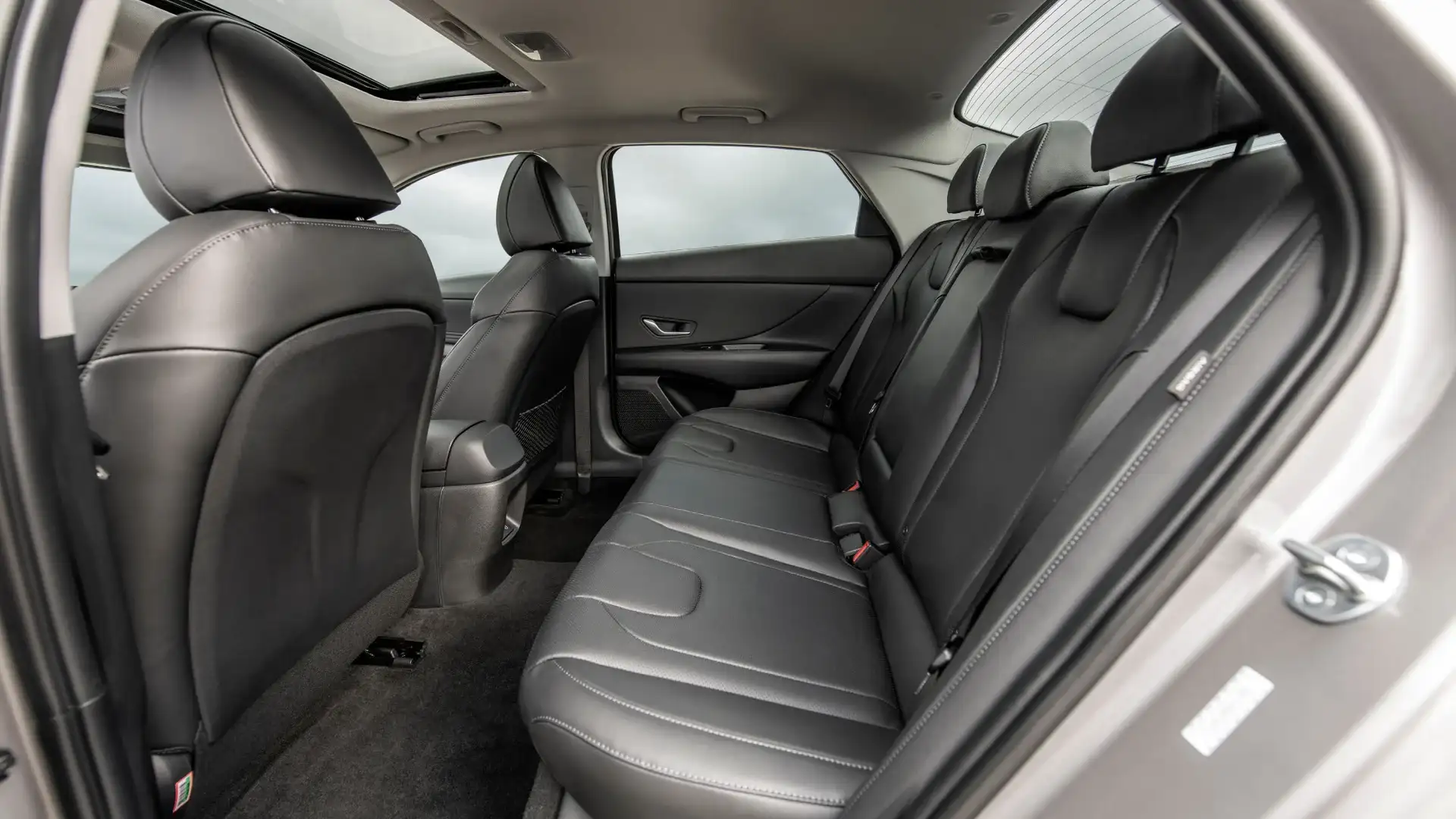
The 2026 Hyundai Elantra maintains a five-passenger cabin layout across all trim levels. Standard seating surfaces use premium cloth upholstery. Higher trims integrate H-Tex® leatherette materials, while N-focused seating configurations use leather-trimmed and microsuede combination sport seats with illuminated N logos.
Front seating includes a 6-way adjustable driver’s seat and a 4-way adjustable front passenger seat across all trims. Heated front seats become available on higher trims, while Limited HEV trims add ventilated front seats and an integrated memory system for driver seat and mirror positioning. Rear seating configurations include both fixed folding seatbacks and 60/40 split-folding rear seatbacks, depending on trim level.
Interior dimensions provide 42.3 inches of front legroom and 38.0 inches of rear legroom. Front headroom measures 40.6 inches without the sunroof configuration and 38.7 inches with the sunroof installed. Passenger compartment volume totals 99.4 cubic feet, while cargo capacity measures 14.2 cubic feet.
Climate control systems vary according to trim level. SE trims use manual air conditioning, while higher trims receive dual automatic temperature control systems. Rear seat heater ducts and rear window defrosters remain standard throughout the lineup.
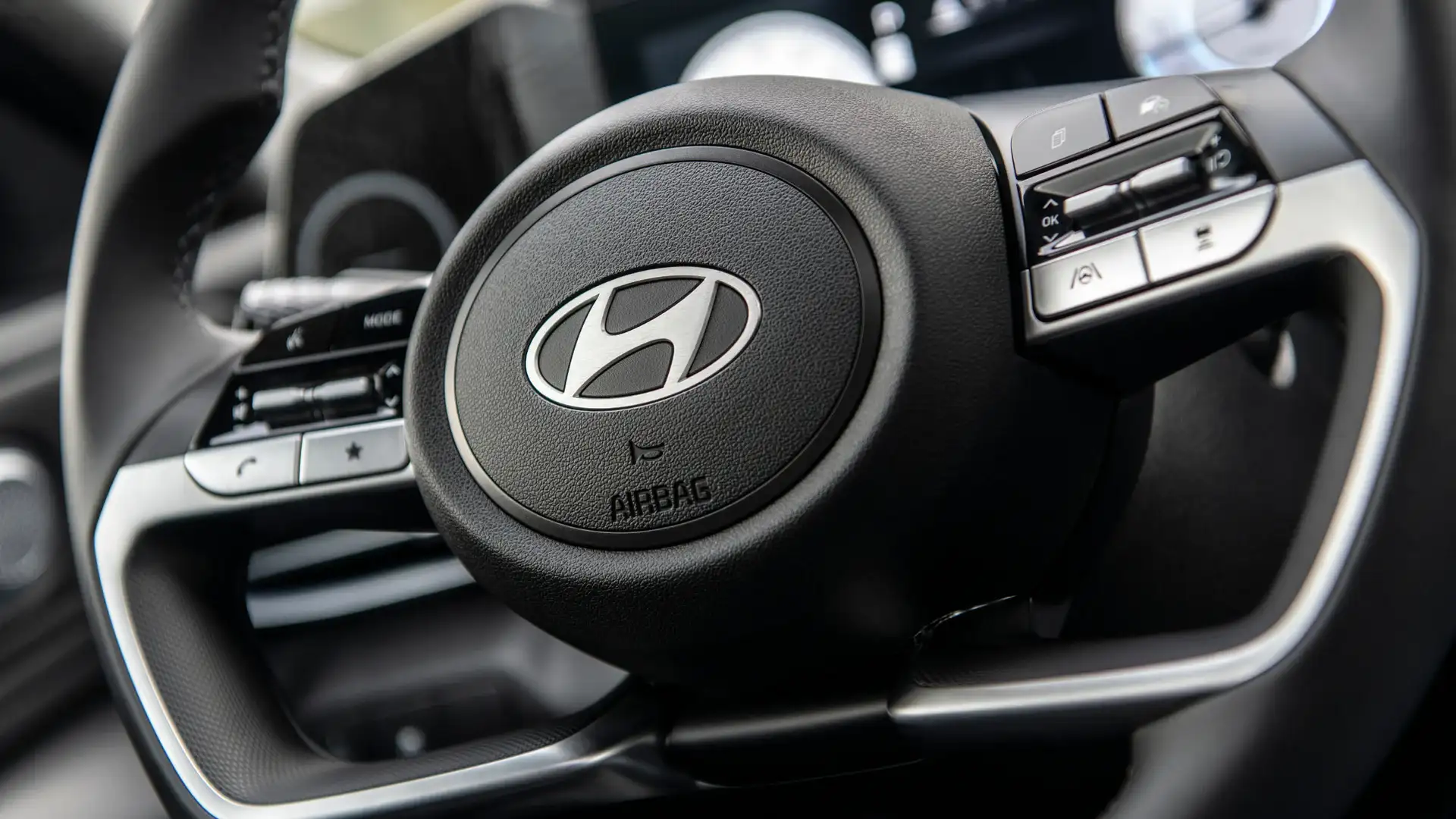
Steering wheel materials vary from urethane to H-Tex® and leather-wrapped surfaces. All trims include tilt-and-telescopic steering adjustment, integrated audio controls, cruise control functions, and Bluetooth® hands-free phone controls.
Infotainment Systems and Digital Connectivity
The 2026 Hyundai Elantra includes multiple infotainment configurations depending on trim selection. Standard trims use an 8-inch high-resolution touchscreen display audio system with six speakers, rearview camera functionality with dynamic guidance, AM/FM/HD Radio™, and wireless Apple CarPlay® and Android Auto™ compatibility.
Higher trims integrate a 10.25-inch navigation touchscreen system with SiriusXM® satellite radio, navigation-based data services, and connected information features, including NavTraffic and NavWeather. Bose® premium audio with eight speakers, a center channel speaker, and a subwoofer becomes available on upper trims.
Bluetooth® hands-free connectivity with voice recognition is standard throughout the lineup. Navigation-equipped trims include dynamic voice recognition functionality, Bluelink® connected car services, and Wi-Fi hotspot capability. Wireless charging capability is available on several trims, while all configurations include dual front USB ports and rear USB-C charging ports.
Instrumentation systems include digital odometer displays, external temperature readings, trip computer functions, and adjustable illumination levels. N-focused configurations add specialized performance gauges displaying turbo pressure, throttle percentage, brake pressure percentage, oil temperature, coolant temperature, and additional performance-related vehicle information.
Driver Assistance and Occupant Protection Systems
The 2026 Hyundai Elantra includes a comprehensive range of occupant protection systems. Standard restraint equipment includes advanced front airbags, side-impact airbags, side curtain airbags, front seatbelt pretensioners, and adjustable shoulder belt anchors. Hyundai also includes LATCH child seat anchors, rear child safety locks, and an Occupant Classification System.
Passive safety engineering includes front and rear crumple zones, body side reinforcements, rear door dual beams, and an energy-absorbing steering column. Hyundai also incorporates high-tensile steel and hot-stamping methods within the side body structure to improve rigidity and impact protection.
Driver assistance technology includes Forward Collision-Avoidance Assist with Pedestrian Detection, Blind-Spot Collision Warning with Rear Cross-Traffic Collision-Avoidance Assist, Lane Keeping Assist, Lane Following Assist, Driver Attention Warning, Intelligent Speed Limit Assist, Safe Exit Warning, and Rear Occupant Alert. Higher trims expand functionality with sensor-fusion Forward Collision-Avoidance Assist capable of pedestrian, cyclist, and junction-turning detection. Smart Cruise Control with Stop and Go functionality and Highway Drive Assist also appear on higher trims.
Visit ALM Hyundai Florence to Schedule a Test Ride
Drivers interested in compact sedan engineering, hybrid efficiency, and turbocharged performance configurations can explore the 2026 Hyundai Elantra at ALM Hyundai Florence, close to Myrtle Beach. The available trim range allows shoppers to compare naturally aspirated gasoline engines, hybrid systems, and N Line turbocharged performance within the same model lineup. Interior technology systems, navigation features, safety technologies, and suspension configurations can also be evaluated directly across multiple trims. Test drives provide an opportunity to examine steering response, transmission behavior, braking feel, and cabin functionality in different 2026 Hyundai Elantra configurations. Our dealership team can assist with reviewing trim specifications, technology systems, seating layouts, and drivetrain differences to support a more informed vehicle selection process.