

2026 Hyundai Elantra N in Florence, SC
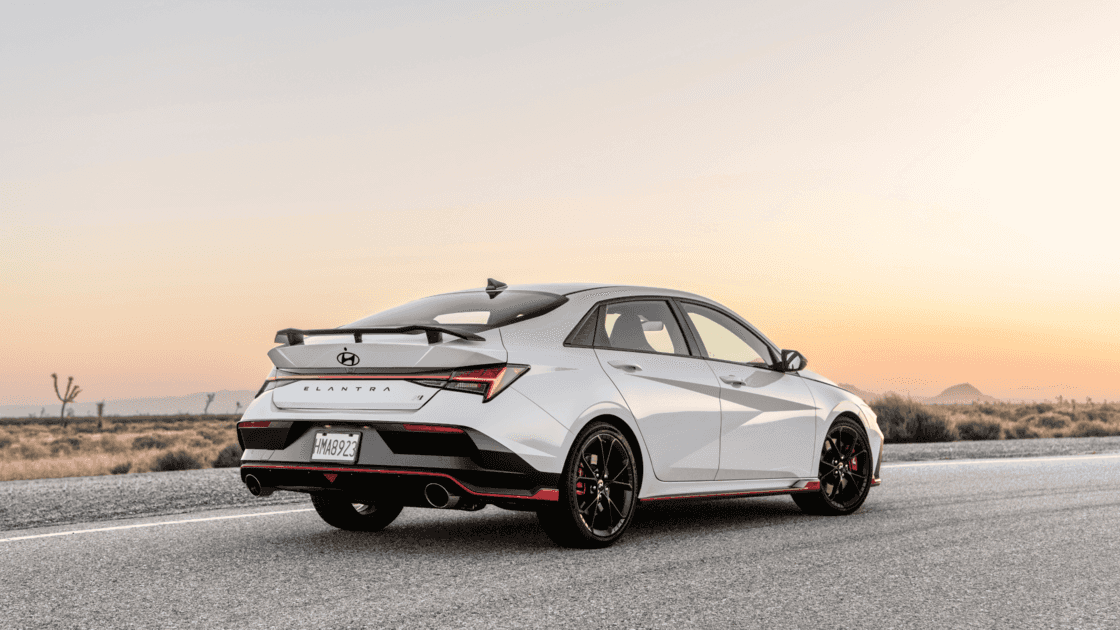
The 2026 Hyundai Elantra N is engineered as a high-performance compact sedan that emphasizes mechanical precision, drivetrain optimization, and system-level integration. This model is distinguished within the Elantra lineup by its dedicated performance hardware, reinforced chassis components, and advanced electronic controls designed to support sustained driving loads. Every major system, including the engine, transmission, suspension, braking, steering, and safety architecture, is configured specifically for enhanced output, stability, and driver control. The 2026 Hyundai Elantra N maintains the dimensional efficiency of the standard Elantra platform while incorporating substantial upgrades that directly affect performance capability, durability, and responsiveness.
Turbocharged Engine Architecture and Power Characteristics
The 2026 Hyundai Elantra N is powered by a 2.0-liter turbocharged direct-injected inline four-cylinder gasoline engine. This unit features an aluminum block and aluminum cylinder head, reducing overall mass while improving heat dissipation under high-load conditions. Total engine displacement measures 1,998 cubic centimeters, configured with an equal bore and stroke of 86 millimeters, a layout selected to support balanced rotational behavior.
Maximum engine output is rated at 276 horsepower delivered between 5,500 and 6,000 revolutions per minute. Peak torque reaches 289 pound-feet across a wide range from 2,100 to 4,700 revolutions per minute. This torque plateau supports sustained acceleration and reduces the need for frequent gear changes during dynamic driving. Direct fuel injection allows precise fuel delivery under varying operating conditions, while the turbocharger maintains consistent boost pressure across the usable rev range. Premium unleaded fuel is specified to ensure stable combustion and output consistency.
Transmission Engineering and Power Delivery Control
Power is routed exclusively to the front wheels through performance-specific transmission systems. The 2026 Hyundai Elantra N offers a 6-speed manual transmission for direct mechanical engagement and a dedicated N eight-speed wet dual-clutch transmission designed to manage higher torque loads. The wet clutch design improves thermal resistance and shift durability during repeated acceleration cycles.
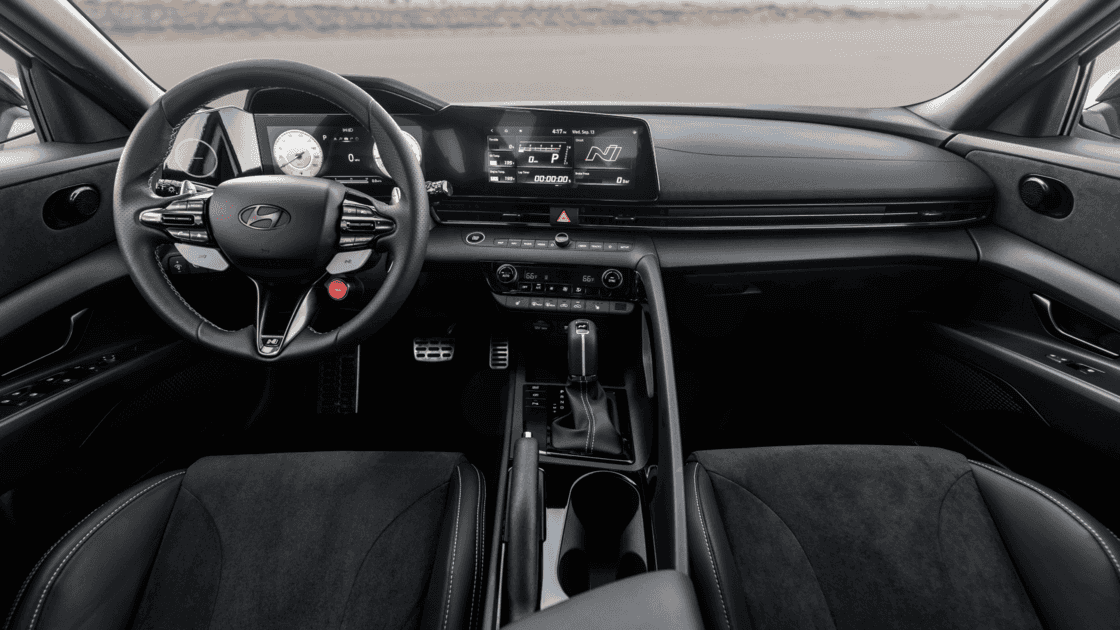
The dual-clutch transmission integrates paddle shifters mounted to the steering wheel, allowing manual gear selection without interrupting power flow. Shift logic adapts based on selected drive modes, modifying clutch engagement speed and shift timing. Drive mode selection includes Eco, Normal, Sport, and N Custom configurations, each adjusting throttle response, transmission behavior, steering weight, suspension damping, and exhaust characteristics.
Differential Technology and Traction Management
The 2026 Hyundai Elantra N incorporates an electronically controlled limited-slip differential known as the N Corner Carving Differential. This system actively manages torque distribution between the front drive wheels, reducing inside wheel slip during corner exit and improving directional stability under acceleration. Electronic control enables continuous adjustment rather than relying on mechanical resistance alone.
By optimizing torque allocation, the differential improves front-end grip and reduces understeer tendencies common in high-output front-wheel-drive vehicles. This system works in coordination with traction control and stability management systems, allowing controlled power application during aggressive driving scenarios.
Suspension Configuration and Chassis Reinforcement
The front suspension uses a MacPherson® strut design paired with a hollow stabilizer bar to control body roll. Hydraulic twin-tube shock absorbers manage vertical motion while maintaining compliance over uneven surfaces. At the rear, the 2026 Hyundai Elantra N employs a multi-link independent suspension setup, replacing the torsion beam configuration found in non-performance trims.
Electronic Controlled Suspension technology adjusts damping force in response to driving conditions and selected modes. This adaptive system allows softer damping during standard operation and increased firmness during performance-focused driving. A rear chassis brace further increases torsional rigidity, contributing to more predictable handling and reduced flex under load.
Steering System Calibration and Control Precision
Steering input is managed through a rack-mounted motor-driven power steering system calibrated specifically for the 2026 Hyundai Elantra N. The steering ratio is quicker than standard Elantra models, reducing the number of turns lock to lock and improving response to driver input. This configuration enhances precision during cornering and directional changes.
The system provides consistent steering weight across varying speeds, supporting both low-speed maneuverability and high-speed stability. Steering feedback is tuned to reflect road conditions without excessive filtering, contributing to accurate vehicle placement.
High-Capacity Braking Hardware
Braking performance is supported by large-diameter ventilated disc brakes on all four corners. The front brakes measure 14.2 inches in diameter, while the rear brakes measure 12.4 inches. Ventilated rotor construction improves heat dissipation during repeated braking events, reducing fade during extended use.
The braking system includes anti-lock braking functionality with electronic brake-force distribution, ensuring balanced braking pressure across all wheels. Brake Assist increases stopping force during emergency conditions. An electric parking brake integrates seamlessly into the system without interfering with performance operation.
Exterior Design with Functional Intent
Exterior components on the 2026 Hyundai Elantra N are designed with aerodynamic and cooling considerations in mind. The front fascia directs airflow toward the engine and braking systems, supporting thermal management under load. Large-bore exhaust outlets reduce back pressure while supporting engine output requirements.
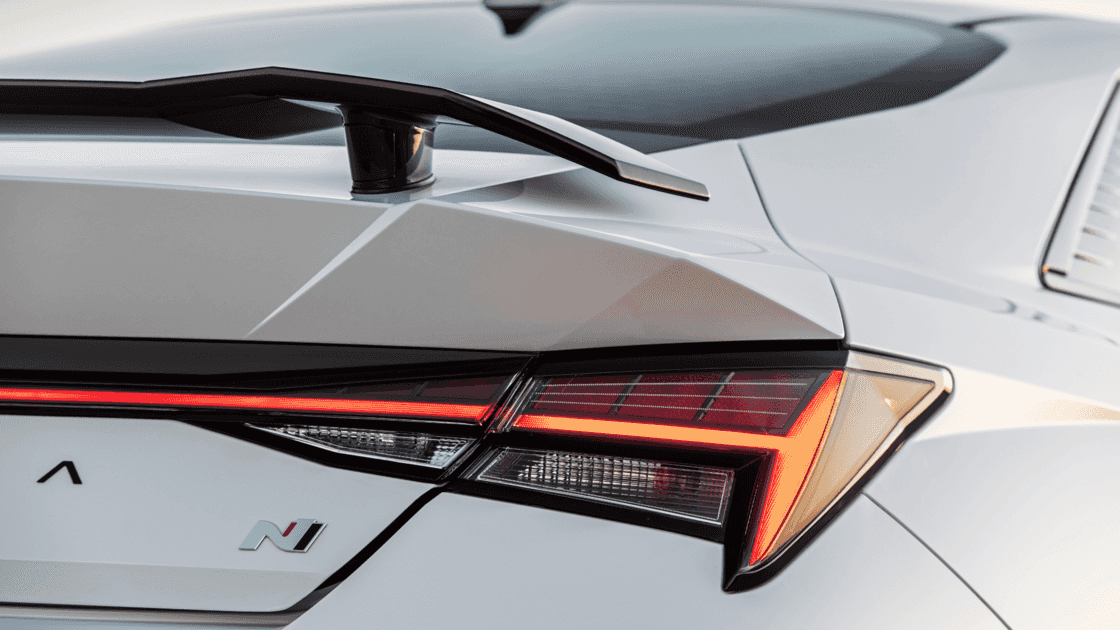
The vehicle rides on 19-inch alloy wheels fitted with 245 section width Michelin® Pilot Sport 4 S summer tires. These tires are selected for high lateral grip and stability during performance driving. A rear wing-style spoiler and integrated diffuser contribute to aerodynamic balance at higher speeds, improving stability without adding unnecessary complexity.
Driver-Oriented Interior Configuration
The interior layout prioritizes driver focus and system visibility. Front seating consists of N-specific sport bucket seats trimmed in a leather and microsuede combination, designed to provide lateral support during cornering. An illuminated N logo is integrated into the seatback, reinforcing model identification.
Instrumentation includes a fully digital display with N performance gauges showing turbo boost pressure, throttle input, oil temperature, coolant temperature, braking force, and power output. These displays allow the driver to monitor vehicle behavior during demanding operation.
Infotainment and Connectivity Systems
A 10.25-inch high-resolution touchscreen navigation system is standard, supporting Apple CarPlay® and Android Auto™ integration. The system includes SiriusXM® capability and navigation-based services when equipped. Wireless device charging and multiple USB-C ports support connectivity for modern devices.
Audio output is handled by a Bose® premium sound system with eight speakers, including a center channel and subwoofer. Bluetooth® hands-free communication and voice recognition functionality support driver convenience without altering focus on vehicle operation.
Structural Safety and Driver Assistance Technologies
The 2026 Hyundai Elantra N uses a unibody construction composed primarily of high-tensile steel. Strategic use of reinforced sections and crumple zones improves occupant protection during collisions. The vehicle includes front, side, and curtain airbags along with seatbelt pretensioners and load limiters.
Active safety technologies include forward collision-avoidance assist with pedestrian detection, blind-spot collision warning with rear cross-traffic collision-avoidance assist, lane keeping assist, lane following assist, driver attention warning, intelligent speed limit assist, and safe exit warning. These systems operate continuously in the background, supporting driver awareness without interfering with manual control.
Dimensions, Capacity, and Structural Balance
The 2026 Hyundai Elantra N maintains a wheelbase of 107.1 inches, contributing to balanced weight distribution and interior space efficiency. Overall length measures 185.4 inches, width measures 71.9 inches, and height measures approximately 55.7 inches. Passenger compartment volume totals 99.4 cubic feet, while trunk capacity measures 14.2 cubic feet.
Ground clearance and suspension geometry are optimized for stability while maintaining daily usability. Structural rigidity is increased through chassis reinforcement without significantly increasing curb weight, supporting predictable handling behavior.
Schedule a Test Ride Today
Drivers interested in evaluating the mechanical systems and performance-oriented design of the 2026 Hyundai Elantra N are encouraged to experience the vehicle in operation through a scheduled test drive. Experiencing the interaction between the turbocharged engine, electronically controlled differential, adaptive suspension, and calibrated steering provides a clearer understanding of its engineering intent. A controlled test drive environment allows assessment of braking response, transmission behavior, and system integration under varied driving inputs. Our team at ALM Hyundai Florence in Florence, SC, is available to assist with detailed explanations of the vehicle’s technical features during a scheduled visit. Appointments can be arranged to ensure adequate time for system demonstrations and vehicle familiarization.