

2026 Hyundai Elantra near Myrtle Beach, SC
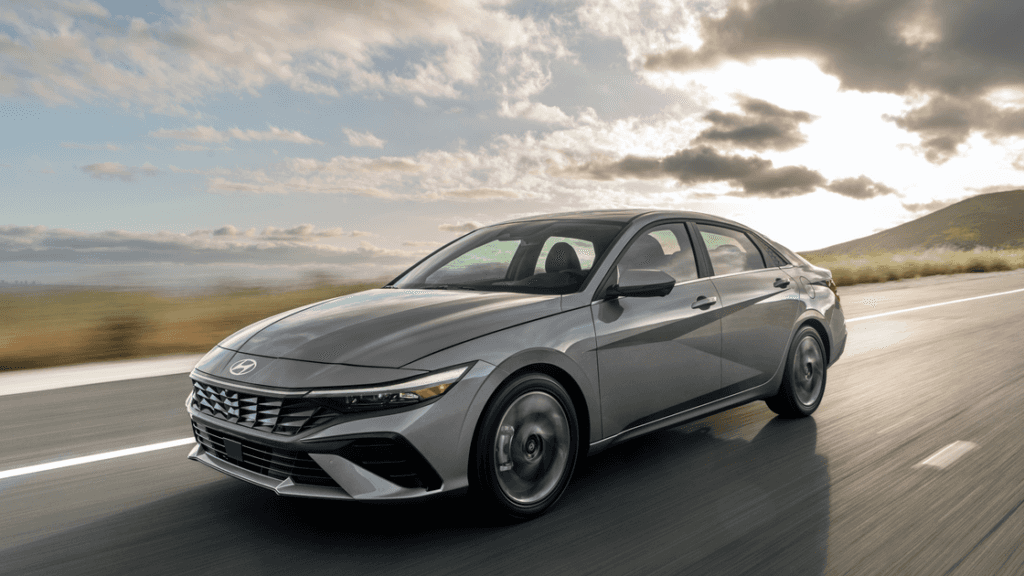
The 2026 Hyundai Elantra is engineered with a focus on structural efficiency, powertrain diversity, and mechanical refinement. Its unibody construction uses high-tensile steel to reinforce rigidity and support predictable handling. The model lineup presents multiple powertrain configurations that vary in output, torque curves, and mechanical behavior, which provides technical distinctions across trims. The Elantra platform maintains front-wheel drive across all variants and incorporates a selection of transmissions programmed to suit the specific characteristics of each engine. The range also integrates extensive electronic control systems that support braking stability, steering precision, and power delivery. Throughout all configurations, components are designed to function cohesively within a compact sedan structure that prioritizes measured balance and dependable performance.
Powertrain Systems and Output Characteristics
The 2026 Hyundai Elantra offers four primary engines that differ in displacement, compression ratios, induction strategies, and torque distribution. The standard 2.0-liter MPI Atkinson cycle four-cylinder engine supports the SE, SEL, and SEL Sport trims. It generates 147 horsepower at 6200 rpm and 132 pound-feet of torque at 4500 rpm. Its long-stroke 81 by 97 millimeter design is optimized for efficiency and stable combustion, paired with a 12.5 to 1 compression ratio that enhances thermal performance. The configuration uses intake and exhaust CVVT, hydraulic lash adjusters, and a two-step variable induction system for controlled airflow.
Hybrid models use a 1.6-liter GDI Atkinson cycle engine that produces 104 horsepower at 5700 rpm and 109 pound-feet of torque at 4000 rpm. It works with an interior permanent magnet synchronous motor rated at 32 kW and capable of 125 pound-feet of torque. Combined output reaches 139 horsepower and 195 pound-feet of total system torque. The hybrid system uses a 240-volt lithium-ion battery with a 1.32 kWh capacity supported by regenerative braking components and battery management controls. The intake and exhaust system uses CVVD, designed to modulate valve duration for improved efficiency and torque stability.
The N Line trim uses a 1.6-liter turbo GDI engine with a CVVD system. It produces 201 horsepower at 6000 rpm and 195 pound-feet of torque available between 1500 and 4500 rpm. This engine uses a 75.6 by 89 millimeter bore and stroke configuration that supports a broad torque band for consistent response. It operates with a 10.0 to 1 compression ratio and incorporates turbocharging hardware for increased air density and output management.
The N uses a 2.0-liter turbocharged engine with direct injection. It provides 276 horsepower between 5500 and 6000 rpm and 289 pound-feet of torque between 2100 and 4700 rpm. The engine geometry uses a square 86 by 86 millimeter configuration. Its 9.5 to 1 compression ratio, large bore exhaust outlets, and performance-calibrated turbo system support sustained output during higher load conditions.
Transmission Architecture and Drive Calibration
Each engine pairs with a transmission engineered for its specific performance profile. The SE and SEL models use an Intelligent Variable Transmission that applies programmed shift logic to maintain smooth acceleration and consistent efficiency. Hybrid trims use a 6-speed EcoShift® dual-clutch transmission designed to integrate with the electric motor’s torque characteristics. The N Line trim offers a 6-speed manual transmission for direct mechanical engagement along with a 7-speed dual-clutch transmission that uses dry double plates and a diaphragm spring for quick gear transitions. The N uses an 8-speed wet dual-clutch transmission designed to manage higher thermal loads and torque levels. Drive mode selections vary across trims. Gas and hybrid models generally include Normal, Sport, and Smart settings. Hybrid trims also include Eco mode. The N offers N Custom profiles for detailed adjustment of drivetrain and chassis responses. These systems control throttle mapping, steering weight, shift patterns, and, in some cases, electronic suspension behavior.
Brake Hardware and Stability Systems
Braking configurations are engineered for performance appropriate to each trim. Standard models use ventilated front discs sized at 11.0 inches with solid rear discs at 10.3 inches. HEV trims maintain the same front sizing and incorporate regenerative braking through an electric booster system. The N Line trim uses 12.0-inch ventilated front discs for increased thermal capacity. The N applies 14.2-inch ventilated front discs and 12.4-inch ventilated rear discs. All configurations include ABS, electronic brake force distribution, and brake assist. Master cylinder design varies but typically applies tandem configurations. Parking brake systems differ, with mechanical cable systems on lower trims and electronic parking brakes on higher trims and hybrid variants depending on configuration.
Steering Component Design
Steering systems use rack and pinion gears across all trims. Most variants use a column-mounted motor-driven power steering system. The N includes a rack-mounted motor-driven setup that supports faster response and improved precision. Steering ratios vary slightly, with standard trims using a 12.9 to 1 ratio and the N using a 12.2 to 1 ratio. Turns lock-to-lock range from 2.5 on most trims to 2.2 on the N. Minimum turning radius ranges from 17.7 feet on standard models to 19.2 feet on the N model due to its wider track and wheel configuration.
Suspension Structure and Chassis Behavior
The 2026 Hyundai Elantra uses MacPherson® strut front suspension across all trims with stabilizer bars between 22 and 23 millimeters depending on configuration. Shock absorber designs use hydraulic twin-tube systems for gas and hybrid variants and upgraded components on N models. Rear suspension varies significantly. Most gas trims use a coupled torsion beam axle with gas-filled hydraulic monotube shock absorbers. Hybrid trims use multi-link independent suspensions with stabilizer bars between 17 and 18 millimeters. The N Line uses multi-link geometry as well. The N includes a multi-link rear suspension with a 24-millimeter stabilizer bar, electronically controlled suspension, and a rear chassis brace. The N model also incorporates a limited slip differential with electronic control that enhances cornering stability through torque vectoring behavior.
Exterior Technical Features and Structural Measurements
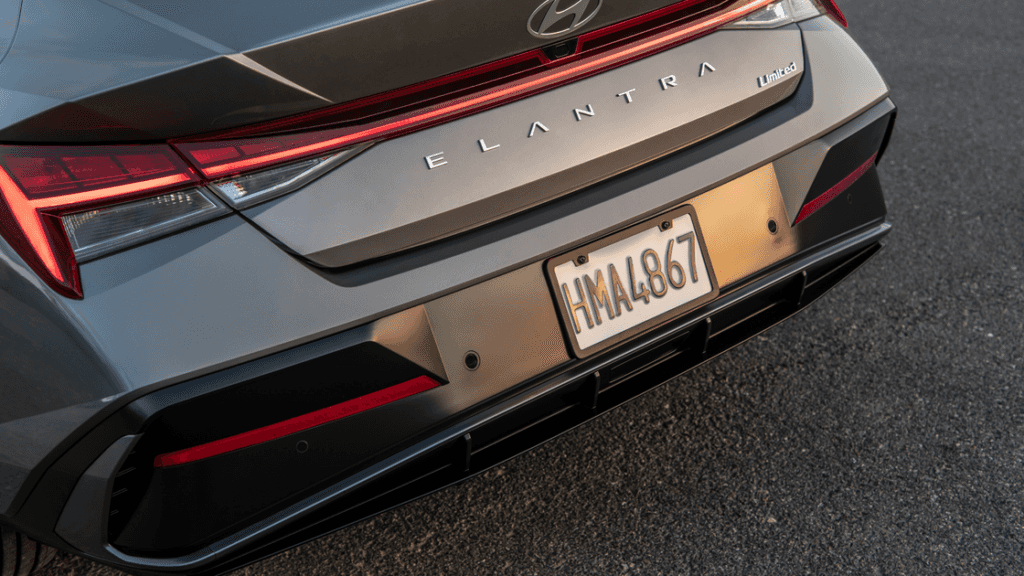
The 2026 Hyundai Elantra includes functional exterior systems designed for lighting control, aerodynamic efficiency, and visibility. All trims include LED daytime running lights and dual LED projector headlights. Rear lighting varies from bulb-type units on base models to full LED systems on the N Line. Automatic headlamp control and high beam assist are standard across all variants. Exterior mirrors are dual power units in body color or glossy black depending on trim, with heating and available turn signal indicators. Sunroof availability varies by trim and is tied to specific package levels.
The 2026 Hyundai Elantra offers a selection of wheel sizes ranging from 15-inch alloy wheels to 19-inch performance wheels. Tire types include all-season options and Michelin® Pilot Sport 4 S summer tires on the N. Track width varies by wheel size. Aerodynamic testing achieves a 0.28 coefficient of drag for most trims, with the N model rated at approximately 0.31. Exterior dimensions remain consistent across the lineup with a 107.1-inch wheelbase, 185.4-inch overall length, and widths near 71.9 inches. Ground clearance ranges from 5.3 to 5.5 inches depending on configuration.
Interior Technology and Functional Systems
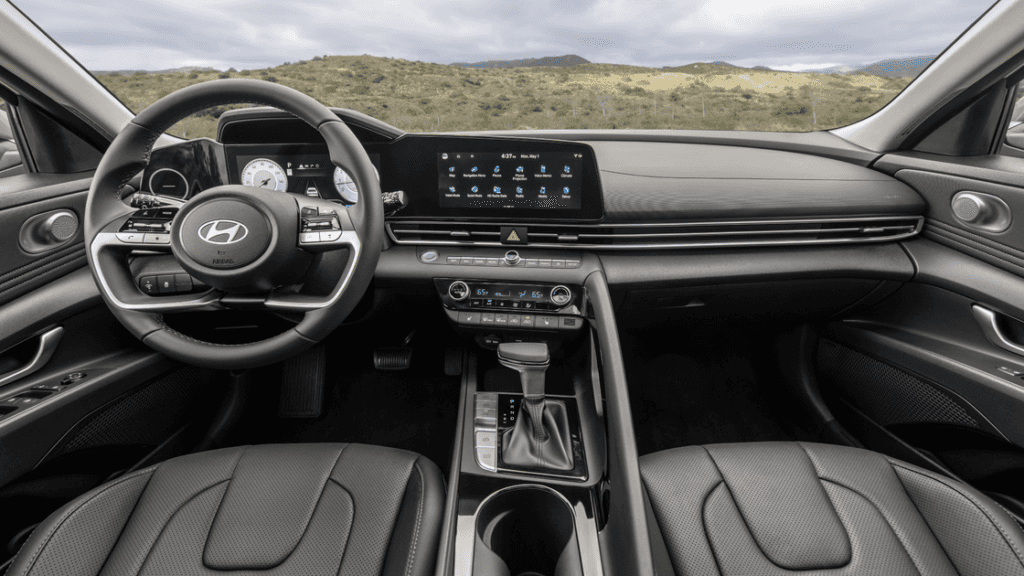
The interior systems of the 2026 Hyundai Elantra incorporate infotainment, seating mechanics, climate control, and instrumentation. Base models use an 8-inch display audio system with wireless smartphone integration along with six speakers. Higher trims use a 10.25-inch navigation display with HD Radio™, SiriusXM® data services, voice recognition, and WiFi hotspot capability. Bose® premium audio is available on upper trims. All models include Bluetooth® connectivity along with USB inputs in both front and rear seating areas. Wireless charging is available on select trims. Digital Key 2.0 Touch is offered on higher trims for device-based vehicle access.
Seating varies across trims. Standard models use premium cloth, while hybrid and upper trims offer H-Tex® leatherette. N Line and N models use specialized sport seats with microsuede or leather-like materials. All models include a 6-way driver seat and a 4-way passenger seat. Ventilated front seats, heated front seats, lumbar support, and memory systems are included in upper trims. Rear seating design varies between single-piece folding seats and 60/40 split configurations with adjustable headrests.
Interior climate control equips lower trims with manual air conditioning and higher trims with dual automatic temperature control. Steering wheels use urethane, H-Tex®, or leather wrapping depending on trim. Instrument clusters include digital indicators, trip computer data, and warning systems. The N adds performance gauges that display turbo pressure, throttle percentage, brake pressure percentage, and temperature readings.
Safety Engineering and Driver Assistance Systems
The 2026 Hyundai Elantra integrates structural and electronic safety systems across all trims. Restraint systems include advanced front airbags, side impact airbags, side curtain airbags, adjustable front seatbelt anchors, pretensioners, and LATCH anchors. Active safety systems include ABS, vehicle stability management, electronic stability control, traction control, and hill start assist. Forward collision avoidance assistance is standard on all trims, with expanded capabilities on upper trims that include cyclist and junction turning detection. Lane keeping assist, lane following assist, blind spot collision warning, rear cross traffic collision avoidance assist, driver attention warning, and safe exit warning are standard across the lineup. Highway Drive Assist is available on higher trims. Structural components include energy-absorbing steering columns, crumple zones, reinforced body sides, crash boxes, and smart pedal technology.
Visit ALM Hyundai Florence to Schedule a Test Ride
A visit to experience the 2026 Hyundai Elantra provides a direct understanding of its engines, transmissions, suspension designs, and technology systems in operation. The model range is built with varied outputs, multiple chassis calibrations, and extensive driver assistance features. Exploring these configurations during a test drive allows a clear comparison of hybrid behavior, turbocharged response, and overall mechanical refinement. Our team at ALM Hyundai Florence near Myrtle Beach, SC, welcomes drivers who want to evaluate these systems in person. Contact us to schedule a test drive and examine the technical characteristics of the 2026 Hyundai Elantra in practical driving environments.