

2026 Hyundai IONIQ 5 close to Columbia SC
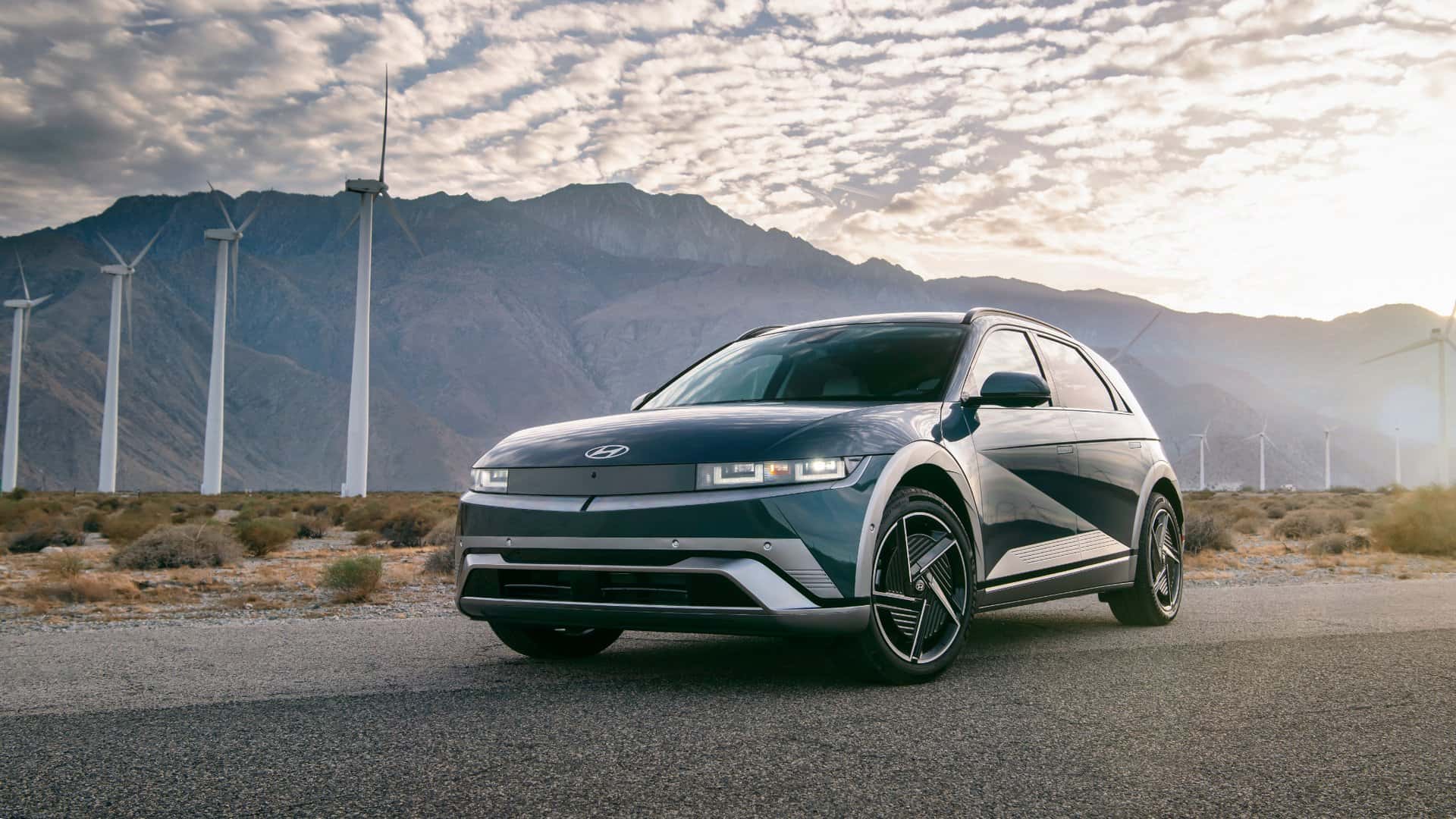
The 2026 Hyundai IONIQ 5 is engineered as a fully electric vehicle built on a dedicated EV platform designed to support high-voltage electrical architecture, modular battery configurations, and advanced digital control systems. Its design and mechanical layout prioritize efficiency, power delivery consistency, and charging performance without reliance on internal combustion components. Every system, from propulsion to braking and thermal management, operates through electronically controlled integration. This approach allows the vehicle to maintain predictable performance across varying driving conditions. The result is an electric SUV structured around measurable outputs, standardized interfaces, and scalable energy systems.
Electric Drive Systems and Output Configuration
The 2026 Hyundai IONIQ 5 is offered with rear-wheel drive and all-wheel drive configurations, each using permanent-magnet synchronous motors. Rear-wheel drive models are available in two output levels, depending on battery selection. The standard-range rear-wheel drive system produces 125 kilowatts, equivalent to 168 horsepower, with maximum torque rated at 350 Newton-meters. Extended-range rear-wheel drive models increase output to 168 kilowatts, or 225 horsepower, while maintaining the same torque rating.
All-wheel drive models integrate dual electric motors, one mounted at the front axle and one at the rear. Combined system output reaches 320 horsepower with total torque measured at 605 Newton-meters. Power distribution between axles is managed electronically without a mechanical driveshaft. This configuration improves traction and stability while preserving energy efficiency during steady-state driving.
All configurations use a single-speed reduction gear transmission paired with shift-by-wire operation. Gear reduction ratios are calibrated to balance acceleration and efficiency across urban and highway operation. Drive mode selection is standard and includes Eco, Normal, Sport, and Snow modes. Mode selection adjusts throttle response, steering effort, and traction parameters through software calibration.
Battery Systems and High-Voltage Architecture
Battery technology in the 2026 Hyundai IONIQ 5 is based on lithium-ion chemistry supplied by SK Innovation. Two battery capacities are offered. The standard-range configuration uses a 63.0 kilowatt-hour battery system operating at 523 volts. Extended-range rear-wheel drive and all-wheel drive configurations use an 84.0 kilowatt-hour battery operating at 697 volts.
Battery modules are arranged in multi-cell packs with 288 cells in the standard-range system and 384 cells in the extended-range system. Each battery includes integrated thermal management and a battery heating system with preconditioning functionality. Preconditioning prepares the battery for charging by regulating temperature, improving charge acceptance under low or high ambient conditions.
The battery pack is mounted low within the chassis to support a balanced center of gravity. Weight distribution is managed through structural integration with the unibody frame. Final driving range values are pending certification, but system design prioritizes usable energy capacity and charge efficiency rather than maximum nominal output.
Ultra-Fast Charging Capability and Energy Transfer
The 2026 Hyundai IONIQ 5 supports an 800-volt charging system that allows compatibility with high-power DC fast chargers. When connected to a charger capable of delivering more than 250 kilowatts at 800 volts, the battery can charge from 10 percent to 80 percent in approximately 20 minutes. Under optimal conditions, a 15-minute charging session can add up to 178 miles of estimated driving range, depending on configuration.
For lower-voltage DC chargers operating at 400 volts, charging times range from approximately 24 to 30 minutes for a 10 percent to 80 percent charge using 150 kilowatt equipment. When using 50 kilowatt DC charging through a CCS adapter, charge times increase accordingly. AC Level II charging is supported through a 10.9 kilowatt onboard charger, with full charge times ranging from approximately 5 hours and 40 minutes to 7 hours and 20 minutes depending on battery size.
Vehicle-to-Load capability is available on select trims and provides bidirectional power output through an onboard two-way charger. This system allows external devices to draw power directly from the vehicle battery.
Disclaimer: Approximately 20 minutes to charge from 10% to 80% on a 350-kW, 800V DC ultra-fast charger using the CCS adapter included with the 2026 IONIQ 5. Actual charging time varies based on a number of factors, including current battery charge level, output of the charging unit, vehicle and battery settings, battery temperature and outside temperature. Ultra-fast charging stations are provided by independent companies and availability is not guaranteed.
Steering, Suspension, and Ride Control Systems
The chassis of the 2026 Hyundai IONIQ 5 uses a unibody construction composed primarily of advanced high-strength steel and high-tensile steel. The suspension system uses a MacPherson® strut design at the front and a five-link multi-link design at the rear. High-performance dampers are standard across all trims to maintain ride consistency and structural control.
Steering is handled through a rack-mounted motor-driven power steering system with an overall steering ratio of 14.26 to 1. The system provides 2.67 turns lock to lock, supporting controlled maneuverability. Turning diameter is measured at 39.4 feet curb to curb.
Braking systems include four-wheel disc brakes with ventilated front discs and solid rear discs. Regenerative braking is standard and adjustable through steering wheel-mounted paddle controls. The braking system integrates electronic brake-force distribution, hill-start assist, brake assist, and an active hydraulic brake booster.
Exterior Structure, Lighting, and Aerodynamics
Exterior dimensions include a wheelbase of 118.1 inches, an overall length of 183.3 inches, a width of 74.4 inches, and a height of 63.0 inches. Ground clearance measures 6.1 inches, increasing to 7.0 inches on XRT models. Aerodynamic efficiency is supported by a drag coefficient as low as 0.282.
Lighting systems are fully LED and include daytime running lights, headlights, taillights, and a center high-mount stop lamp. High beam assist is standard. Active grille shutters in the lower front grille adjust automatically to balance cooling needs and aerodynamic efficiency.
Wheel options range from 18-inch to 20-inch alloy wheels depending on trim and drivetrain configuration. Flush door handles operate automatically and retract when not in use. A power-operated charge port door is standard across all models.
Interior Layout, Displays, and Control Interfaces
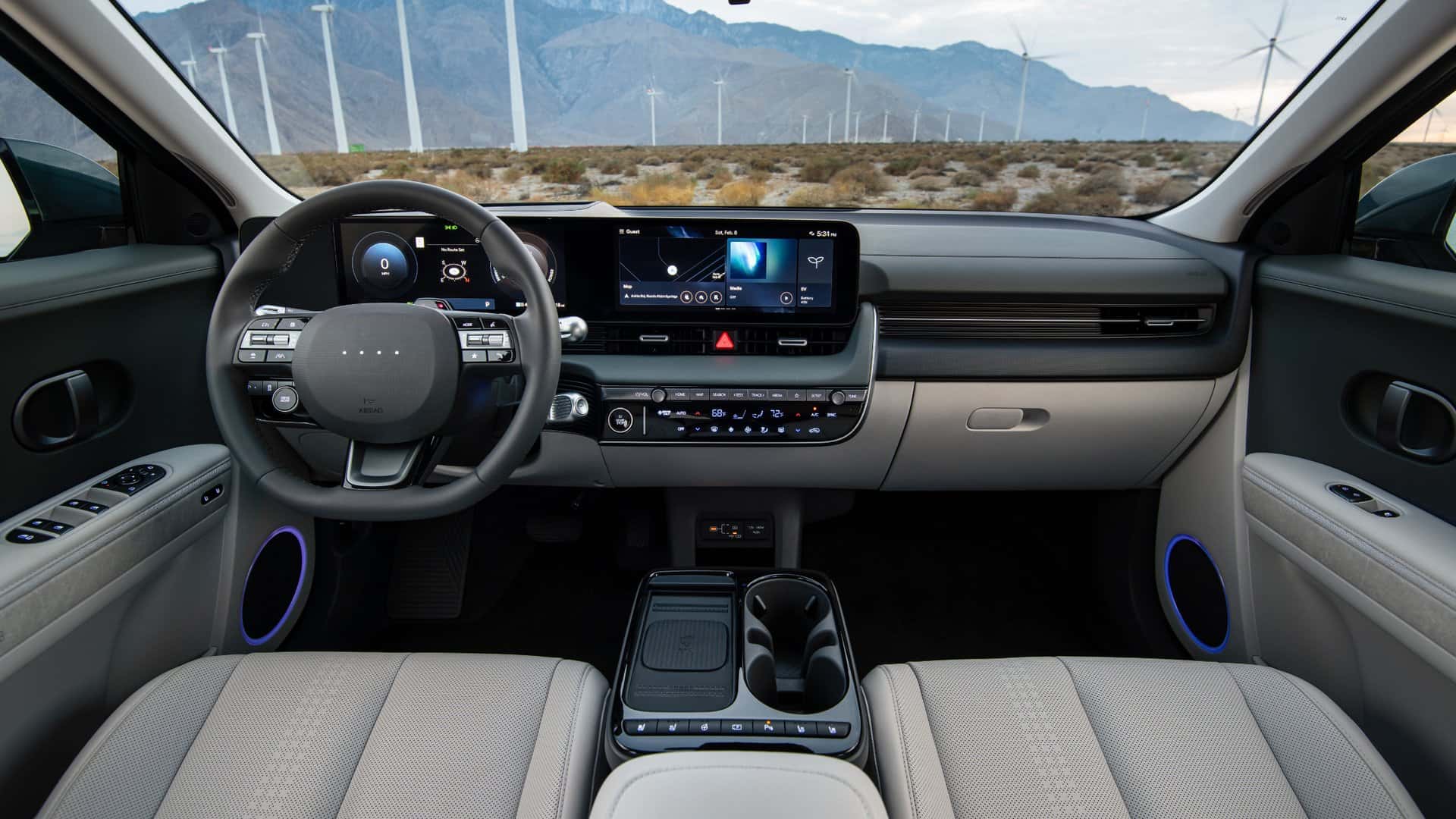
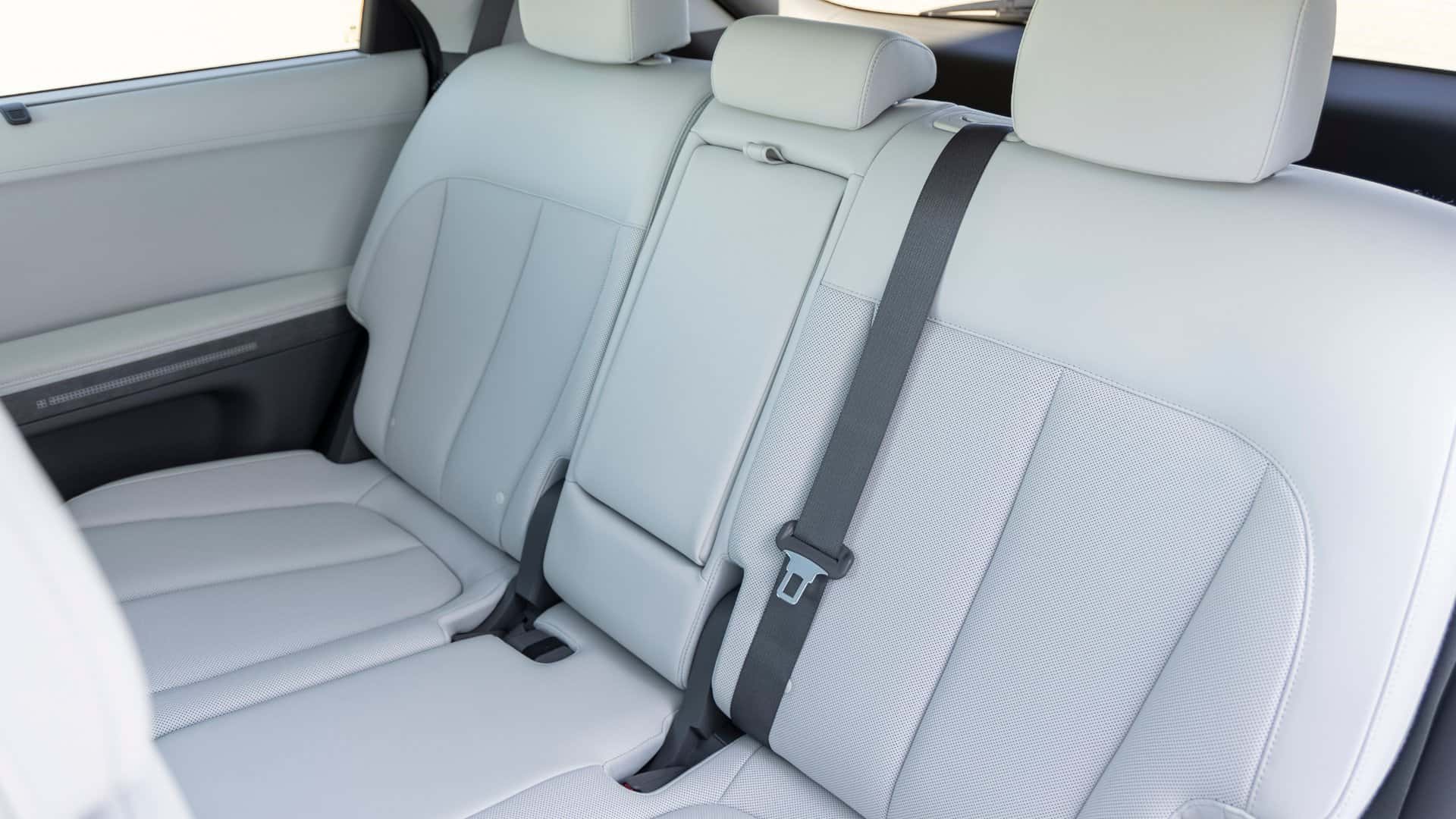
The interior of the 2026 Hyundai IONIQ 5 is configured for five passengers with a flat floor design enabled by the dedicated electric platform. Seating surfaces include cloth or H-Tex® synthetic material depending on trim. Front seats are power adjustable, with available heating, ventilation, and memory functions.
A 12.3-inch digital instrument cluster is standard and displays EV system information, including charge level, power usage, regenerative braking status, and drive mode. A matching 12.3-inch infotainment touchscreen supports navigation, traffic data, wireless smartphone integration, Bluetooth® connectivity, and dynamic voice recognition.
USB-C outlets are positioned throughout both rows, providing power and data access. Wireless phone charging is available on select trims. Climate control systems include dual automatic temperature control, rear air vents, and a heat pump system on all-wheel drive models.
Driver Assistance and Safety Technologies
Safety systems in the 2026 Hyundai IONIQ 5 include a full suite of active and passive technologies. Standard features include forward collision-avoidance assist, lane keeping assist, lane following assist, rear cross-traffic collision-avoidance assist, intelligent speed limit assist, and driver attention warning.
Advanced systems available on higher trims include Highway Driving Assist 2, blind-spot view monitoring, surround view monitoring, parking collision-avoidance assist, navigation-based smart cruise control with curve control, and advanced rear occupant alert using radar sensors.
Passive safety features include multiple airbags, reinforced body structures, front crumple zones, electronic stability control, traction control, and a tire pressure monitoring system with individual tire indicators.
Cargo Capacity and Utility Design
Cargo capacity measures 26.3 cubic feet with rear seats in the upright position and expands to 58.5 cubic feet when rear seats are folded. An additional front trunk provides 0.85 cubic feet of storage. Cargo management features include tie-down anchors and an available retractable cargo cover.
Trailering capability is available on XRT models equipped with the proper hitch configuration, supporting a maximum trailer weight of 2,700 pounds when using trailer brakes.
Visit ALM Hyundai Florence close to Columbia SC
To evaluate the engineering and system integration of the 2026 Hyundai IONIQ 5 in person, a scheduled test drive provides direct access to its electric drive performance, charging interfaces, and driver assistance technologies. Our team at ALM Hyundai Florence, close to Columbia SC can demonstrate battery operation, charging compatibility, and digital control systems in a controlled setting. A test drive allows drivers to assess steering response, regenerative braking behavior, and cabin technology functionality. Scheduling an appointment ensures sufficient time to explore configuration-specific features and drivetrain options. Contact our team to arrange a visit and examine the vehicle’s technical capabilities in detail.