

2026 Hyundai IONIQ 5 close to Myrtle Beach
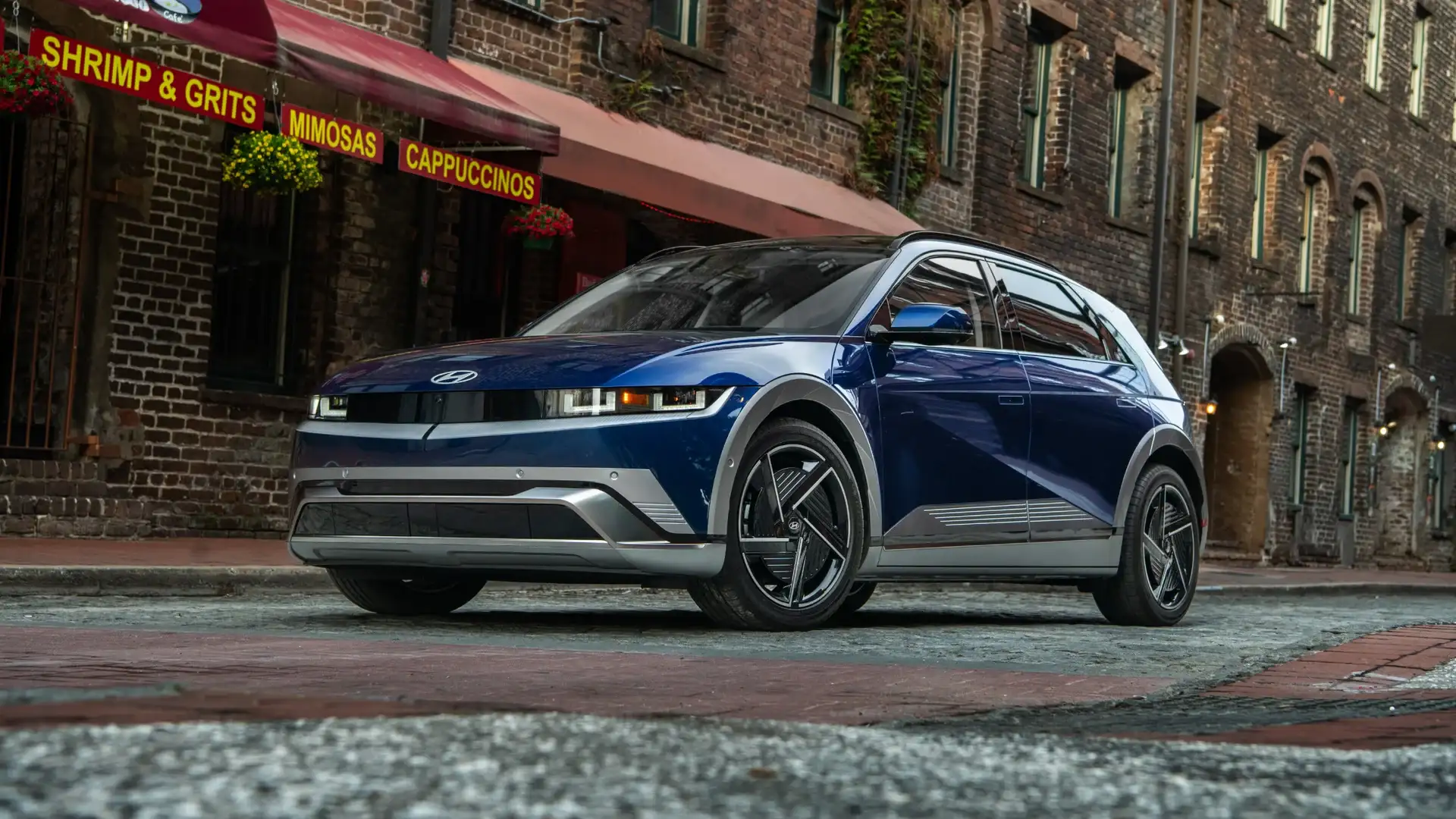
The 2026 Hyundai IONIQ 5 continues the brand’s electric vehicle development with updated charging capability, advanced driver assistance systems, multiple drivetrain configurations, and an EV-focused cabin layout. Built on the dedicated electric platform of Hyundai, the 2026 Hyundai IONIQ 5 combines high-output electric motors, a high-voltage battery system, regenerative braking technology, and integrated digital displays within a midsize crossover structure. The model lineup includes rear-wheel-drive and all-wheel-drive configurations, along with trim-specific equipment packages designed to support comfort, utility, and vehicle control functions.
The 2026 Hyundai IONIQ 5 uses a permanent-magnet synchronous motor configuration across the lineup. Rear-wheel-drive Standard Range models produce 168 horsepower and 258 lb.-ft. of torque through a 125-kW motor. Rear-wheel-drive long-range models increase output to 225 horsepower using a 168-kW motor while maintaining the same torque figure. All-wheel-drive models use dual electric motors rated at 74 kW and 165 kW, producing a combined output of 320 horsepower and 446 lb-ft. of torque. Hyundai pairs the electric drivetrain with a single-speed reduction gear transmission and shift-by-wire operation.
High-Voltage Battery Engineering and Charging Systems
The 2026 Hyundai IONIQ 5 uses lithium-ion battery technology in two configurations. Standard Range rear-wheel-drive models use a 63.0-kWh battery system with 523-volt architecture. Rear-wheel-drive and all-wheel-drive long-range models use an 84.0-kWh battery system operating at 697 volts. Hyundai equips all configurations with battery preconditioning capability and a battery heating system to support charging performance in varying temperatures.
Charging capability remains one of the most technically advanced aspects of the 2026 Hyundai IONIQ 5. Standard 240-volt AC Level II charging from 10 percent to 100 percent requires approximately 5 hours and 40 minutes for the 63.0-kWh battery and 7 hours and 20 minutes for the 84.0-kWh battery. DC fast charging performance varies depending on charger type and output level. Hyundai lists 10 percent to 80 percent charging in approximately 24 minutes on the standard-range battery and 30 minutes on the larger battery when connected to a 150-kW charger operating at 400 volts through NACS charging capability.
The 2026 Hyundai IONIQ 5 also supports charging speeds above 250 kW through 800-volt charging architecture. Under those conditions, Hyundai lists a 10 percent to 80 percent charge time of 20 minutes for both battery systems. The onboard charger supports up to 10.9 kW capacity. Hyundai positions the charge port on the rear passenger-side quarter panel and includes a power-operated charge door across the lineup.
Battery packaging contributes to vehicle structure and weight distribution. Hyundai lists the standard range battery weight at 815.7 pounds, excluding cooling and hosepipe components. The larger battery weighs 1054.0 pounds under the same measurement conditions. Cell construction differs between battery sizes, with the standard range battery using 288 cells across 24 modules and the larger battery using 384 cells across 32 modules.
Disclaimer: Approximately 20 minutes to charge from 10% to 80% on a 350-kW, 800V DC ultra-fast charger using the CCS adapter included with the 2026 IONIQ 5. Actual charging time varies based on a number of factors, including current battery charge level, output of the charging unit, vehicle and battery settings, battery temperature and outside temperature. Ultra-fast charging stations are provided by independent companies and availability is not guaranteed.
Drive Modes, Steering Calibration, and Chassis Control
Hyundai equips the 2026 Hyundai IONIQ 5 with multiple selectable drive modes, including Eco, Normal, Sport, and Snow. These modes adjust throttle response, steering feel, and drivetrain operation through steering-wheel-mounted controls. XRT models add Terrain Mode Select with Snow, Mud, and Sand settings to improve traction management in low-grip environments.
The steering system uses rack-mounted motor-driven power steering with a steering ratio of 14.26:1. Hyundai lists 2.67 turns lock-to-lock and a turning diameter of 39.4 feet. Suspension design consists of a MacPherson® strut front suspension and a multi-link five-link rear suspension. Hyundai includes high-performance dampers on both front and rear suspension assemblies.
The braking system combines regenerative braking capability with conventional hydraulic braking components. Front brakes use ventilated discs measuring 325 mm by 30 mm, while rear brakes use solid discs measuring 325 mm by 12 mm. Hyundai includes anti-lock braking, Electronic Brake-force Distribution, Brake Assist, Hillstart Assist Control, and an electric parking brake with Automatic Vehicle Hold.
Exterior Structure and Aerodynamic Development
The 2026 Hyundai IONIQ 5 uses a unibody construction with advanced high-strength steel and high-tensile steel integrated throughout the chassis. Hyundai engineers the body structure to support battery protection, cabin rigidity, and aerodynamic efficiency. The lowest drag coefficient listed for the model is 0.282.
Exterior dimensions include a wheelbase of 118.1 inches, an overall length of 183.3 inches, a width of 74.4 inches, and an overall height of 63.0 inches. XRT models increase ride height to 64.0 inches. Ground clearance measures 6.1 inches on standard configurations and 7.0 inches on XRT models. Approach angle and departure angle measurements increase on XRT trims to support additional off-pavement capability.
Wheel configurations vary by trim level. XRT models use 18-inch alloy wheels paired with 235/60R18 tires. SE and SEL models use 19-inch alloy wheels with 235/55R19 tires. Limited all-wheel-drive models use 20-inch alloy wheels fitted with 255/45R20 tires.
Lighting systems include LED daytime running lights, LED taillights, LED interior lights, LED cargo lighting, and automatic headlights. Higher trims include projector-type LED headlights and premium LED accent lighting with a front V-shaped light bar. Hyundai also includes High Beam Assist across the lineup.
Additional exterior equipment includes active grille shutters, flush automatic door handles, acoustic windshield glass, heated side mirrors with integrated blind-spot indicators, rear privacy glass, rear spoiler integration with LED center high-mount stop lamp functionality, and a hands-free smart power liftgate on select trims. Limited models add rain-sensing windshield wipers, premium gloss-black exterior accents, premium side sills, and a panoramic fixed-glass Vision Roof with a sunshade.
Interior Packaging and Seating Configuration
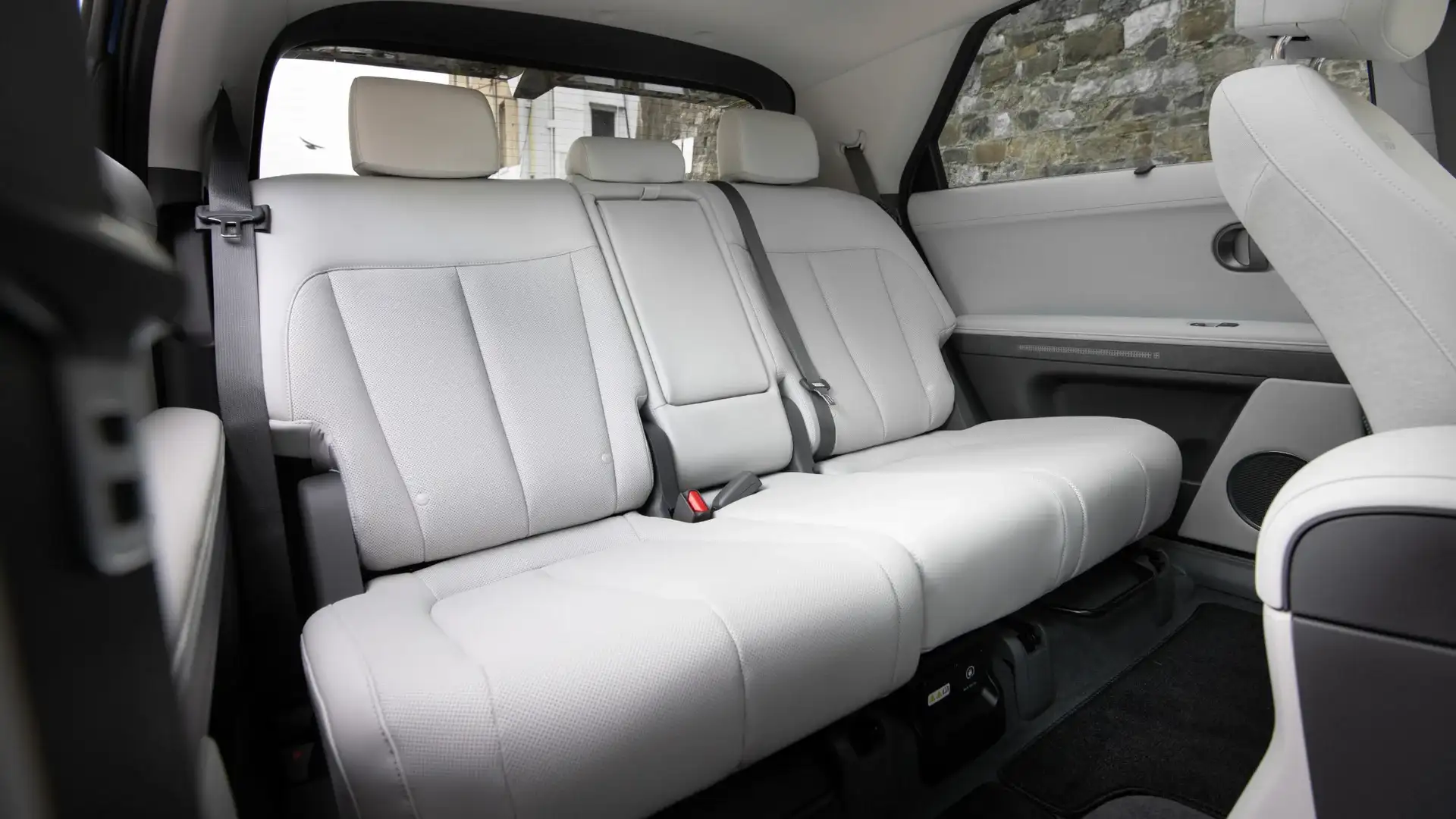
The cabin structure of the 2026 Hyundai IONIQ 5 prioritizes passenger volume and cargo flexibility. Hyundai lists total interior volume at 132.8 cubic feet with passenger volume measuring 106.5 cubic feet. Cargo space measures 26.3 cubic feet behind the rear seats and 58.5 cubic feet with the rear seats folded flat. A front cargo compartment provides an additional 0.85 cubic feet of storage.
All trims seat five passengers and include a sliding 60/40 split-folding rear bench seat with reclining seatbacks. SE models use stain-resistant cloth seating surfaces. SEL, XRT, and Limited trims use H-Tex® artificial leather seating materials. All trims include an 8-way power driver seat, heated front seats, and power lumbar support. SEL and above add an 8-way power passenger seat.
Limited models include additional seating functions such as front seat ventilation, integrated memory settings for the driver’s seat, heated rear outboard seats, and a driver relaxation function. XRT models include unique seat debossing integrated into the front seating surfaces.
Interior measurements include 41.7 inches of front legroom and 39.4 inches of rear legroom. Shoulder room measures 57.7 inches in both front and rear seating positions. Front headroom reaches 39.8 inches without the sunroof.
Integrated Displays and Infotainment Technology
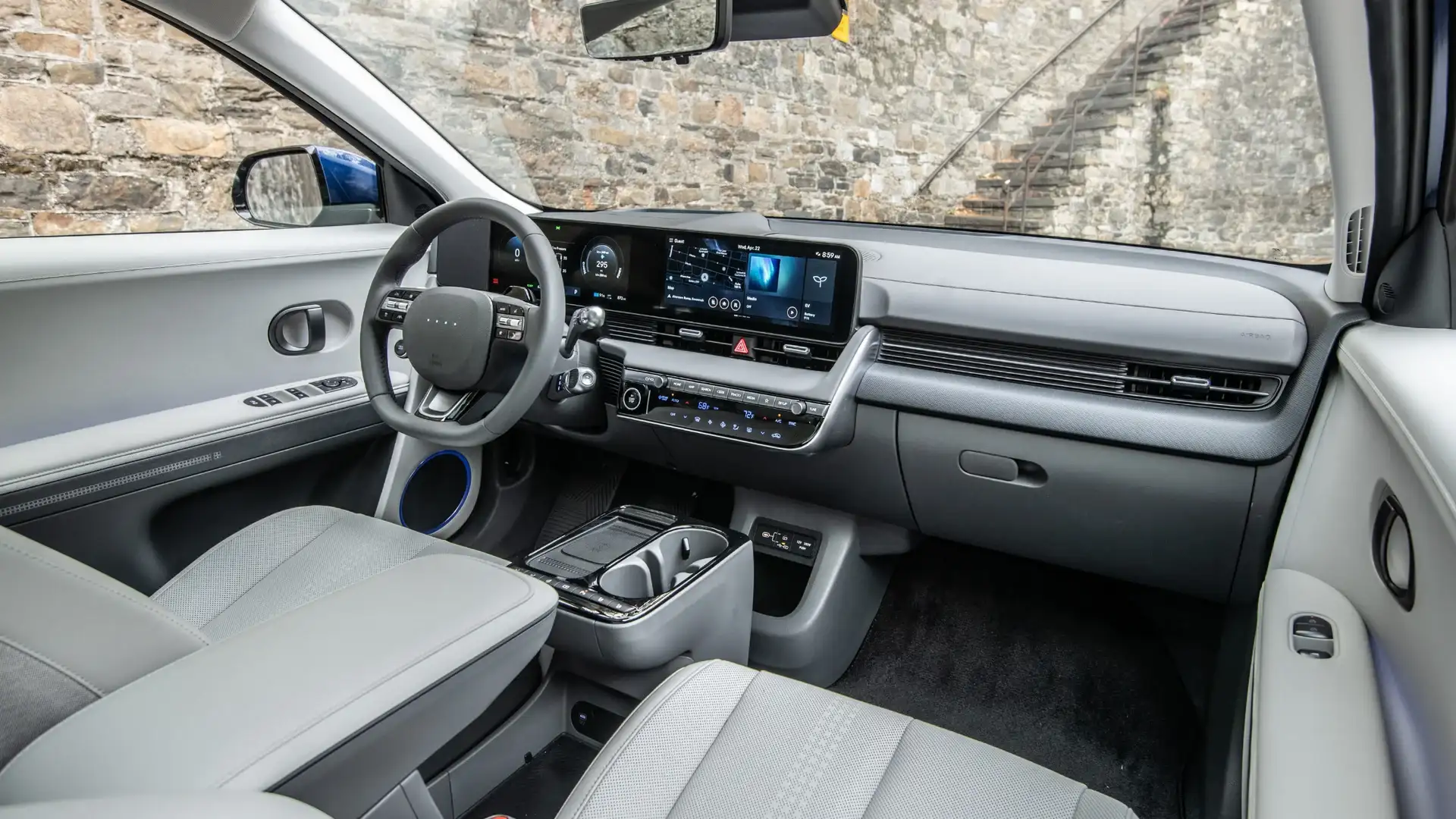
Every 2026 Hyundai IONIQ 5 includes a 12.3-inch digital instrument cluster paired with a 12.3-inch touchscreen infotainment display. The instrument cluster displays EV-specific information, including power usage, regenerative braking status, battery charge level, drive mode status, and driver-assistance alerts.
The infotainment system includes AM/FM radio, SiriusXM® capability, HD Radio™ integration, navigation, and traffic information support. Wireless Android Auto™ and Apple CarPlay® are standard across all trims. Hyundai also includes Dynamic Voice Recognition, Bluetooth® multi-device connectivity for up to two devices, and multiple USB-C charging ports throughout the cabin.
XRT and Limited trims include a Bose® premium audio system with eight speakers and an external amplifier. Limited models add a head-up display and a digital rearview mirror with HomeLink integration. Wireless phone charging capability rated at 15 watts appears on SEL, XRT, and Limited trims.
Convenience systems include Hyundai Digital Key 2 Premium with NFC, BLE, and UWB support on XRT and Limited trims. Hyundai also equips the lineup with Bluelink®+ connected services, remote charge management capability, Wi-Fi hotspot functionality, and Hyundai Pay integration.
Climate Management and Cabin Utility Features
Hyundai equips the 2026 Hyundai IONIQ 5 with dual automatic climate control and a cabin air filtration system across all trims. AWD models include a heat pump system to support cabin efficiency during cold-weather operation. Rear-seat air vents are included on SEL, XRT, and Limited trims.
Interior utility systems include multiple cupholders, front and rear bottle holders, front and rear power window controls, illuminated vanity mirrors, adjustable steering-wheel positioning, and center console storage compartments. Limited trims add a sliding center console storage arrangement and ambient interior lighting.
Vehicle-to-Load functionality appears on XRT and Limited trims. This system allows the vehicle battery to provide electrical output through a two-way onboard charger positioned in the second-row area. Hyundai also includes front and rear 12-volt outlets and a removable cargo area cover on Limited trims.
Driver Assistance and Safety Integration
The 2026 Hyundai IONIQ 5 includes a broad range of passive and active safety systems. Standard restraint systems include advanced front airbags, side-impact thorax airbags, side curtain airbags with rollover sensors, and rear side airbags. Hyundai also includes seatbelt pretensioners, load limiters, rear child safety locks, and rear LATCH anchor systems.
Driver assistance systems vary by trim level but include Lane Keeping Assist, Lane Following Assist, Driver Attention Warning, Forward Attention Warning, Intelligent Speed Limit Assist, Safe Exit Assist, Navigation-based Smart Cruise Control with Curve Control, and Highway Driving Assist functionality.
Forward Collision-Avoidance Assist capability expands on higher trims with support for junction turning, junction crossing, lane change oncoming detection, lane change side detection, and evasive steering assist. Rear Cross-Traffic Collision-Avoidance Assist remains standard throughout the lineup.
Higher trims also include Blind-Spot Collision-Avoidance Assist, Blind-Spot View Monitor, Surround View Monitor, and Parking Collision-Avoidance Assist with reverse, forward, and side detection capability. Parking Distance Warning systems support front, rear, and side monitoring functions depending on trim selection.
Schedule a Test Ride at ALM Hyundai Florence
The 2026 Hyundai IONIQ 5 combines high-output electric propulsion, fast-charging capability, configurable drive systems, and integrated digital technology within a midsize crossover platform. Customers visiting ALM Hyundai Florence close to Myrtle Beach can evaluate the differences between rear-wheel-drive and all-wheel-drive configurations, compare available battery systems, and examine the functionality of Hyundai’s driver-assistance and charging technologies in person. A test drive provides an opportunity to experience regenerative braking adjustment, drive mode calibration, cabin insulation, digital display operation, and acceleration response under normal driving conditions. The available XRT trim also allows drivers to examine increased ground clearance, terrain drive modes, and towing capability designed for additional utility applications. The integration of high-voltage charging architecture, dual-display instrumentation, and advanced safety systems gives the 2026 Hyundai IONIQ 5 a technically focused design with a strong emphasis on operational efficiency and driver support features.