

2026 Hyundai IONIQ 5 N close to Columbia, SC
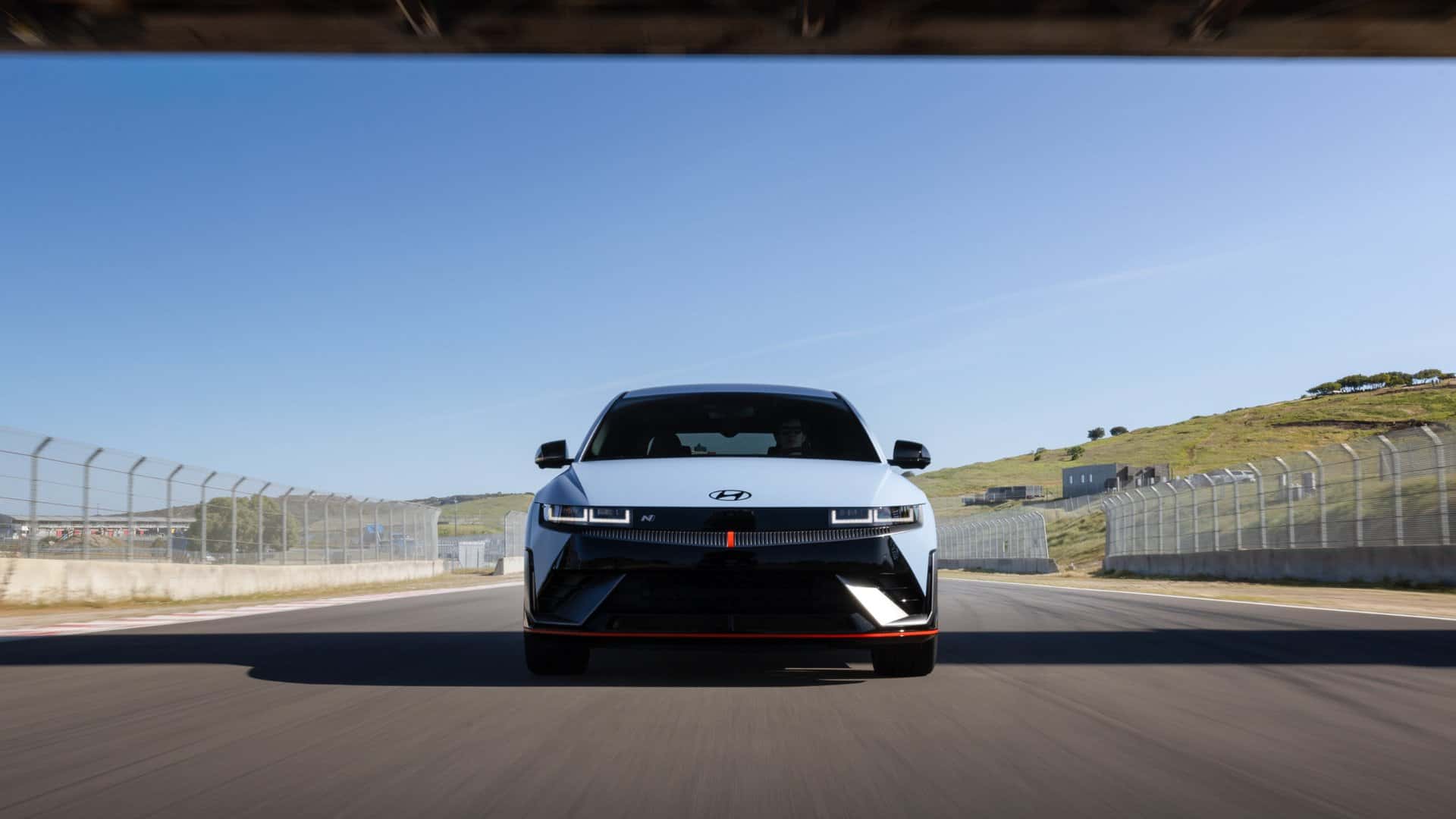
The 2026 Hyundai IONIQ 5 N is a high-performance electric crossover engineered with a focus on measurable performance specifications, advanced electric propulsion, and integrated vehicle control systems. Developed using Hyundai’s electric vehicle architecture, the model combines dual-motor all-wheel drive with high-output battery technology and performance-oriented mechanical systems.
This model integrates performance-focused engineering within an all-electric drivetrain. Its propulsion system uses permanent-magnet synchronous motors, a large lithium-ion battery pack, and high-voltage electrical architecture. Additional mechanical and electronic systems support vehicle dynamics, driver interface functionality, and safety monitoring. The vehicle maintains practical passenger capacity and cargo space while incorporating design elements associated with performance-oriented electric vehicles.
Electric Motor System and Performance Output
The 2026 Hyundai IONIQ 5 N uses a dual permanent-magnet synchronous motor configuration that powers both the front and rear axles. The front motor generates 166 kilowatts of output, while the rear motor produces 282 kilowatts. Combined system output reaches 448 kilowatts, equivalent to 601 horsepower.
The vehicle includes the N Grin Boost function, which temporarily increases the system’s electrical output. When this function is activated, the combined motor output increases to 478 kilowatts, which corresponds to 641 horsepower. This function modifies motor control parameters to provide short-term performance enhancement.
Total torque output from the electric motors reaches 740 newton meters, equivalent to 545 pound-feet. With the N Grin Boost function active, torque increases to 770 newton meters, or 568 pound-feet. Electric motor torque is delivered immediately through the single-speed transmission system, supporting strong acceleration from low vehicle speeds.
Acceleration performance reflects the high power output of the dual-motor configuration. The vehicle can reach 60 miles per hour in approximately 3.25 seconds when N-Grin Boost is engaged. Additional performance measurements include acceleration from 0 to 37 miles per hour in approximately 2.0 seconds and acceleration from 0 to 62 miles per hour in about 3.5 seconds.
The maximum vehicle speed is electronically controlled and reaches 162 miles per hour. Power distribution between the front and rear motors allows the all-wheel-drive system to maintain traction during acceleration and cornering.
Transmission Architecture and Drive Configuration
The drivetrain uses a single-speed reduction gear transmission that transfers motor output to the drive axles. Electric propulsion does not require a multi-speed transmission because the electric motors operate efficiently across a wide range of rotational speeds.
The drive configuration is all-wheel drive, which distributes torque between the front and rear wheels. The transmission includes a dog clutch disconnector for the front motor. This mechanical component allows the system to adjust motor engagement in specific driving conditions.
The gear ratio for the front motor is 2.263, and the rear motor gear ratio measures 2.265. The final gear ratio for the drivetrain is 4.706. These ratios are calibrated to balance acceleration performance with efficient power delivery at higher speeds.
The vehicle includes shift-by-wire control for the transmission interface. Drive mode selection is available through steering-wheel controls. Available modes include Eco, Normal, Sport, and N performance modes along with customizable N settings.
High-Voltage Battery System and Electrical Architecture
The 2026 Hyundai IONIQ 5 N uses an 84.0 kilowatt-hour lithium-ion battery pack designed for high output and rapid charging capability. The battery operates at a system voltage of 697 volts. This high-voltage architecture supports strong power delivery to the electric motors and enables ultra-fast charging capability.
The battery pack weighs approximately 1,071 pounds. It uses a cell structure described as 2P192S, which refers to two parallel cell groups connected in a series configuration of 192 cells.
Energy density is rated at 173 watt-hours per kilogram. Battery output during discharge reaches 535 kilowatts, while charging capability reaches 432 kilowatts. These specifications allow the battery to support the high-performance requirements of the dual-motor system.
The battery includes a preconditioning system that adjusts battery temperature prior to high-speed charging sessions. Thermal control systems help maintain optimal operating conditions for battery performance.
The vehicle also uses a 12-volt electrical system for non-traction electronics, including lighting, vehicle control modules, and cabin electronics.
Charging Capability and Power Delivery
Charging capability varies depending on the charging infrastructure used. Level II alternating current charging using a 240-volt power supply requires approximately 7 hours and 20 minutes to charge the battery from 10 percent to full capacity.
Direct current fast charging provides significantly shorter charging durations. A 150-kilowatt direct current charger can charge the battery from 10 percent to 80 percent in approximately 30 minutes. When connected to a high-output 350-kilowatt charger operating with an 800-volt architecture, the same 10 percent to 80 percent charge level can be reached in approximately 18 minutes.
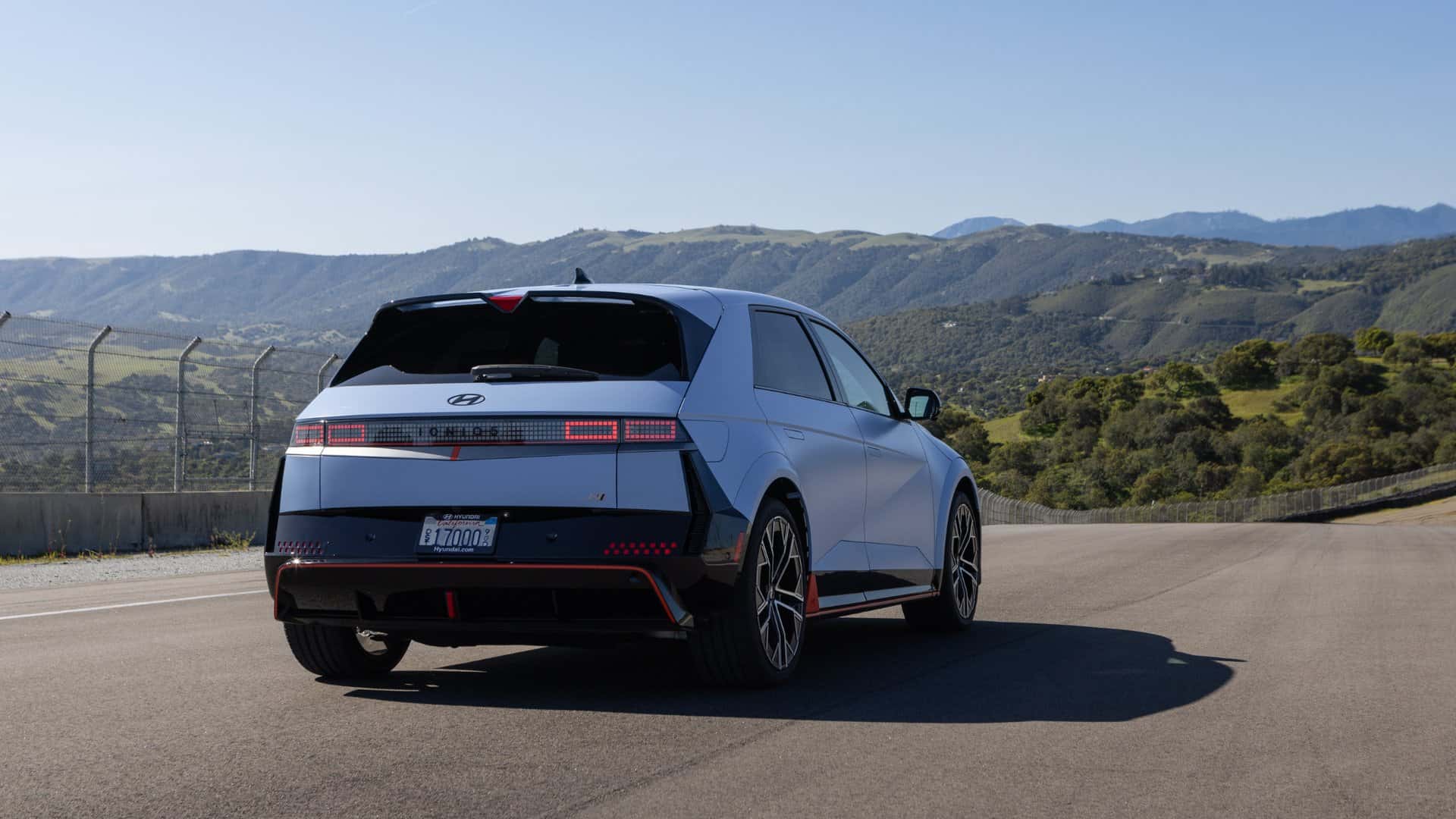
The vehicle includes a North American Charging Standard port positioned on the passenger-side rear quarter panel. This configuration supports compatibility with multiple public charging networks.
The onboard charger has a maximum capacity of 10.9 kilowatts and an output density rating of 1.4 kilovolt-amperes per liter.
Steering System and Handling Characteristics
Steering control uses a rack-and-pinion system equipped with motor-driven power steering. The steering ratio measures 12.54 to 1, allowing responsive directional control. Steering wheel rotation from lock to lock requires approximately 2.29 turns.
The turning diameter measured from curb to curb is 40.7 feet. This measurement reflects the physical dimensions of the vehicle and the steering geometry.
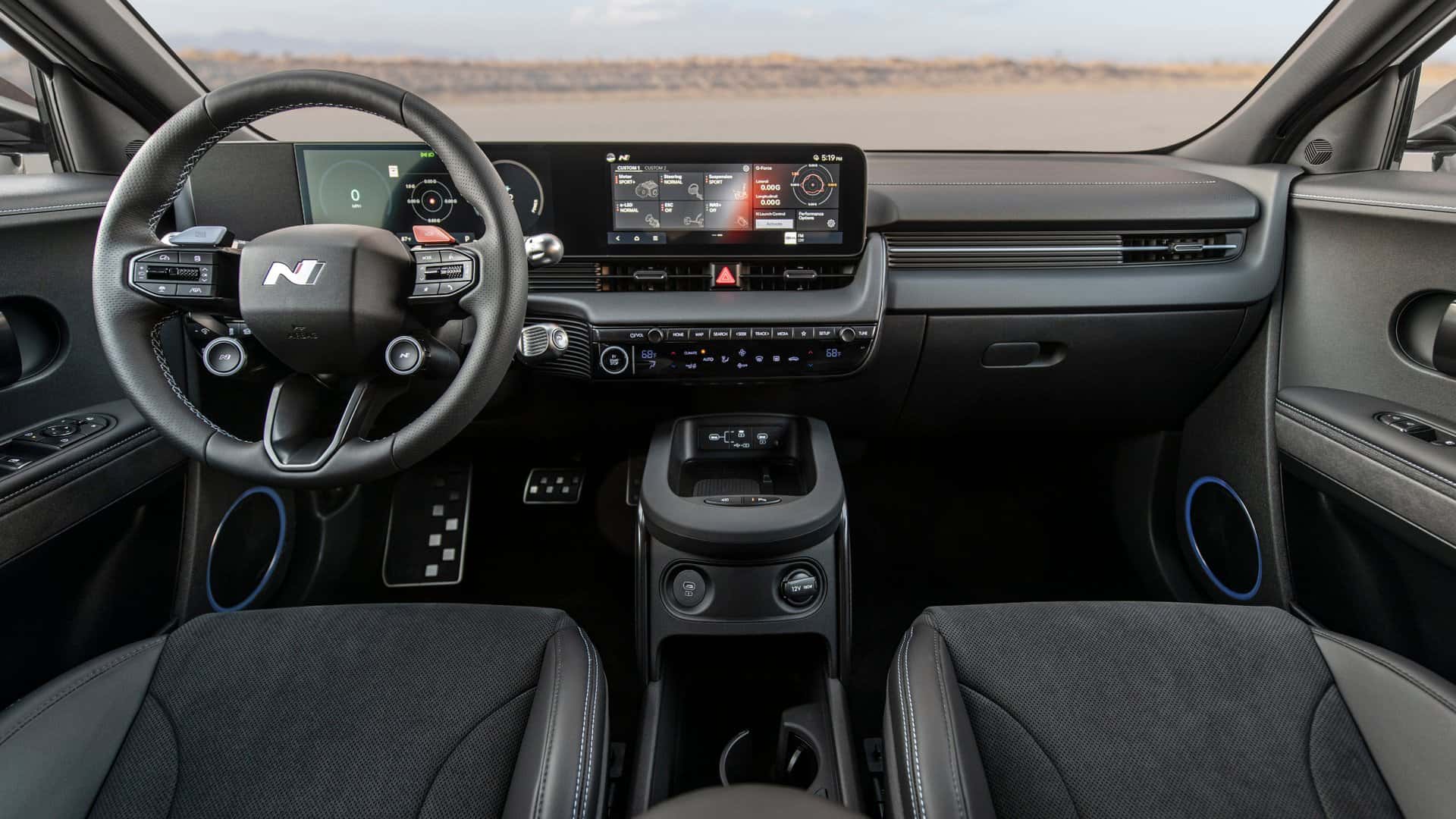
The steering wheel has a diameter of 14.5 inches and uses a perforated leather covering. Steering-wheel-mounted controls provide access to drive mode selection, regenerative braking control, and audio system functions.
Suspension Engineering and Ride Control
The suspension system uses a MacPherson® strut configuration for the front suspension and a multi-link design for the rear suspension. The rear suspension uses a five-link layout to maintain wheel alignment during acceleration and cornering.
The vehicle includes electronically controlled suspension dampers. These dampers adjust damping force electronically to maintain vehicle stability during different driving conditions.
Gas-filled shock absorbers operate in coordination with the electronic control system. The suspension calibration is designed to manage body motion during high-speed driving while maintaining predictable handling response.
The vehicle body uses a unibody construction with advanced high-strength steel and high-tensile steel components. Structural rigidity supports suspension performance and helps maintain consistent handling behavior.
Brake System and Regenerative Braking
The braking system uses large ventilated disc brakes at both the front and rear axles. The front brake rotors measure 15.7 inches in diameter and use four-piston calipers. Rear brake rotors measure 14.2 inches in diameter and use single-piston sliding calipers.
The vehicle includes an Integrated Electronic Brake system that coordinates friction braking with regenerative braking. The Regenerative Braking system captures energy during deceleration and stores it in the battery.
Anti-lock braking, electronic brake-force distribution, and brake assist functions are included in the braking control system. Additional braking support systems include hill-start assist control and an electronic parking brake with automatic vehicle hold functionality.
Exterior Structure and Aerodynamic Components
The exterior structure incorporates aerodynamic and functional design elements associated with the performance variant of the 2026 Hyundai IONIQ 5 N platform. The vehicle includes active grille shutters and active front air flaps that regulate airflow through the front fascia.
The model uses 21 by 9.5 inch forged alloy wheels. These wheels weigh approximately 32 pounds each. Tire specifications are 275 by 35R21 Pirelli P ZERO performance tires designed for high traction and stability.
The exterior includes body-colored wide fender arches and gloss black exterior trim with luminous orange accents specific to the N model. A rear spoiler integrates an LED center high-mounted stop lamp.
Lighting equipment includes projector-type LED headlights, LED daytime running lights, LED taillights, and automatic headlight control with high beam assist.
Flush-type door handles operate automatically. Exterior mirrors include heating elements, power folding capability, and integrated turn signal indicators.
Interior Technology and Driver Interface
The interior accommodates five occupants. Seating surfaces combine Eco Alcantara material with H-Tex® synthetic upholstery. The front seats use a lightweight sport bucket design with illuminated N branding.
The driver and front passenger seats provide manual six-way adjustment. Heating and ventilation functions are included for the front seats.
The infotainment system includes a 12.3-inch touchscreen display with integrated navigation capability. Audio playback supports AM radio, FM radio, SiriusXM® satellite radio, and HD Radio™ broadcasting.
Wireless smartphone integration supports Apple CarPlay® and Android Auto™ functionality. Bluetooth® connectivity allows two devices to connect simultaneously.
The audio system uses a Bose® premium audio configuration with eight speakers and an external amplifier. Speaker placement includes front door speakers, tweeters, rear speakers, a center speaker, and a subwoofer.
Cabin connectivity includes five USB Type-C ports that supply charging capability. A wireless phone charging pad supplies up to 15 watts of power.
The driver instrument cluster uses a 12.3-inch digital display that presents vehicle information, including system power output, charge level, speed, and regenerative braking indicators.
Ambient interior lighting is adjustable and includes 64 color options integrated into door trim and speaker areas.
Integrated Safety and Driver Assistance Systems
The 2026 Hyundai IONIQ 5 N incorporates multiple active and passive safety systems. Airbag coverage includes front airbags, front side-impact airbags, and side curtain airbags with rollover detection.
Seatbelt systems include pretensioners and load limiters for outboard seating positions. Rear seating positions include lower anchors and upper tether anchors for child seats.
Electronic safety systems include vehicle stability management, traction control, and tire pressure monitoring with individual tire indicators.
Driver assistance technologies include forward collision avoidance assist capable of detecting vehicles, pedestrians, and cyclists. The system includes junction turning and crossing detection along with lane change monitoring.
Lane keeping assist and lane following assist help maintain vehicle position within marked lanes. Blind spot collision avoidance assist and blind spot view monitoring improve awareness of adjacent traffic.
Rear cross-traffic collision avoidance assist monitors approaching vehicles when reversing. Parking distance sensors monitor obstacles in front, behind, and on the sides of the vehicle.
Navigation-based smart cruise control adjusts vehicle speed based on road curvature and speed limits. Highway driving assist provides steering support and adaptive cruise control operation during highway travel.
Driver attention warning and forward attention warning systems monitor driver behavior and provide alerts when necessary.
Visit ALM Hyundai Florence close to Columbia, SC
Drivers interested in high-performance electric vehicle technology can explore the capabilities of the 2026 Hyundai IONIQ 5 N through a test drive experience. This vehicle demonstrates measurable performance output from its dual-motor system along with advanced battery technology and integrated safety systems. ALM Hyundai Florence, close to Columbia, SC, provides an opportunity to experience the 2026 Hyundai IONIQ 5 N in person. Scheduling a test drive allows drivers to evaluate the vehicle’s electric propulsion system, interior technology, and safety systems while receiving guidance from our team.