

2026 Hyundai IONIQ 5 N near Conway, SC
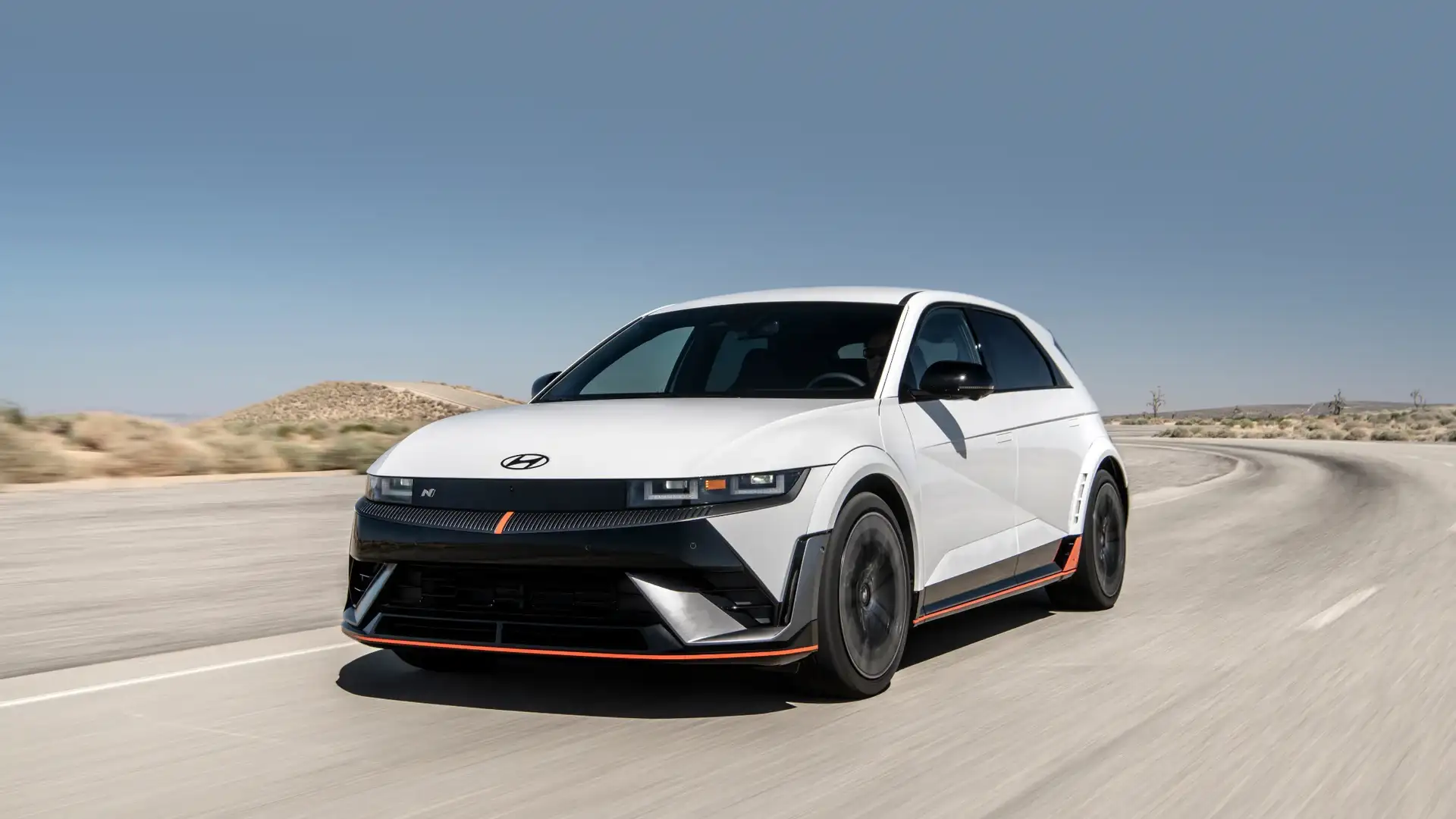
The 2026 Hyundai IONIQ 5 N is engineered as a high-performance electric vehicle that integrates dual-motor all-wheel-drive capability with advanced chassis systems and a high-capacity battery platform. This model is designed to deliver measurable output in acceleration, handling precision, and system responsiveness. The vehicle operates with a permanent magnet synchronous motor configuration on both the front and rear axles, paired with a single-speed reduction gear transmission. The drivetrain supports multiple drive modes, including Eco, Normal, Sport, and dedicated N performance settings with customizable parameters.
The system produces a combined maximum output of 448 kW, equivalent to 601 horsepower. When the N Grin Boost function is engaged, total output increases to 478 kW, or 641 horsepower. Torque output reaches 740 Nm under standard conditions and increases to 770 Nm during boost operation. This level of output enables acceleration from 0 to 60 mph in approximately 3.25 seconds, while the vehicle reaches a maximum speed of 162 mph.
Electric Powertrain and Battery System Specifications
The 2026 Hyundai IONIQ 5 N uses an 84.0 kWh lithium-ion battery system with a voltage rating of approximately 697 volts. This high-voltage configuration supports both sustained performance output and high-efficiency charging. The battery is structured to deliver a discharge power of 535 kW and accept charging input up to 432 kW. The system includes battery preconditioning, which adjusts temperature conditions prior to charging to improve efficiency.
Charging times vary based on the power source. With a 350 kW DC fast charger operating on an 800V architecture, the battery can charge from 10 percent to 80 percent in approximately 18 minutes. A 150 kW DC fast charger completes the same charging range in about 30 minutes, while a 50 kW charger requires approximately 1 hour and 21 minutes. A Level II 240V AC charger completes a full charge from 10 percent to 100 percent in approximately 7 hours and 20 minutes. The vehicle includes a North American Charging Standard port located on the rear passenger-side quarter panel.
The onboard charger has a maximum capacity of 10.9 kW and an output density of 1.4 kVA per liter. The battery system weighs approximately 1,071 pounds and features an energy density rating of 173 Wh per kilogram. The system is supplied by SK Innovation and incorporates a 2P192S structural configuration.
Disclaimer: Approximately 18 minutes to charge from 10% to 80% on a 350-kW, 800V DC ultra-fast charger. Actual charging time varies based on a number of factors, including current battery charge level, output of the charging unit, vehicle and battery settings, battery temperature and outside temperature. Ultra-fast charging stations are provided by independent companies and availability is not guaranteed.
Drivetrain Architecture and Mechanical Systems
The 2026 Hyundai IONIQ 5 N utilizes an all-wheel-drive configuration with a dual-motor setup and a single-speed reduction gear transmission. The gear ratio is configured at 2.263 for the front and 2.265 for the rear, with a final gear ratio of 4.706. The system includes a front-mounted dog clutch disconnector, which allows selective disengagement of the front motor under certain conditions to improve efficiency.
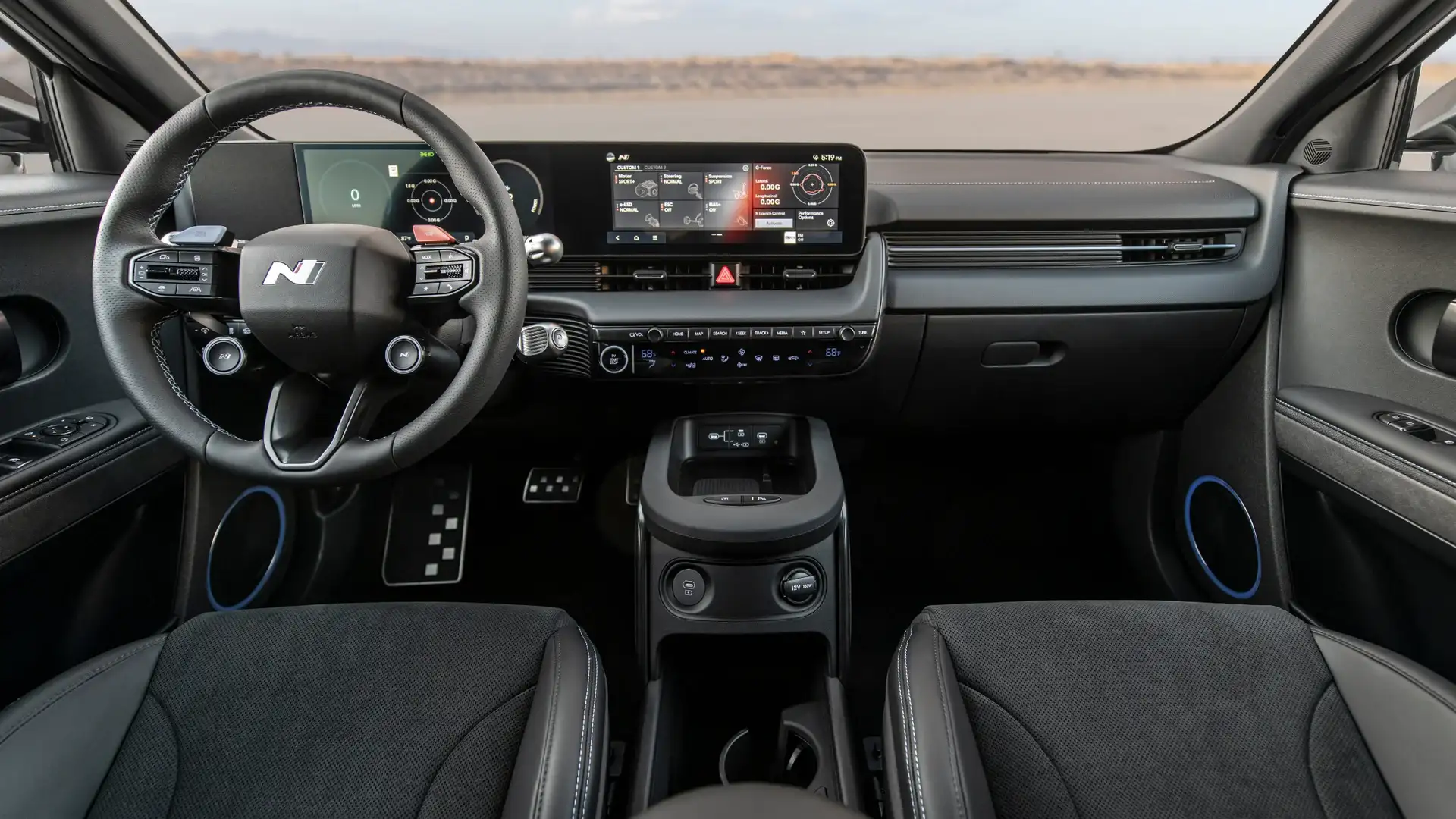
The 2026 Hyundai IONIQ 5 N uses shift-by-wire technology for gear selection, enabling electronic control of drivetrain engagement. Drive mode selection is managed through steering wheel-mounted controls, allowing rapid adjustments to vehicle behavior. The non-traction electrical system operates on a 12-volt architecture to support auxiliary systems.
Steering Calibration and Suspension Engineering
The steering system is a rack-and-pinion configuration with motor-driven power assist mounted directly on the rack. The steering ratio is set at 12.54 to 1, providing direct response to driver input. The steering wheel has a diameter of 14.5 inches, and the system requires approximately 2.29 turns from lock to lock. The turning diameter measures 40.7 feet, supporting maneuverability in confined spaces.
The suspension system combines a MacPherson® strut design in the front with a multi-link configuration in the rear. Both systems incorporate electronically controlled dampers, referred to as Electronic Controlled Suspension. These dampers adjust continuously based on road conditions and selected drive modes. The suspension is calibrated to maintain stability during high-speed operation while supporting ride control during standard driving conditions.
Braking System and Regenerative Integration
The braking system uses ventilated disc brakes on all four wheels. The front brakes measure 15.7 inches in diameter with a thickness of 1.3 inches and utilize four-piston fixed calipers. The rear brakes measure 14.2 inches in diameter with a thickness of 0.8 inches and use single-piston sliding calipers. The system includes integrated electronic braking, which coordinates hydraulic braking with regenerative braking functions.
Anti-lock braking, electronic brake-force distribution, and brake assist systems are included to maintain stability under braking conditions. The vehicle also incorporates hill-start assist control and an electronic parking brake with automatic hold functionality. Regenerative braking is adjustable through steering wheel-mounted paddle controls, allowing drivers to modify energy recovery levels during deceleration.
Exterior Structure, Aerodynamics, and Wheel Configuration
The 2026 Hyundai IONIQ 5 N is constructed using a unibody chassis composed of advanced high-strength steel and high-tensile steel materials. This structure supports rigidity while maintaining weight distribution for performance stability. The exterior dimensions include a wheelbase of 118.1 inches, an overall length of 185.6 inches, a width of 76.4 inches, and a height of 62.4 inches. Ground clearance measures 5.6 inches.
The aerodynamic profile includes active grille shutters and front fascia air flaps, which adjust airflow to improve cooling and reduce drag. The coefficient of drag is rated at 0.313. The vehicle is equipped with 21-inch forged alloy wheels measuring 9.5 inches in width with a 45 mm offset. Tires are specified as 275/35R21 Pirelli P ZERO performance tires designed for electric vehicle applications.
Additional exterior features include LED projector headlights, LED daytime running lights, LED taillights, and an integrated rear spoiler with a center high-mounted stop lamp. The vehicle also includes flush-type automatic door handles, power-folding heated mirrors, and a hands-free smart power liftgate with adjustable height settings.
Interior Layout, Instrumentation, and Connectivity Systems
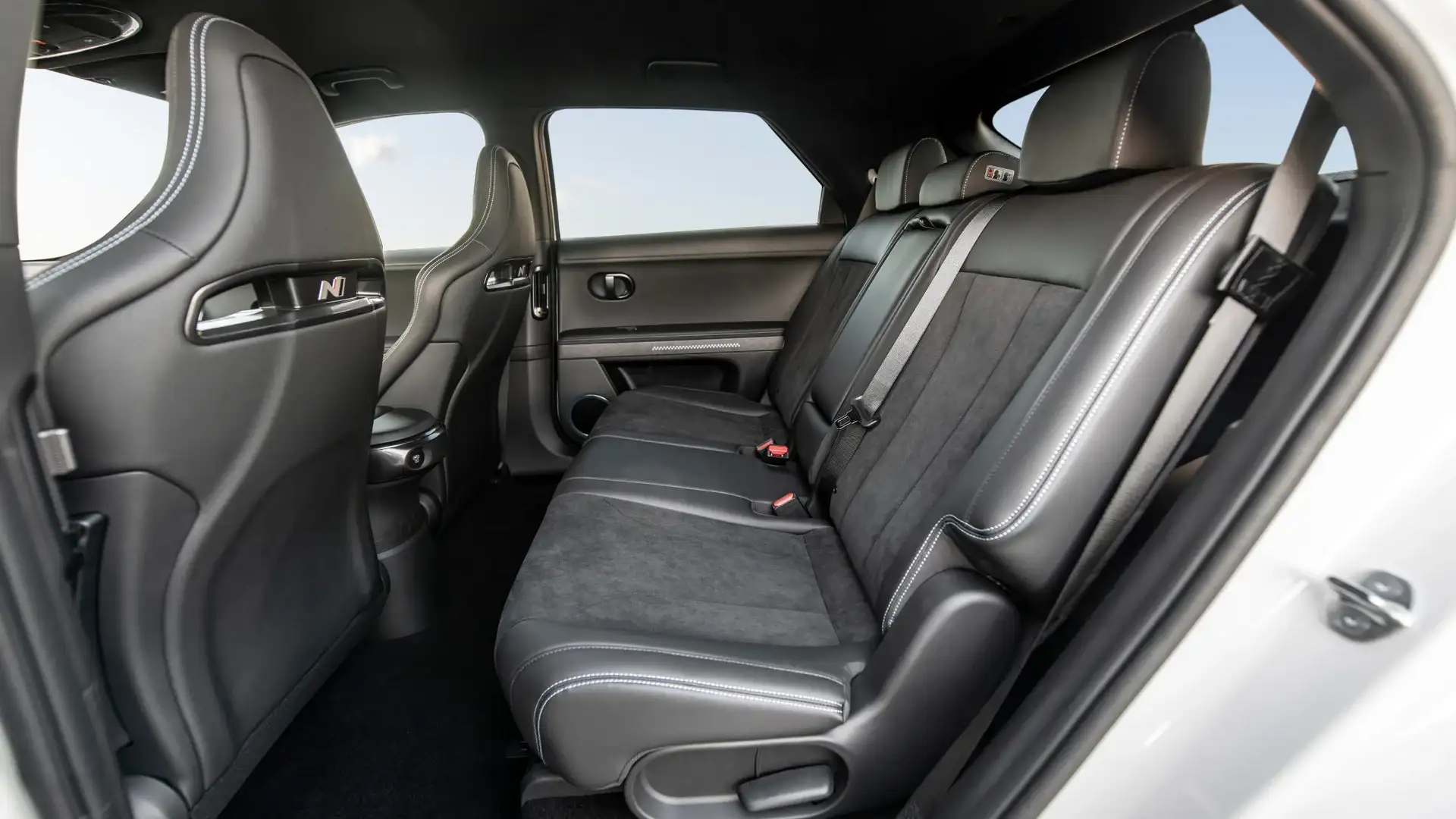
The interior is configured to accommodate five passengers with a combination of Eco Alcantara® and H-Tex® seating surfaces. Front seats are designed as lightweight sport bucket seats with integrated illumination and include heating and ventilation functions. The rear seating area features a 60 to 40 split-folding bench with sliding and reclining capabilities.
Instrumentation includes a 12.3-inch digital cluster that displays vehicle speed, power output, battery charge level, and regenerative braking status. The infotainment system is also displayed on a 12.3-inch touchscreen and includes navigation, AM/FM radio, SiriusXM®, and HD Radio™ compatibility. The system supports wireless Apple CarPlay® and Android Auto™ integration.
Audio is delivered through a Bose® premium system with eight speakers and an external amplifier. The vehicle includes a wireless phone charging pad rated at 15 watts and multiple USB Type-C ports capable of delivering up to 27 watts of power. Bluetooth® connectivity supports pairing with multiple devices simultaneously.
Additional interior features include dual-zone automatic climate control with a heat pump system, rear air vents, and a cabin air filtration system. Ambient lighting is configurable with 64 color options, and the vehicle includes a digital key system that uses NFC, Bluetooth® Low Energy, and Ultra Wideband technologies.
Advanced Safety Systems and Driver Assistance Technologies
The 2026 Hyundai IONIQ 5 N incorporates a comprehensive range of safety systems, including multiple airbags positioned throughout the cabin. These include front airbags, side-impact airbags, and curtain airbags with rollover detection. Seatbelt systems include pretensioners and load limiters for all outboard seating positions.
Driver assistance systems include forward collision avoidance with detection for vehicles, pedestrians, cyclists, and junction scenarios. Blind-spot collision avoidance and rear cross-traffic collision avoidance systems provide additional situational awareness. Lane keeping assist and lane following assist support directional stability during driving.
Highway Driving Assist 2 combines adaptive cruise control with lane centering and navigation-based speed adjustments. Additional features include intelligent speed limit assist, driver attention warning, forward attention warning, and safe exit assist. Parking assistance systems include a surround view monitor, blind-spot view monitor, and parking collision avoidance assist.
The vehicle also includes a tire pressure monitoring system with individual tire indicators and a tire fill completion alert. Stability control systems include electronic stability control, traction control, and vehicle stability management.
Interior Space, Cargo Capacity, and Functional Utility
The interior space provides a total volume of 133.2 cubic feet, with 107.0 cubic feet allocated to passenger space. Cargo capacity measures 26.1 cubic feet with rear seats in place and expands to 59.3 cubic feet when the rear seats are folded. The layout supports flexible storage configurations through a split-folding rear seat design.
The vehicle includes multiple storage compartments, including a center console with armrest storage, door-mounted pockets, and a cargo area with tie-down anchors. Additional features include a retractable cargo cover and an optional cargo net.
Vehicle-to-Load capability allows the vehicle to supply power to external devices through an onboard charging adapter. This system supports bidirectional energy transfer, enabling the vehicle to function as a mobile power source when required.
Schedule a Test Ride at ALM Hyundai Florence
We invite you to review the engineering and technical systems of the 2026 Hyundai IONIQ 5 N at ALM Hyundai Florence near Conway, SC. This vehicle integrates high-output electric motors, advanced suspension calibration, and a high-capacity battery system designed for consistent performance. A test drive allows evaluation of acceleration characteristics, steering precision, and braking response under controlled conditions. The available driver assistance systems and connectivity features can also be assessed during operation. Schedule a visit to examine the technical capabilities of this model and observe its performance systems in use.