

2026 Hyundai IONIQ 9 close to Columbia, SC
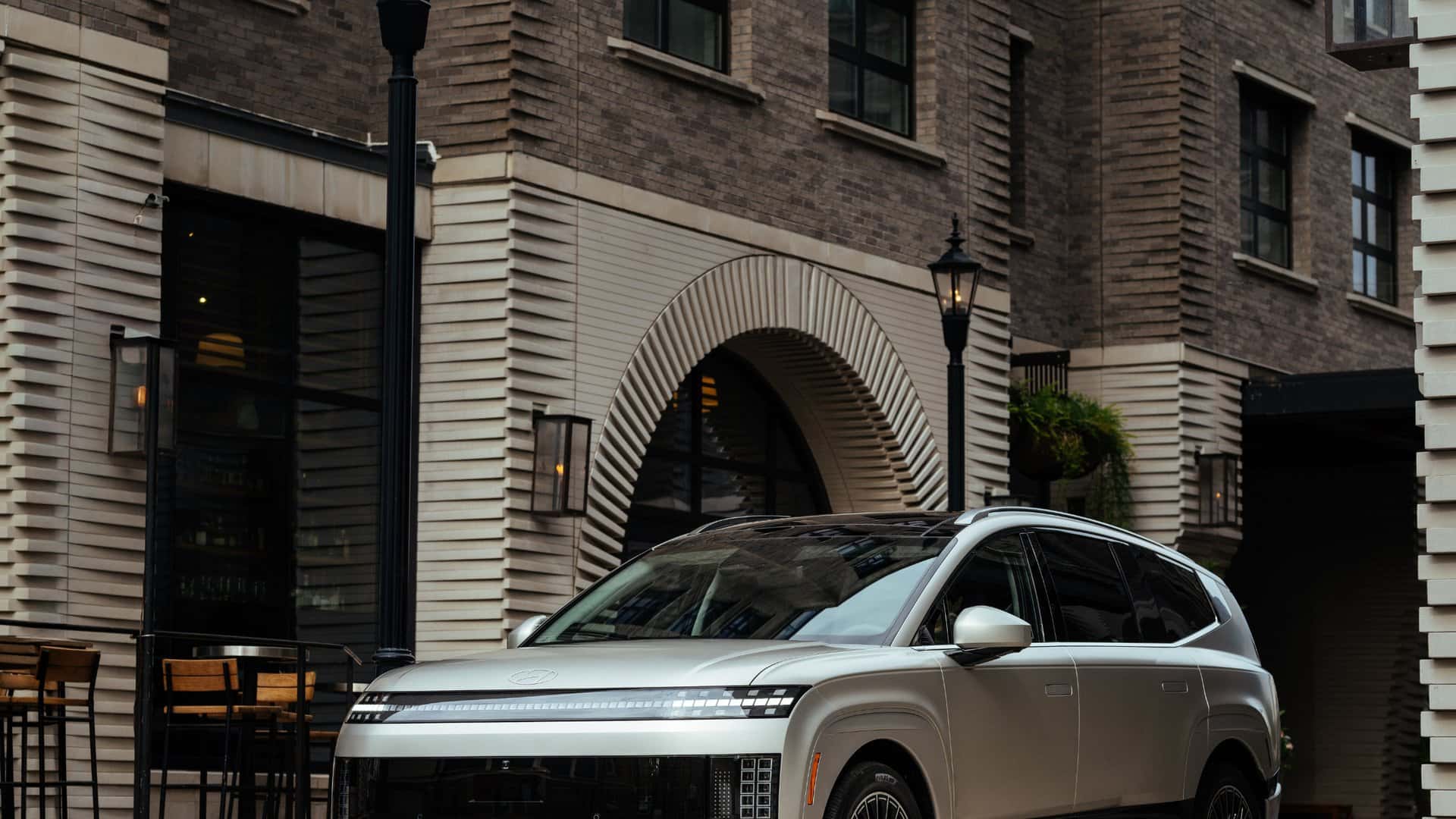
The 2026 Hyundai IONIQ 9 is a fully electric three-row SUV designed with a focus on efficient power delivery, high-capacity battery performance, and integrated vehicle technologies. Built with Hyundai’s dedicated electric architecture, the model combines a permanent-magnet synchronous motor system, a large lithium-ion battery pack, and a single-speed reduction transmission that supports smooth power transfer. The platform supports rear-wheel-drive and all-wheel-drive configurations, allowing the vehicle to provide multiple levels of performance and traction capability.
The engineering approach behind the 2026 Hyundai IONIQ 9 emphasizes battery efficiency, structural stability, and electronic system integration. The vehicle incorporates a 610-volt battery architecture that supports rapid charging, regenerative braking functionality, and multiple energy management systems designed to maintain consistent electric performance. The SUV also integrates digital driver displays, connected vehicle technology, and a comprehensive driver-assistance system suite. These combined systems position the 2026 Hyundai IONIQ 9 as a technically advanced electric SUV that balances performance capability with functional interior space and modern connectivity.
Electric Motor Configuration and Power Output
The 2026 Hyundai IONIQ 9 uses permanent-magnet synchronous motors to deliver consistent torque and efficient energy use across different driving conditions. Hyundai provides several drivetrain configurations that allow drivers to select between efficiency-focused rear-wheel drive and higher-output all-wheel-drive systems designed for increased traction and performance.
The rear-wheel-drive configuration produces 160 kW, which equals 215 horsepower, along with 350 Nm or 258 lb-ft of torque. This configuration focuses on maximizing range and maintaining efficient energy consumption while providing responsive acceleration. The all-wheel-drive configuration introduces an additional electric motor that increases total system output to 226.1 kW, or 303 horsepower, and generates 605 Nm, or 446 lb-ft, of torque. A higher-output all-wheel-drive system increases total power to 314.6 kW or 422 horsepower with torque reaching 700 Nm or 516 lb-ft.
Power from the electric motors is delivered through a single-speed reduction gear transmission. This transmission type simplifies power delivery by removing multi-gear shifting and maintaining continuous torque output. Gear ratios differ between drivetrain configurations. The rear-wheel-drive model uses a 13.16 final gear ratio. The all-wheel-drive configuration uses a 10.65 front ratio and a 13.16 rear ratio. The system supports a shift-by-wire gear selector mounted on the steering column, which electronically controls gear selection.
The vehicle also includes a drive mode selection system that adjusts driving characteristics. Available modes include Eco, Normal, Sport, Snow, and My Mode. Each mode modifies throttle response, traction behavior, and steering characteristics to support different road and weather conditions.
High-Capacity Battery Architecture and Charging Capability
The 2026 Hyundai IONIQ 9 uses a lithium-ion battery pack with a total capacity of 110.3 kWh. The battery operates on a 610-volt electrical system designed to support both high-power delivery and fast-charging capability. This architecture allows the electric motors to maintain strong performance output while also supporting energy recovery through regenerative braking.
Driving range varies depending on drivetrain configuration. Rear-wheel-drive models achieve a combined estimated range of 335 miles. All-wheel-drive models with moderate power output provide an estimated 320 miles of range. Higher-output all-wheel-drive models provide an estimated combined range of 311 miles.
Disclaimer: EPA-estimated 335-mile driving range for 2026 IONIQ 9 S trim; EPA-estimated 320-mile driving range for SE and SEL trims; EPA-estimated 311-mile driving range for Limited, Calligraphy, and Calligraphy Design trims. Figures are EPA estimates and based on a fully charged battery. For comparison purposes only. Battery capacity decreases with time and use. Actual range will vary based on a number of factors, including vehicle options, driving conditions and habits, vehicle and battery’s condition, battery temperature, and outside temperature.
The charging system supports multiple charging standards. The vehicle is equipped with a North American Charging Standard port located on the rear passenger-side quarter panel. Fast charging using a 350 kW DC charger can increase battery charge from 10 percent to 80 percent in approximately 24 minutes. When using a NACS V3 Supercharger connection, the same charging range can be achieved in approximately 40 minutes. Charging with a 50 kW DC charger requires approximately 109 minutes to reach the same charge level.
For residential charging, the vehicle supports Level 2 AC charging at 240 volts and 48 amps with an 11 kW output. This charging configuration requires approximately 9 hours and 40 minutes to charge the battery from 10 percent to 80 percent. Hyundai includes a dual-voltage ICCB charging cable that allows the vehicle to connect to multiple charging sources.
The battery system also includes thermal management features designed to maintain optimal charging conditions. Battery preconditioning prepares the battery temperature before charging sessions, and a battery heating system supports performance in lower-temperature environments.
Structural Engineering and Chassis Design
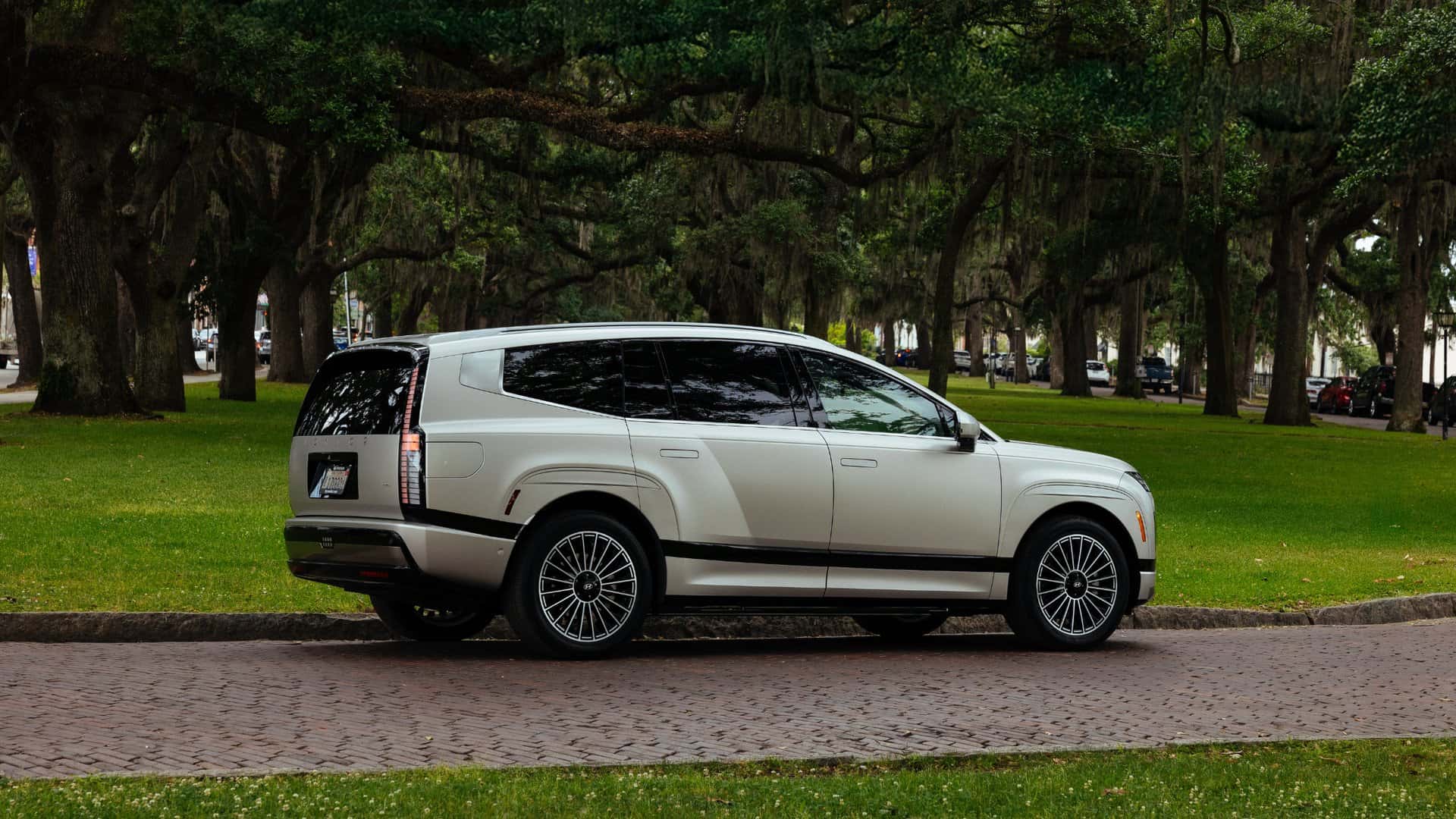
The 2026 Hyundai IONIQ 9 uses a unibody structure constructed primarily from advanced high-strength steel and high-tensile steel. This structure increases rigidity and contributes to passenger safety during collisions. The vehicle dimensions support both stability and interior space. The wheelbase measures 123.2 inches, while the overall length measures 199.2 inches. The vehicle width is 78.0 inches, and the overall height measures 70.5 inches. Ground clearance measures 6.9 inches.
The SUV achieves a drag coefficient as low as 0.269. Aerodynamic efficiency helps reduce energy consumption during highway driving and improves electric driving range.
The suspension system includes a MacPherson® strut configuration in the front and a multi-link five-link system in the rear. Both suspension systems include gas dampers designed to absorb road impacts and maintain consistent ride stability.
Steering performance is controlled through a rack-and-pinion steering system combined with rack-mounted motor-driven power steering. The steering system provides an overall ratio of 16.02 with approximately 2.93 turns from lock to lock. The turning diameter measures 41 feet, curb to curb.
Braking performance uses ventilated disc brakes on both the front and rear axles. The front brakes measure 360 millimeters in diameter and 30 millimeters in thickness. Rear brakes measure 345 millimeters in diameter with a thickness of 20 millimeters. The braking system integrates anti-lock braking functionality, electronic brake-force distribution, and brake assist technology. The vehicle also includes hill-start assist control and an electronic parking brake with automatic vehicle hold.
The regenerative braking system works alongside the mechanical braking system. Steering-wheel-mounted paddles allow the driver to adjust regenerative braking levels to increase energy recovery during deceleration.
Exterior Engineering and Functional Design Elements
The exterior structure of the 2026 Hyundai IONIQ 9 integrates aerodynamic design elements and lighting technologies intended to improve visibility and airflow management. Active air flaps located in the lower front grille adjust automatically to regulate airflow through the vehicle’s cooling system. When cooling demand decreases, the flaps close to improve aerodynamic efficiency.
Lighting systems include LED daytime running lights, LED projector headlights with automatic functionality, and LED taillights. The lighting system also includes LED interior lighting and a center high-mount stop lamp integrated into the rear spoiler.
Exterior mirror systems include heating functionality and integrated LED turn signal indicators. Blind-spot collision-avoidance sensors are integrated within the mirror assemblies. Higher trims include power-folding mirror functionality.
The vehicle uses flush-type automatic door handles designed to sit within the body panels when not in use. This design reduces aerodynamic drag and maintains a clean exterior profile. The door handles deploy automatically when the driver approaches the vehicle.
The exterior also includes rain-sensing windshield wipers, aero-style wiper blades, and a power liftgate with automatic opening capability. Roof side rails are integrated into the roofline to support cargo-carrying accessories. Certain trims include a panoramic sunroof that extends across a large portion of the roof structure.
Wheel sizes vary by trim. Available configurations include 19-inch alloy wheels, 20-inch alloy wheels, and 21-inch alloy wheels paired with performance tires.
Interior Seating Layout and Cabin Configuration
The 2026 Hyundai IONIQ 9 interior is designed for either six-passenger or seven-passenger configurations, depending on trim level. Base configurations include a second-row bench seat, allowing the vehicle to carry seven passengers. Higher trim levels replace the bench seat with second-row power captain’s chairs, which reduce seating capacity to six.
Front seating includes an eight-way power driver seat across all trims. Higher trims include an eight-way power passenger seat and expanded lumbar support adjustment. Heating functionality is standard for the front seats. Ventilated seating is available in higher trim levels.
Second-row captain’s chairs include a four-way power adjustment system and a one-touch walk-in function that allows easier access to the third-row seating area. These seats also include wing-type headrests and extendable leg rests for improved passenger support.
The third-row seating area can be manually folded in lower trims. Higher trims include power-folding functionality that allows the seats to collapse electronically for increased cargo capacity.
Passenger space measures 163.54 cubic feet in seven-passenger configurations. Cargo capacity varies depending on seat arrangement. The vehicle provides 21.9 cubic feet of storage space behind the third row, 46.7 cubic feet behind the second row, and 86.9 cubic feet when both the second and third rows are folded.
Digital Displays, Connectivity Systems, and Interior Technology
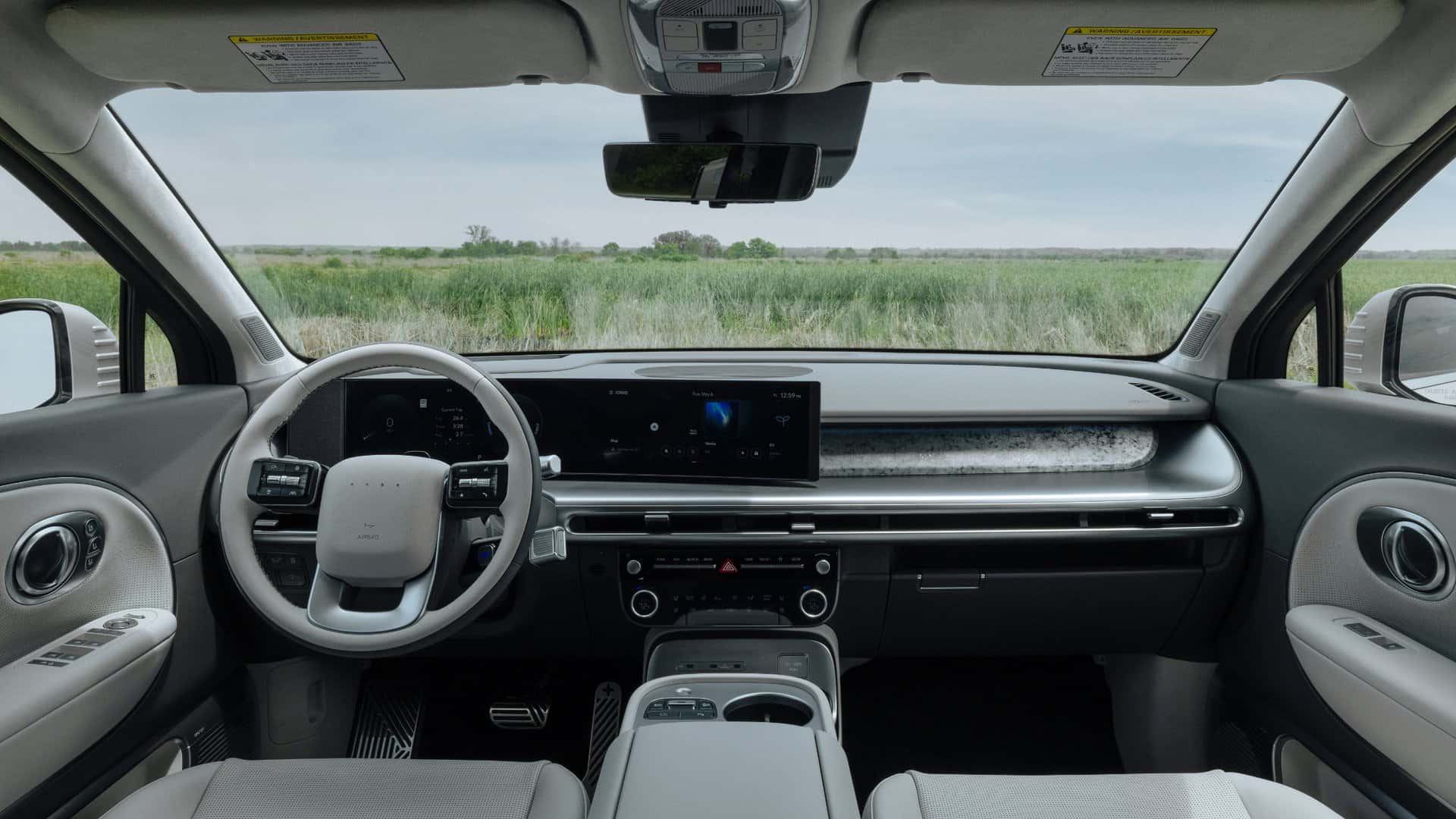
The driver information system includes a 12.3-inch digital instrument cluster that displays driving data, battery charge level, speed, and vehicle status indicators. A second 12.3-inch display functions as the central infotainment screen and includes navigation functionality and media controls.
The infotainment system supports wireless Apple CarPlay® and Android Auto™ connectivity. SiriusXM® satellite radio and HD Radio™ functionality are integrated within the system. Software updates can be delivered through over-the-air update capability.
The audio system includes multiple speaker configurations. Higher trim levels include a Bose® premium audio system engineered to enhance clarity throughout the cabin.
Device connectivity is supported through seven USB Type-C charging ports distributed across all three seating rows. Wireless smartphone charging is integrated into the front center console. Bluetooth® connectivity supports multiple paired devices.
Hyundai integrates the Bluelink® connected vehicle platform within the 2026 Hyundai IONIQ 9. The system allows drivers to access vehicle information and charging status remotely using a smartphone application. The system also supports remote charge control functionality.
Additional convenience features include proximity key entry with push-button start, power windows with automatic up and down functionality, dual-zone automatic climate control, and additional automatic temperature control for the second row. Rear passengers benefit from dedicated air vents in both the second and third rows. A heat pump system improves climate efficiency by reducing energy consumption when heating the cabin.
Advanced Driver Assistance and Safety Systems
The safety architecture of the 2026 Hyundai IONIQ 9 combines passive safety equipment with electronic driver assistance systems. The vehicle includes three-point seatbelts in all seating positions along with seatbelt pretensioners and load limiters in the first, second, and third rows. Child safety locks and power window lockout controls are also included.
The vehicle stability system integrates electronic stability control, traction control, and brake assist to maintain vehicle control during emergency maneuvers. Tire pressure monitoring provides individual tire pressure indicators.
Driver assistance technologies include forward collision avoidance assist capable of detecting vehicles, pedestrians, cyclists, and intersection crossing hazards. The system also includes lane change detection and evasive steering assist functionality.
Lane keeping assist and lane following assist help maintain lane position during highway driving. Highway Driving Assist 2 works together with Smart Cruise Control to maintain safe following distances while supporting semi-automated highway driving behavior.
Additional safety systems include blind-spot collision avoidance assist, rear cross-traffic collision avoidance assist, parking distance warning sensors for forward and reverse movement, and driver attention warning that monitors driver behavior.
Higher trims add advanced parking and visibility features, such as a surround-view monitor and blind-spot view monitor. Remote Smart Parking Assist 2 allows the vehicle to maneuver into parking spaces while the driver operates the system from outside the vehicle.
Schedule a Test Ride Today
Drivers interested in exploring the engineering and technology of the 2026 Hyundai IONIQ 9 can experience the vehicle in person at ALM Hyundai Florence close to Columbia, SC. A scheduled test drive allows visitors to evaluate the electric powertrain, charging capability, and digital technology systems in a controlled driving environment. During the visit, our team will explain the drivetrain configurations, battery system operation, and driver assistance technologies installed in the vehicle. The test drive also provides an opportunity to examine the three-row seating layout and interior technology interfaces directly. Contact our team to arrange a scheduled drive and review the full set of technical features available in the 2026 Hyundai IONIQ 9.