

2026 Hyundai Kona Electric in Florence, SC
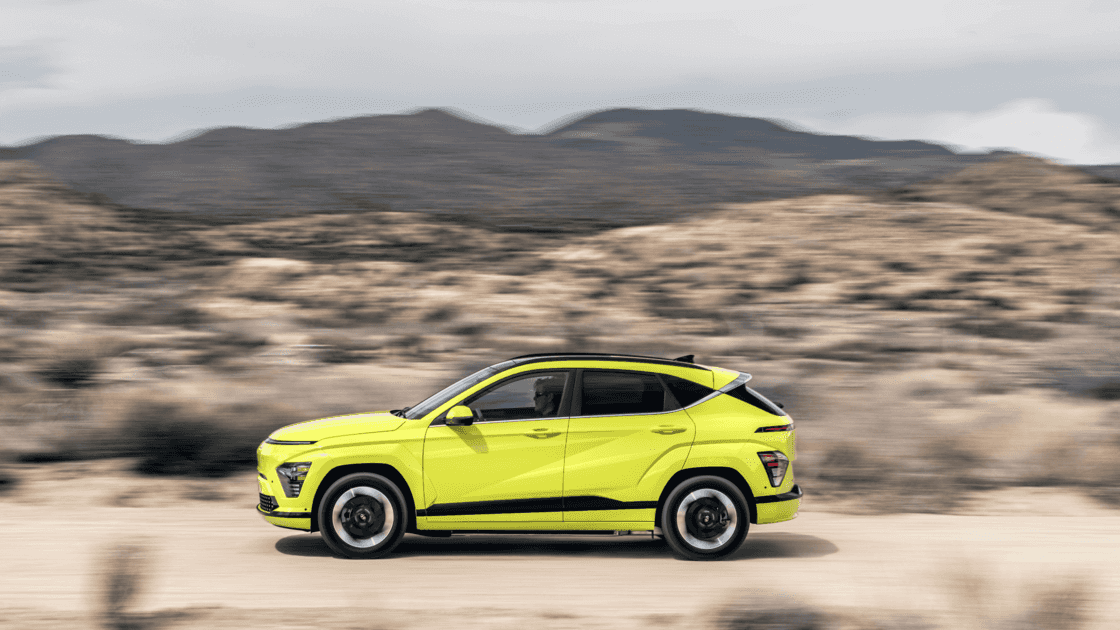
The 2026 Hyundai Kona Electric is engineered as a compact SUV platform designed to balance structural efficiency, mechanical precision, and advanced electronic integration. Its construction relies on a unibody chassis formed from high-tensile steel, supporting torsional rigidity while controlling overall vehicle mass. The platform accommodates both front-wheel-drive and available active on-demand all-wheel-drive configurations, allowing the vehicle to maintain predictable handling characteristics across a variety of operating conditions. Exterior dimensions and interior packaging are optimized to support passenger comfort, cargo flexibility, and aerodynamic efficiency without compromising structural integrity. Every major system in the 2026 Hyundai Kona Electric is configured to operate cohesively, emphasizing controlled performance, stable ride behavior, and consistent system response.
Powertrain Configuration and Output Characteristics
The 2026 Hyundai Kona Electric lineup supports multiple powertrain configurations built around efficient internal-combustion architecture as outlined in the technical documentation. Engine options include a 2.0-liter MPI Atkinson-cycle inline four-cylinder engine and a 1.6-liter turbocharged GDI inline four-cylinder engine, each constructed with aluminum block and head components. The 2.0-liter engine produces 147 horsepower at 6,200 rpm and 132 lb-ft of torque at 4,500 rpm, while the turbocharged 1.6-liter engine generates 190 horsepower at 6,000 rpm and 195 lb-ft of torque available between 1,700 and 4,500 rpm.
Both engines utilize dual continuously variable valve timing to optimize combustion efficiency and torque delivery across the operating range. Fuel delivery systems differ by engine, with the 2.0-liter utilizing multi-point injection and the 1.6-liter employing gasoline direct injection. These configurations are calibrated for regular unleaded fuel and comply with SULEV 30 emissions standards, reinforcing the vehicle’s compliance with regulatory efficiency and emissions requirements.
Transmission Systems and Drive Control Logic
Transmission options for the 2026 Hyundai Kona Electric include an Intelligent Variable Transmission paired with the 2.0-liter engine and an 8-speed automatic torque converter transmission paired with the 1.6-liter turbocharged engine. Both systems are engineered to deliver smooth power transfer while maintaining controlled shift behavior. The Intelligent Variable Transmission continuously adjusts gear ratios to maintain engine efficiency during acceleration and steady-state cruising, while the 8-speed automatic provides defined gear engagement optimized for torque management and throttle response.
Drive Mode Select functionality is integrated into the center console and allows drivers to alter vehicle behavior based on driving conditions. Front-wheel-drive models offer Normal and Sport modes, adjusting throttle mapping and transmission response. All-wheel-drive configurations add a Snow mode, modifying torque distribution and traction control logic to support low-grip surfaces. Paddle shifters are included with applicable transmissions, allowing manual gear selection when equipped.
Drivetrain Architecture and Chassis Design
The drivetrain architecture of the 2026 Hyundai Kona Electric supports both front-wheel-drive and active on-demand all-wheel-drive systems. The all-wheel-drive system automatically distributes torque between the front and rear axles based on traction demands, vehicle speed, and driver input. An available AWD lock function further stabilizes torque distribution in low-traction conditions.
The chassis employs a monocoque unibody design constructed from high-tensile steel, providing a balance of strength and weight efficiency. This structure supports crash energy management, suspension mounting stability, and long-term durability. Ground clearance varies by drivetrain and wheel size, with increased clearance available on all-wheel-drive configurations, supporting moderate off-road capability without compromising on-road stability.
Suspension Geometry and Ride Control
Suspension tuning on the 2026 Hyundai Kona Electric prioritizes controlled ride behavior and predictable handling. The front suspension utilizes a MacPherson® strut layout with coil springs and gas-pressurized shock absorbers, offering consistent wheel control and steering feedback. The rear suspension differs by drivetrain configuration, with front-wheel-drive models employing a coupled torsion beam axle and all-wheel-drive models using a multi-link rear suspension.
Stabilizer bars are incorporated where applicable to reduce body roll during cornering. This suspension architecture supports balanced ride quality across varying road surfaces while maintaining alignment consistency and tire contact. The system is calibrated to manage vehicle mass distribution and suspension travel without excessive pitch or roll during braking and acceleration.
Steering System and Braking Performance
Steering is managed by a column-mounted motor-driven power steering system designed to provide linear response and consistent feedback. The steering ratio supports urban maneuverability, resulting in a curb-to-curb turning diameter of 34.8 feet. Steering input is electronically assisted and adjusted based on vehicle speed to maintain control during both low-speed maneuvers and highway travel.
The braking system consists of four-wheel disc brakes with ventilated front rotors and solid rear rotors. Anti-lock braking is supported by electronic brake-force distribution, ensuring balanced braking pressure under varying load conditions. Additional systems include Hillstart Assist Control, Downhill Brake Control, and an electronic parking brake all contribute to controlled braking behavior during inclines, descents, and stationary conditions.
Exterior Systems and Functional Design Elements
Exterior components of the 2026 Hyundai Kona Electric are engineered for durability, visibility, and aerodynamic efficiency. LED projector headlights, LED daytime running lights, and LED taillights provide consistent illumination while reducing power draw. High Beam Assist automatically adjusts headlight output to avoid glare while maintaining forward visibility.
Active grille shutters are integrated into the front fascia to reduce aerodynamic drag at cruising speeds. Wheel options include 17-inch, 18-inch, and 19-inch alloy wheels paired with tire sizes calibrated for ride comfort and traction. Roof rails are available to support additional cargo capacity, and privacy glass is applied to rear and quarter windows to reduce solar heat intrusion.
Interior Configuration and Seating Architecture
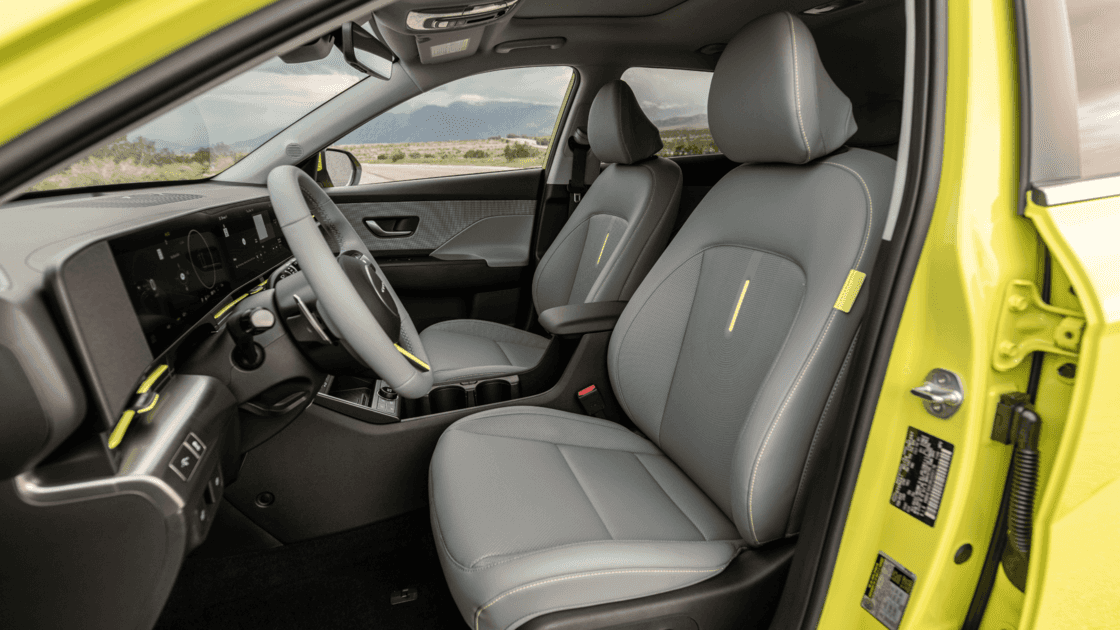
The interior of the 2026 Hyundai Kona Electric is designed to maximize space utilization and functional ergonomics. Seating capacity accommodates five occupants, with available cloth or H-Tex® trimmed seating surfaces depending on configuration. Front seats offer manual or power adjustment, including available lumbar support, height adjustment, and heating or ventilation on select trims.
Rear seating features a 60/40 split-folding seatback with adjustable head restraints and a recline function. This configuration supports flexible cargo and passenger arrangements. A dual-level cargo floor enhances storage adaptability, and tie-down anchors are integrated to secure cargo during transport.
Digital Interfaces and Infotainment Systems
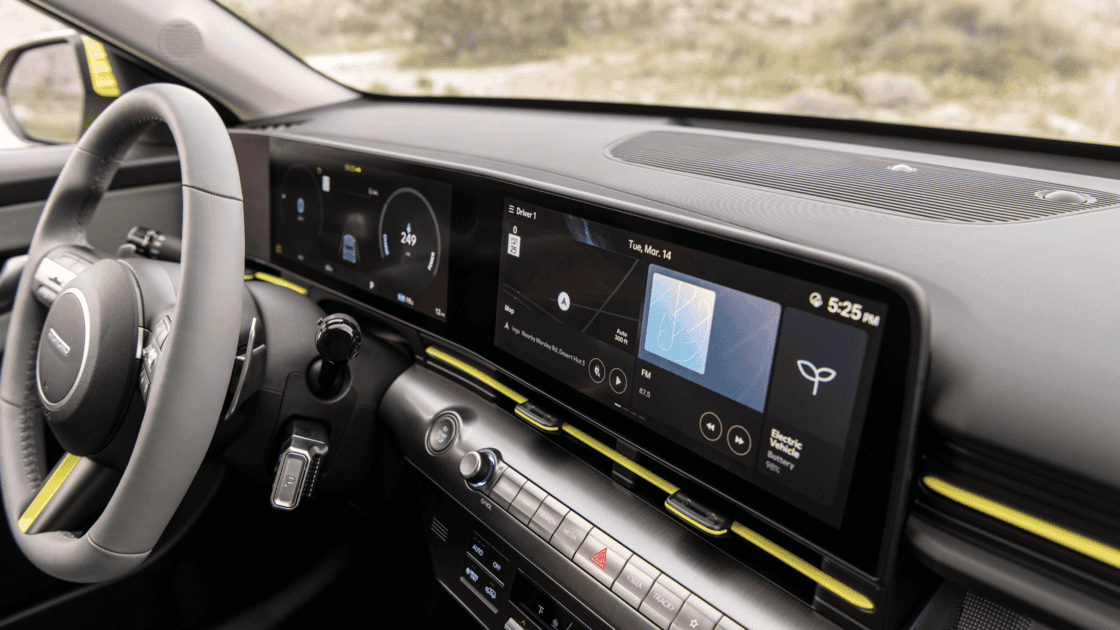
The infotainment system in the 2026 Hyundai Kona Electric centers on a 12.3-inch touchscreen interface with high-resolution display output. The system supports AM and FM radio, SiriusXM®, HD Radio™, wireless Android Auto™, and wireless Apple CarPlay®. Navigation functionality is available on select configurations, integrating routing data with driver assistance systems.
Audio output is delivered through a standard multi-speaker setup, with an available premium audio system featuring external amplification and additional speakers. USB-C ports are positioned in both front and rear seating areas, supporting device charging and data connectivity. Wireless device charging is included on applicable trims, reducing cable dependence within the cabin.
Climate Control and Cabin Environment Systems
Climate control systems include automatic temperature control with integrated defogging functionality. Rear seat air vents improve airflow distribution for rear passengers. A PTC heater supports cold-weather operation, and cabin air filtration improves interior air quality. Heated steering wheel functionality is available, and HVAC controls are positioned for intuitive access without driver distraction.
Advanced Driver Assistance and Safety Architecture
Safety systems in the 2026 Hyundai Kona Electric encompass both active and passive technologies. Active safety features include Forward Collision-Avoidance Assist with pedestrian and cyclist detection, Blind-Spot Collision Avoidance Warning, Rear Cross-Traffic Collision Avoidance Assist, Lane Keeping Assist, Lane Following Assist, and Driver Attention Warning. Intelligent Speed Limit Assist and Highway Driving Assist are available on select trims.
Passive safety systems include advanced front airbags, side-impact airbags, side curtain airbags with rollover sensors, reinforced crumple zones, and bodyside reinforcements. Rear Occupant Alert and Safe Exit Warning enhance awareness during passenger entry and exit, while electronic stability control and traction control support vehicle stability under dynamic conditions.
Dimensions, Interior Space, and Cargo Capacity
The 2026 Hyundai Kona Electric features a wheelbase of 104.7 inches, supporting stable handling and interior space optimization. Overall length measures 171.3 inches, with a width of 71.9 inches. Interior dimensions provide ample headroom, legroom, shoulder room, and hip room for both front and rear occupants.
Cargo capacity measures 25.5 cubic feet with rear seats upright and expands to 63.7 cubic feet with the rear seats folded. Roof rails support a load capacity of up to 220 pounds, further enhancing cargo flexibility for transport needs.
Visit ALM Hyundai Florence in Florence, SC
Drivers seeking a closer evaluation of the 2026 Hyundai Kona Electric can arrange a test drive at ALM Hyundai Florence in Florence, SC. A scheduled visit allows prospective owners to assess drivetrain responsiveness, steering precision, and braking performance under controlled conditions. The test drive experience also provides an opportunity to review digital interfaces, safety systems, and cabin ergonomics in operation. Dealership staff can assist with detailed explanations of powertrain configurations, drivetrain options, and available technologies. Scheduling a test drive offers a direct way to examine how the vehicle’s engineering translates into daily driving performance.