

2026 Hyundai Kona near Myrtle Beach, SC
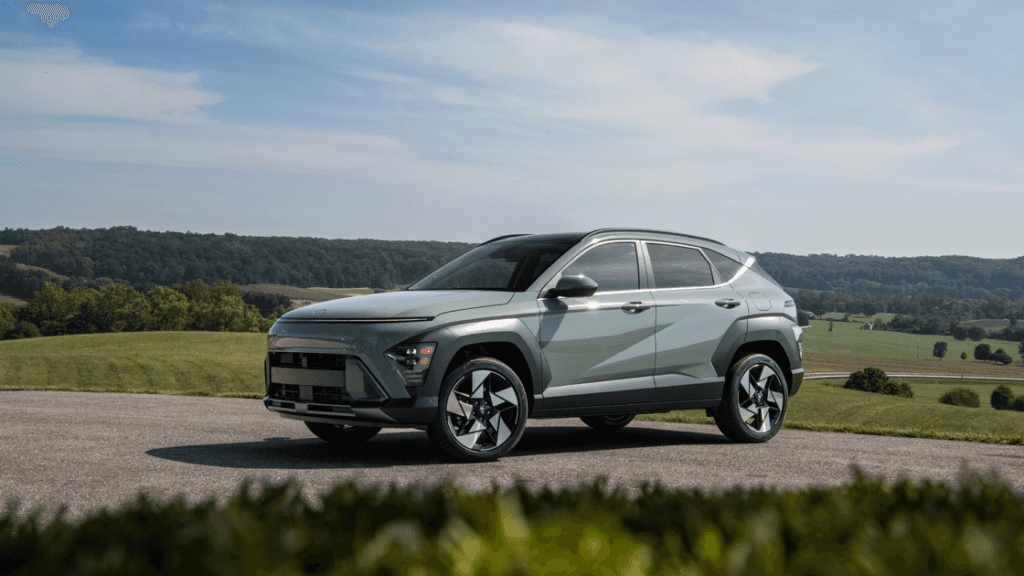
The 2026 Hyundai Kona is structured around measurable technical improvements that define its performance, capability, and operational efficiency. Its design reflects a focus on engineering consistency through a unibody construction reinforced with high-tensile steel. The model features two engine families, multiple transmission configurations, and a range of digital and mechanical systems that support functionality across all trims. Every specification contributes to a compact SUV engineered for precision in power delivery, interior technology, safety integration, and structural durability. The following sections detail the technical characteristics of the 2026 Hyundai Kona with a strict factual approach, ensuring an accurate reflection of the information provided in the reference materials.
Comprehensive Powertrain Mechanical Structure
The 2026 Hyundai Kona features two engines developed to support different power requirements. The 2.0-liter MPI Atkinson cycle inline four-cylinder is part of the Nu PE engine family. It produces 147 horsepower at 6200 rpm and 132 pound-feet of torque at 4500 rpm. This configuration uses Dual Continuously Variable Valve Timing and a Multi Point Injection fuel system. The engine holds a displacement of 1999 cubic centimeters with a 12.5 to 1 compression ratio. Regular unleaded fuel is recommended. The block and head are aluminum, and the engine includes a full cover along with a standard hood insulator.
The second powertrain option is the 1.6-liter Turbo GDI inline four-cylinder from the Gamma II family. It produces 190 horsepower at 6000 rpm and 195 pound-feet of torque across 1700 to 4500 rpm. It incorporates a Gasoline Direct Injection system and turbocharging. Displacement is 1598 cubic centimeters with a 10.0 to 1 compression ratio. The engine includes a semi-full cover and uses regular unleaded fuel. Both engines use distributorless ignition and are supported by electrical components such as a 12-volt starter rated at 1.2 kilowatts for the 2.0-liter version and 0.9 kilowatts for the 1.6-liter version, along with alternator systems rated at 13.5 volts.
Drive Systems and Transmission Engineering
The 2026 Hyundai Kona offers front-wheel drive or available all-wheel drive with Active On Demand operation. Drive Mode Select is mounted on the center console. Front-wheel-drive configurations provide Normal and Sport modes. All-wheel-drive versions add a Snow mode. The 2.0-liter engine pairs with an Intelligent Variable Transmission featuring shift by cable with SHIFTRONIC® manual shift mode. The 1.6-liter turbo engine connects to an 8-speed automatic torque converter transmission with shift-by-wire and paddle shifters on higher trims.
Gear ratios differ between the two powertrains to match torque curves and performance characteristics. The 2.0-liter ranges from 2.680 in first gear to 0.385 at the highest ratio with a final drive of 6.052. The 1.6-liter turbo ranges from 4.717 in first gear to 0.635 in eighth gear with a final drive of 3.510. These ratios create distinctive acceleration behavior and efficiency patterns appropriate for each engine’s output and intended use.
Brake Systems and Chassis Control Features
Brake engineering includes ventilated front discs sized up to 12.0 inches depending on configuration, along with solid 11.2-inch rear discs. Systems include ABS with Electronic Brake Force Distribution along with traction-enhancing technologies such as Downhill Brake Control and Hillstart Assist Control. The 2026 Hyundai Kona uses a single 10.5-inch left-hand-drive brake booster with a 9.0 to 1 boosting ratio. The parking brake is electronic.
Steering uses a column-mounted motor-driven power steering unit with a 13.6 overall ratio and 2.5 turns lock to lock. Turning diameter is 34.8 feet, which supports maneuverability in compact driving environments. These specifications contribute to predictable input response and consistent brake management across driving conditions.
Suspension Configuration and Structural Elements
The suspension system features a MacPherson® strut layout with coil springs and gas-pressurized shock absorbers in the front. Rear suspension differs between drive types. Front-wheel-drive models use a coupled torsion beam axle. All-wheel-drive models use a multi-link design with gas-pressurized shock absorbers and a stabilizer bar. The vehicle’s structural design uses a monocoque body built with high-tensile steel for rigidity and controlled deformation characteristics.
Exterior Engineering and Functional Components
The 2026 Hyundai Kona offers wheel sizes consisting of 17-inch alloys with 215/60R17 tires on lower trims, 18-inch alloys with 215/55R18 tires on mid trims, and 19-inch alloys fitted with 235/45R19 tires on upper trims. All-wheel-drive trims include a compact temporary spare, while front-wheel-drive versions feature a Tire Mobility Kit on specific trims.
Exterior lighting includes LED projector headlights, LED daytime running lights, LED taillights, LED center high mount stop lamps, automatic headlights, and High Beam Assist. Side mirrors vary by trim with body color or gloss black finishes. Features may include heating and turn signal indicators. Bumpers are body colored with active grille shutters on all versions. Moldings and door garnishes differ by trim with textured black or black finishes and satin chrome on the Limited. All trims include a shark fin antenna. The Limited trim adds a power tilt and slide sunroof and a hands-free smart liftgate with auto open.
Exterior dimensions include a 104.7-inch wheelbase and an overall length of 171.3 inches. Width is 71.9 inches. Tread widths vary slightly by wheel size and drive configuration. Ground clearance ranges from 6.7 inches to 8.3 inches. The lowest coefficient of drag is 0.302. Roof rails hold up to 220 pounds.
Interior Configuration and Functional Design
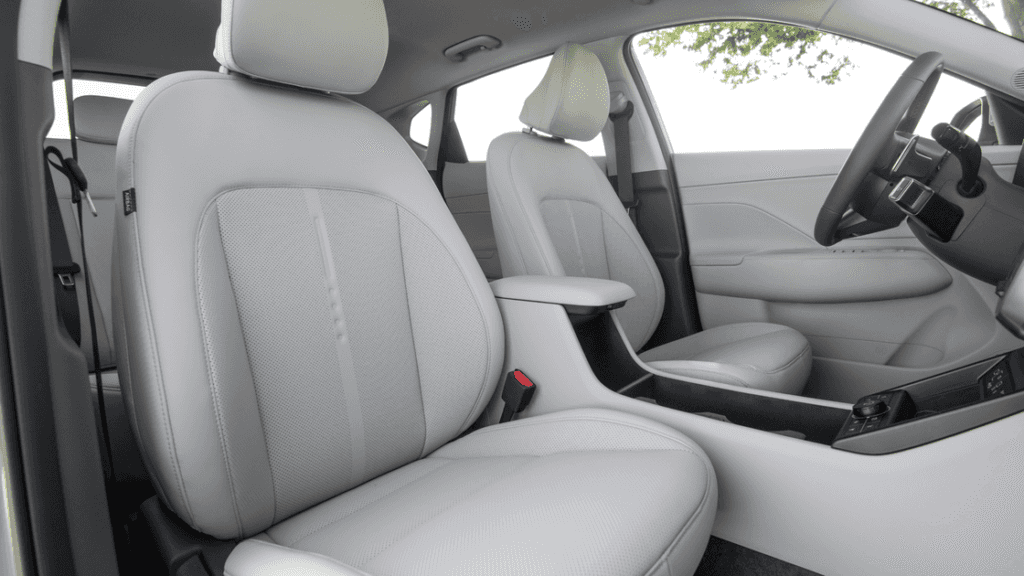
Seating capacity is five across all trims. Lower trims include cloth upholstery, and upper trims use H-Tex® trimmed seating. Seat adjustment varies with the availability of a 6-way manual driver seat or an 8-way power driver seat with power lumbar support. Heated and ventilated front seats appear in upper trims. Rear seating includes a 60/40 split flat-folding seatback with adjustable head restraints and a recline feature. A dual-level cargo floor is standard across trims.
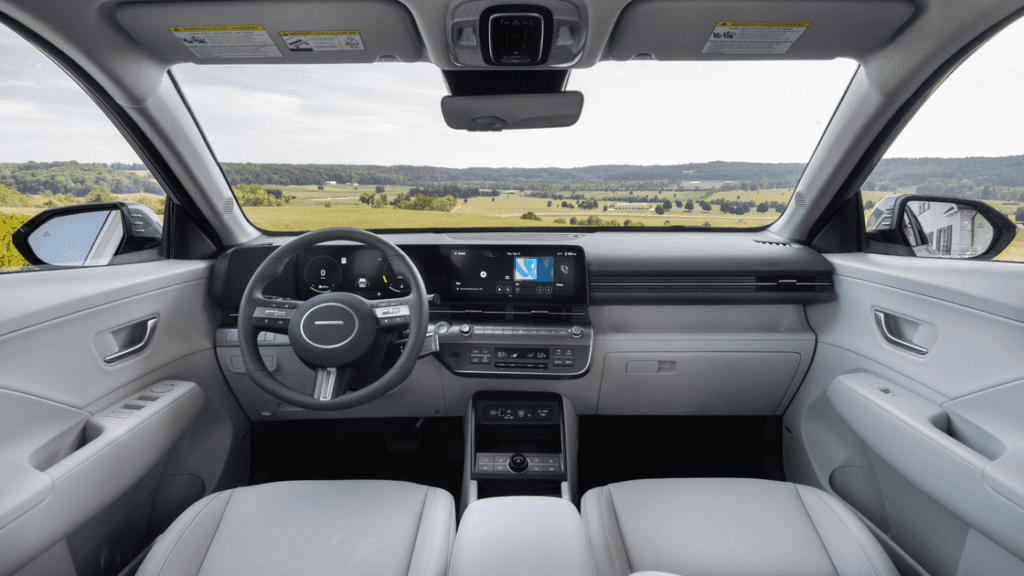
Infotainment systems include a 12.3-inch touchscreen audio unit with AM/FM SiriusXM® HD Radio™ and 6 speakers on lower trims. The Limited includes a 12.3-inch touchscreen with navigation and a Bose® premium audio system with eight speakers and an external amplifier. All trims support wireless Android Auto™ and Apple CarPlay® along with front and rear USB-C outlets. Rear view monitor with parking guidance is standard. The Surround View Monitor appears on the Limited. Wireless device charging is available starting at SEL.
Interior materials include knit headliners and premium soft-touch door panels on upper trims. LED interior lighting is available as well as ambient lighting above the glovebox and within front door storage areas. HVAC systems include air conditioning with auto defog, rear seat heater ducts, a PTC heater, and a cabin air filter. Rear window defroster with a timer is standard. Steering wheel features include leather wrapping, manual tilt and telescoping adjustment, audio controls, Bluetooth® controls, and smart cruise controls.
Instrumentation includes a gauge cluster with speedometer, tachometer, coolant temperature, fuel level, and digital odometer. Upper trims add a 12.3-inch digital instrument cluster. Indicators and warning lamps cover gear position, cruise control, lighting, braking, stability systems, and multiple safety warnings. Adjustable illumination is provided on all trims.
Safety and Security Systems
Airbag protection includes advanced front airbags, front passenger occupant classification sensors, driver and passenger side impact airbags, side air curtains with rollover sensors, and pretensioners with load limiters for front and rear outboard positions. Structural protections include a front crumple zone, bodyside reinforcements, and 2.5-mile-per-hour bumpers. Safety locks and child seat anchors are included.
Active safety technologies include ABS with four-wheel disc brakes, Electronic Stability Control, Traction Control, Brake Assist, Vehicle Stability Management, and Tire Pressure Monitoring with individual tire indicators. Driver assistance features include Blind Spot Collision Avoidance Warning, Rear Cross Traffic Collision Avoidance Assist, Forward Collision Avoidance Assist with pedestrian, cyclist, junction turning, and direct oncoming detection, Lane Keeping Assist, Lane Following Assist, Intelligent Speed Limit Assist, Driver Attention Warning, High Beam Assist, Rear Occupant Alert, and Safe Exit Warning. The Limited trim adds Parking Distance Warning, Highway Driving Assist I, and Blind Spot View Monitor.
Dimensions and Capacities
Interior measurements include front headroom of 39.9 inches or 38.3 inches with a sunroof and rear headroom of 38.3 inches. Legroom is 41.7 inches in front and 38.2 inches in the rear. Shoulder room is 56.8 inches in front and 55.2 inches in the rear. Hip room is 54.3 inches in front and 52.4 inches in the rear. Fuel tank capacity is 12.4 gallons for the 2.0-liter engine and 13.2 gallons for the 1.6-liter turbo. Passenger volume reaches 101.2 cubic feet. Cargo capacity is 25.5 cubic feet with the seats up and 63.7 cubic feet with the seats folded.
Visit ALM Hyundai Florence near Myrtle Beach, SC
Drivers who want to evaluate the performance and engineering of the 2026 Hyundai Kona can benefit from experiencing its engine behavior, digital systems, and safety features in operation. A test drive offers a clear view of how its powertrains respond under different driving modes and how the interior technology integrates into daily use. It also provides the opportunity to observe the visibility, cabin structure, and chassis behavior in motion. Our team is available to assist in arranging a drive that focuses on the specifications and capabilities of the 2026 Hyundai Kona. We welcome you to schedule a visit and explore the model in person at ALM Hyundai Florence near Myrtle Beach, SC.