

2026 Hyundai Palisade in Florence, SC

The 2026 Hyundai Palisade is engineered as a full-size SUV with a clear emphasis on mechanical integrity, drivetrain versatility, structural strength, and integrated vehicle systems. The model is offered with two distinct powertrain configurations, each developed to meet different operational requirements while maintaining consistent performance standards. Across all trims, the 2026 Hyundai Palisade relies on a unibody chassis constructed from high-strength steel, combined with advanced suspension geometry, electronic control systems, and comprehensive safety technologies. The vehicle’s dimensions, capacities, and component specifications reflect a design approach focused on stability, passenger accommodation, and towing capability.
Engine Configurations and Output Characteristics
The 2026 Hyundai Palisade is available with a naturally aspirated 3.5-liter V6 internal combustion engine or a 2.5-liter turbocharged hybrid powertrain. The 3.5-liter V6 uses a dual fuel injection strategy combining Multi-Point Injection and Gasoline Direct Injection. It features a DOHC 24-valve configuration and an aluminum block and cylinder heads to reduce overall engine weight. Displacement measures 3,470 cubic centimeters, with a bore and stroke of 92.0 by 87.0 millimeters. The compression ratio is set at 12.3:1, supporting efficient combustion on regular unleaded fuel. Maximum output is rated at 287 horsepower at 6,400 rpm, with peak torque of 260 pound-feet available at 5,000 rpm. Idle Stop and Go functionality is included to reduce fuel usage during stationary operation.
The hybrid powertrain combines a 2.5-liter Turbo-GDI inline four-cylinder engine with a dual electric motor system. Engine displacement is 2,497 cubic centimeters, supported by a compression ratio of 12.0:1. The hybrid system integrates a permanent magnet synchronous motor arrangement, designated as P1 and P2 motors. The P2 motor provides up to 195 pound-feet of torque at approximately 1,900 rpm, supporting low-speed acceleration and load management. Total system output reaches 329 horsepower with a combined torque of 339 pound-feet. Electrical energy is stored in a lithium-ion battery operating at 300 volts, with a capacity of 1.65 kilowatt-hours. Battery power output is rated at 64 kilowatts, enabling smooth transitions between electric and combustion power sources.
Transmission Architecture and Drive Systems
The V6-equipped 2026 Hyundai Palisade utilizes an 8-speed automatic transmission with electronically controlled shift logic. Gear ratios are optimized for both acceleration and cruising efficiency, with a final drive ratio of 3.510 for front-wheel-drive models and 3.648 for all-wheel-drive configurations. Shift-by-wire operation is standard, paired with steering-wheel-mounted paddle shifters for manual gear selection. The hybrid variant uses a 6-speed automatic transmission integrated with the electric motor system, designated TMED-II, allowing coordinated torque delivery between the combustion engine and electric motors.
Front-wheel drive is standard across the lineup, while the HTRAC active on-demand all-wheel-drive system is available and standard on XRT PRO models. HTRAC dynamically distributes torque between the front and rear axles based on traction conditions. Drive Mode Select includes Eco, Sport, and My Drive settings, while all-wheel-drive models add Terrain Modes for Mud, Snow, and Sand. A dedicated Tow Mode is included to optimize throttle response, transmission behavior, and stability control when hauling loads.
Towing Capability and Load Management Systems
Towing performance is a defined component of the vehicle’s engineering. When properly equipped, the V6 model supports a maximum trailer weight of 5,000 pounds with trailer brakes, while the hybrid configuration is rated for up to 4,000 pounds. Without trailer brakes, towing capacity is limited to 1,650 pounds. All trims include standard trailer pre-wiring and heavy-duty engine and transmission oil coolers. Trailer sway control is integrated into the electronic stability management system, and an available factory-installed tow hitch and integrated trailer brake controller support controlled towing performance.
Suspension, Steering, and Braking Systems
The 2026 Hyundai Palisade uses a MacPherson® strut front suspension with coil springs and a stabilizer bar. The rear suspension is a multi-link independent design with separated springs and shocks, paired with a self-leveling function to maintain ride height under varying cargo or passenger loads. This configuration supports consistent handling characteristics and ride stability.
Motor Driven Power Steering is rack-and-pinion based, with a steering ratio of 14.3:1 on most trims and 13.3:1 on XRT PRO models. Steering response is calibrated to balance low-speed maneuverability with highway stability. Turning diameter measures approximately 39.2 feet curb to curb.
Braking hardware consists of ventilated front disc brakes measuring 345 millimeters by 30 millimeters and solid rear discs measuring 325 millimeters by 20 millimeters. Anti-lock Braking System operation is supported by Electronic Brake-force Distribution, Brake Assist, Hillstart Assist Control, and an electronic parking brake with automatic vehicle hold functionality.
Exterior Dimensions and Structural Specifications
The 2026 Hyundai Palisade rides on a 116.9-inch wheelbase. Overall length measures approximately 199.2 inches for most trims and up to 200.4 inches for XRT PRO variants. Overall width is 78.0 inches, while height measures approximately 69.5 inches. Ground clearance ranges from 7.4 inches on standard models to 8.4 inches on XRT PRO trims. Roof rails are rated to support up to 220 pounds of static load.
Exterior components include LED headlights, LED daytime running lights, LED rear combination lamps, and automatic headlight control with high-beam assist. Acoustic windshield glass and acoustic side glass on select trims reduce wind and road noise. Wheel options range from 18-inch to 21-inch alloy designs, paired with tire sizes appropriate to each configuration. A hands-free smart liftgate with adjustable height is standard, supporting cargo access efficiency.
Interior Space and Seating Engineering
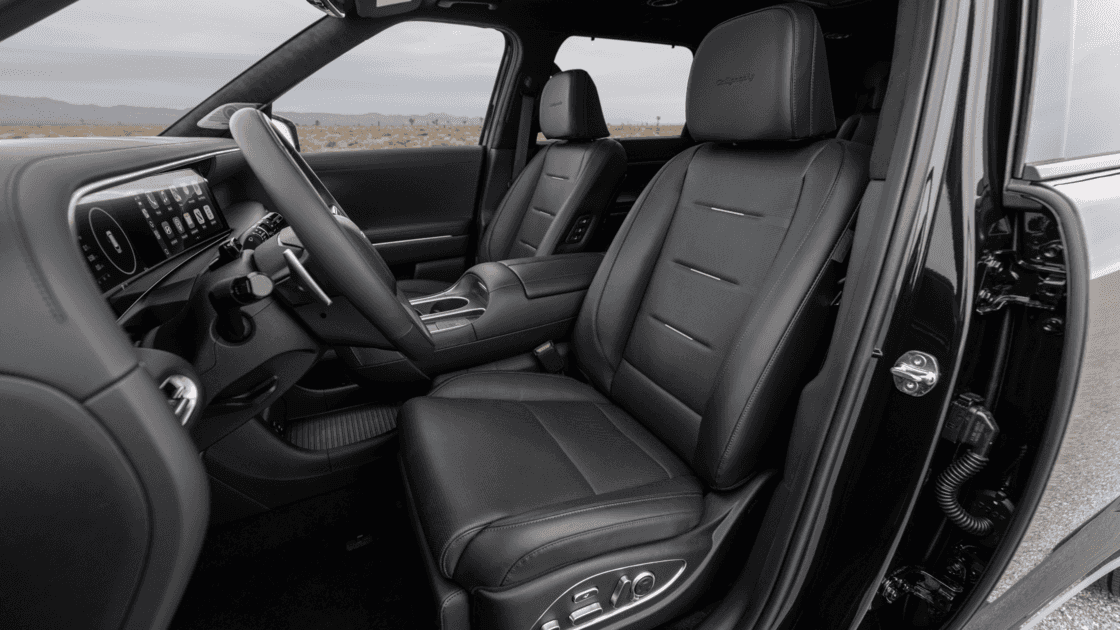
Interior design prioritizes passenger capacity and adjustability. Seating configurations support seven or eight occupants depending on trim and second-row layout. Materials range from cloth and H-Tex® leatherette to leather-trimmed seating and premium Nappa leather on upper trims. Front seats provide up to 8-way power adjustment, with available 4-way lumbar support, ventilation, heating, and integrated memory systems. Select trims include Ergo-Motion seating, leg cushion extension, and Relaxation Mode.
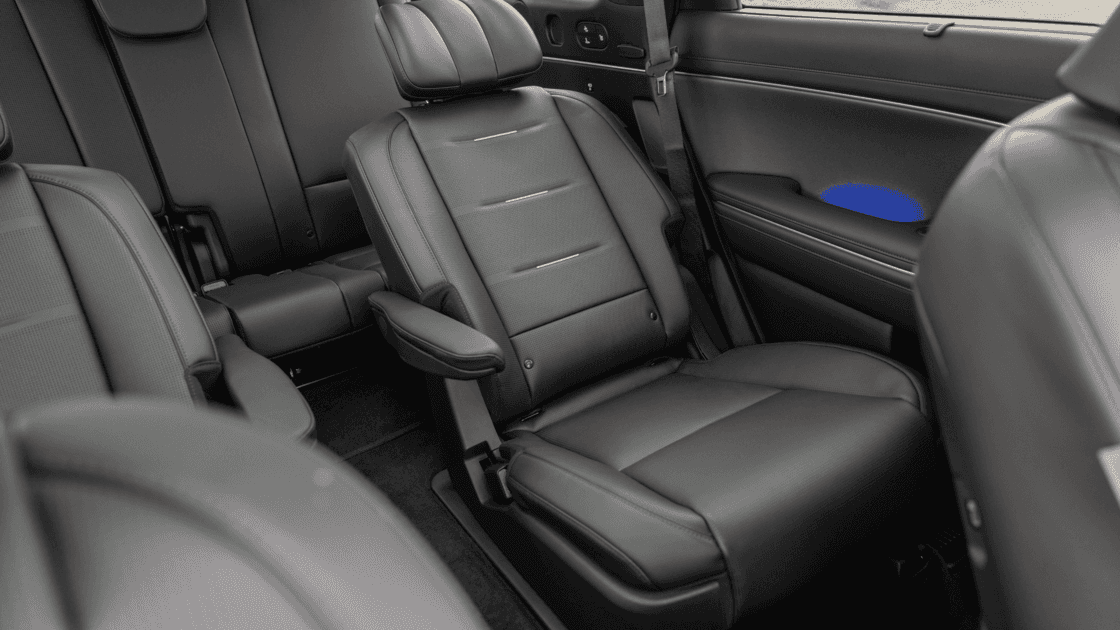
Second-row seating includes sliding and reclining functionality, with available captain’s chairs offering heating and ventilation. Power-adjustable second-row seats are included on higher trims. Third-row seating features a 60-40 split-fold design with available power folding, reclining, sliding, and heating functions. Cargo volume measures 19.1 cubic feet behind the third row, 46.3 cubic feet behind the second row, and up to 86.7 cubic feet with rear seats folded. Underfloor storage compartments support organized cargo management.
Digital Displays and Infotainment Systems
The 2026 Hyundai Palisade includes a 12.3-inch color touchscreen with integrated navigation across all trims. Wireless Apple CarPlay® and Android Auto™ compatibility is standard, supporting smartphone integration without physical connections. Audio output is handled by a standard system or an available Bose® 14-speaker premium audio system featuring Centerpoint and SoundTrue enhanced processing.
The digital instrument cluster displays vehicle status information, driver assistance indicators, and system alerts. Available features include a 12-inch color head-up display, surround view monitor, blind-spot view monitor, and a built-in front and rear dashcam system. Multiple high-power USB-C ports are installed across all three seating rows to support device charging.
Climate Control and Cabin Systems
The 2026 Hyundai Palisade uses a three-zone automatic climate control system with integrated auto-defog functionality. Air vents are distributed across all seating rows, with separate second-row HVAC controls. A PTC heater supports cabin warming efficiency, particularly in colder operating conditions. The steering wheel is leather-wrapped and available with heating and haptic feedback, along with integrated controls for audio, cruise control, and driver information systems.
Safety Engineering and Driver Assistance Technologies
Safety systems are integrated across all trims. The restraint system includes advanced front airbags, a front center airbag, a driver knee airbag, side-impact airbags for front and second-row occupants, and full-length side curtain airbags with rollover sensors. Seatbelt pretensioners and load limiters are installed for all three rows.
Active safety technologies include Forward Collision-Avoidance Assist with pedestrian and cyclist detection, Lane Keeping Assist, Lane Following Assist 2, Driver Attention Warning, Intelligent Speed Limit Assist, and Smart Cruise Control with Stop and Go functionality. Select trims add Highway Driving Assist II, Blind-Spot Collision-Avoidance Assist, Parking Collision-Avoidance Assist, Safe Exit Assist, and Advanced Rear Occupant Alert using radar detection.
Visit ALM Hyundai Florence to Schedule a Test Ride
Drivers interested in evaluating the 2026 Hyundai Palisade can benefit from experiencing its drivetrain response, steering calibration, and integrated safety systems during a scheduled test drive. Observing how the powertrain configurations manage acceleration, towing preparation, and daily driving conditions provides valuable insight into the vehicle’s engineering balance. The interior layout and digital interfaces can also be assessed directly during on-road operation. At ALM Hyundai Florence in Florence, SC, test drives are available to allow a detailed evaluation of the technical features and overall performance characteristics of the 2026 Hyundai Palisade. Scheduling a visit offers the opportunity to examine how the vehicle’s specifications translate into controlled and predictable operation.