

2026 Hyundai Santa Cruz near Conway, SC
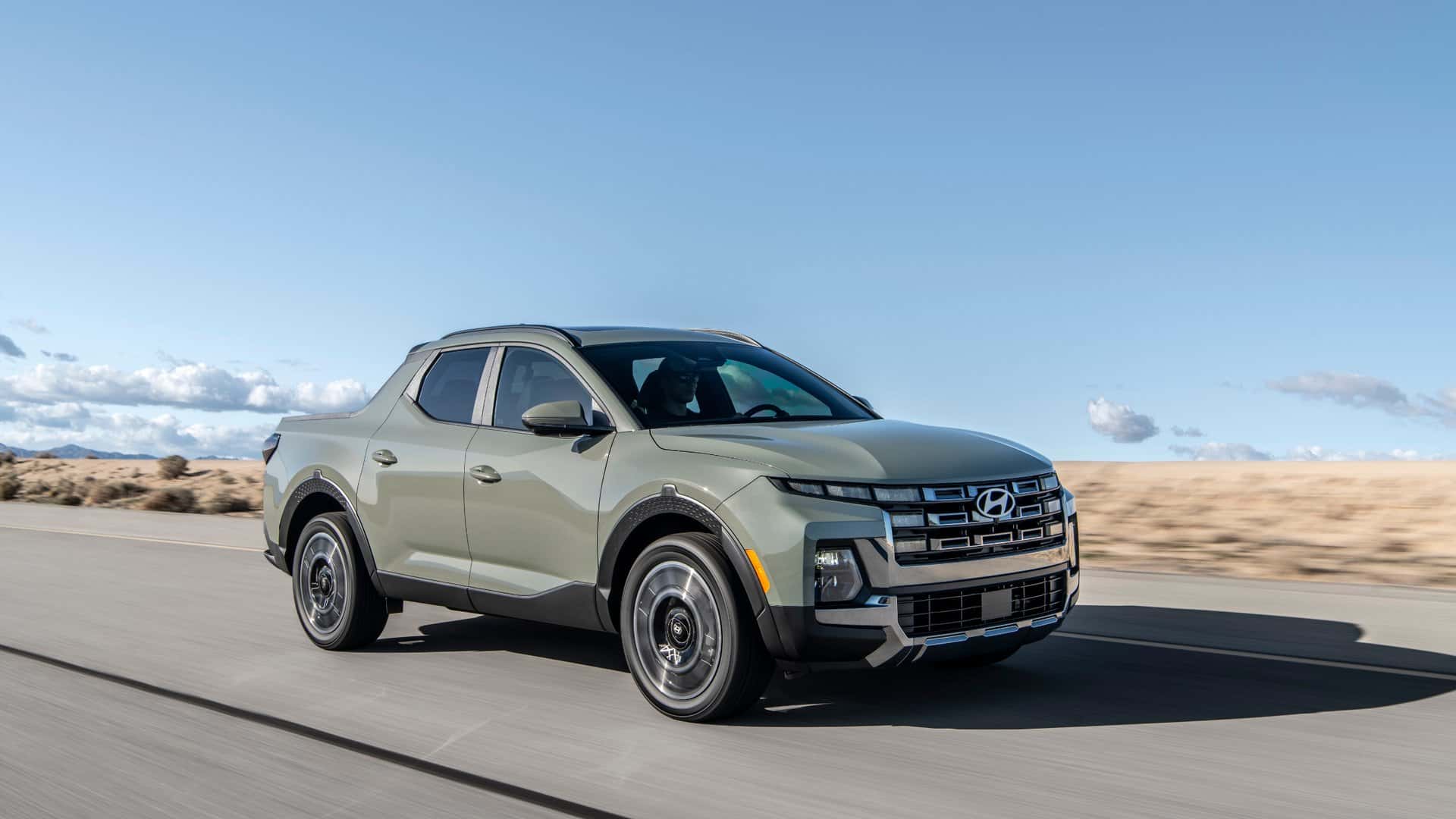
The 2026 Hyundai Santa Cruz combines a unibody chassis with pickup functionality, creating a vehicle that integrates passenger comfort with cargo capability. Its structural design differs from traditional body-on-frame trucks, using advanced high-strength steel and high-tensile materials to improve rigidity and reduce weight. The model supports both front-wheel drive and all-wheel drive configurations, paired with a standard 8-speed automatic transmission. With two available engines and a range of integrated utility features, the 2026 Hyundai Santa Cruz focuses on mechanical precision and functional design. The platform supports a five-passenger cabin and a composite cargo bed, aligning interior space with external utility.
Engine Architecture and Output Specifications
The 2026 Hyundai Santa Cruz offers two engine configurations within the Smartstream® engine family. The standard engine is a 2.5-liter GDI plus MPI inline four-cylinder with dual overhead camshafts and 16 valves. This engine produces 191 horsepower at 6,100 rpm and 181 lb-ft of torque at 4,000 rpm. It uses continuously variable valve timing to adjust intake and exhaust flow, improving combustion efficiency. The bore and stroke measure 85.5 mm by 101.5 mm, with a compression ratio of 13.0.
The available turbocharged engine maintains the same displacement of 2,497 cc but incorporates a turbocharged intake system. This configuration increases output to 281 horsepower at 5,800 rpm and 311 lb-ft of torque between 1,700 and 4,000 rpm. The compression ratio for this engine is 10.5, reflecting forced induction requirements. Both engines use aluminum block and head construction, reducing overall weight and aiding thermal management. Each configuration operates on regular unleaded fuel and meets ULEV emissions standards.
Ignition is managed through a distributorless system, and both engines use a 12-volt starter rated at 1.2 kW. The alternator system is rated at 13.5 volts and 150 amps, supporting onboard electronics and charging systems. The exhaust system uses a single outlet design, maintaining consistent flow characteristics across trims.
Transmission, Drive Systems, and Gear Ratios
All Hyundai Santa Cruz models use an 8-speed automatic transmission with a torque converter. Gear ratios differ between the naturally aspirated and turbocharged configurations. The standard engine uses a final gear ratio of 4.081, while the turbocharged version uses a 3.51 ratio. These differences affect acceleration and fuel efficiency characteristics.
Front-wheel drive is standard on the base configuration, while Hyundai’s HTRAC all-wheel-drive system is available or standard depending on the trim. The system actively distributes torque between the front and rear axles, adjusting to traction conditions. A drive mode selector is mounted on the center console, allowing drivers to adjust vehicle response characteristics. The XRT trim includes a terrain mode select system, enhancing control on varied surfaces.
Reverse gear ratios differ between configurations, with the standard engine using a ratio of 3.081 and the turbocharged version using 3.425. The eight forward gears are calibrated to balance acceleration and fuel efficiency, with higher gears supporting highway driving conditions.
Chassis Construction and Suspension Geometry
The 2026 Hyundai Santa Cruz uses a monocoque body structure, integrating the frame and body into a single unit. This design improves torsional rigidity and reduces structural flex. The chassis uses advanced high-strength steel in critical areas, improving durability and occupant protection.
The front suspension uses a MacPherson® strut configuration with coil springs and gas-pressurized shock absorbers. This setup supports consistent wheel control and reduces vibration transfer. The rear suspension uses a multi-link design with self-leveling capability. This system maintains ride height under varying load conditions, improving stability during cargo transport.
Steering is controlled through a motor-driven power steering system with a rack-and-pinion layout. The steering ratio is 14.2, with 2.62 turns from lock to lock. The turning diameter measures 39.6 feet, supporting maneuverability in confined spaces.
Braking Systems and Stability Control
The braking system includes ventilated front disc brakes measuring 12.8 inches in diameter and 1.2 inches in thickness. The rear brakes use solid discs with a diameter of 12.8 inches and a thickness of 0.5 inches. The system incorporates anti-lock braking with electronic brake-force distribution across four wheels.
Additional control systems include Downhill Brake Control, Hill Start Assist control, and Brake Assist. These features improve control during steep descents and prevent rollback on inclines. The electronic parking brake includes an automatic vehicle hold function, maintaining position without continuous pedal input.
Exterior Lighting, Wheels, and Structural Features
The exterior includes Bi-LED projector headlights with integrated high and low beams. LED daytime running lights and LED taillights improve visibility and energy efficiency. Automatic headlights and high beam assist adjust lighting conditions based on ambient light and surrounding traffic.
Wheel configurations include 18-inch alloy wheels with 245/60R18 tires and available 20-inch alloy wheels with 245/50R20 tires. A temporary spare tire is included. The exterior also incorporates roof side rails, a shark-fin antenna, and optional roof cross rails.
Side mirrors include integrated turn signal indicators and blind-spot monitoring indicators. Heated mirrors are available on higher trims. Privacy glass is used on rear windows, while solar glass is applied to the windshield and front door windows. An acoustic laminated windshield reduces noise transmission into the cabin.
Integrated Cargo Bed and Utility Systems
The 2026 Hyundai Santa Cruz includes a composite cargo bed designed for durability and modular use. The bed features lockable under-bed storage and sidewall compartments, providing enclosed storage options. Heavy-duty cargo D-rings are integrated for securing loads.
The bed includes a multi-functional tailgate with assisted opening and closing. Integrated rear bumper side steps provide access to the cargo area. Higher trims include an integrated tonneau cover with built-in T-slot accessory tracks, allowing attachment of external equipment.
A dual C-channel utility track system with adjustable cleats supports load management. A 115-volt power outlet is integrated into the bed sidewall, enabling operation of tools or accessories. Bed lighting is provided through LED fixtures, improving visibility in low-light conditions.
Interior Configuration and Seating Systems
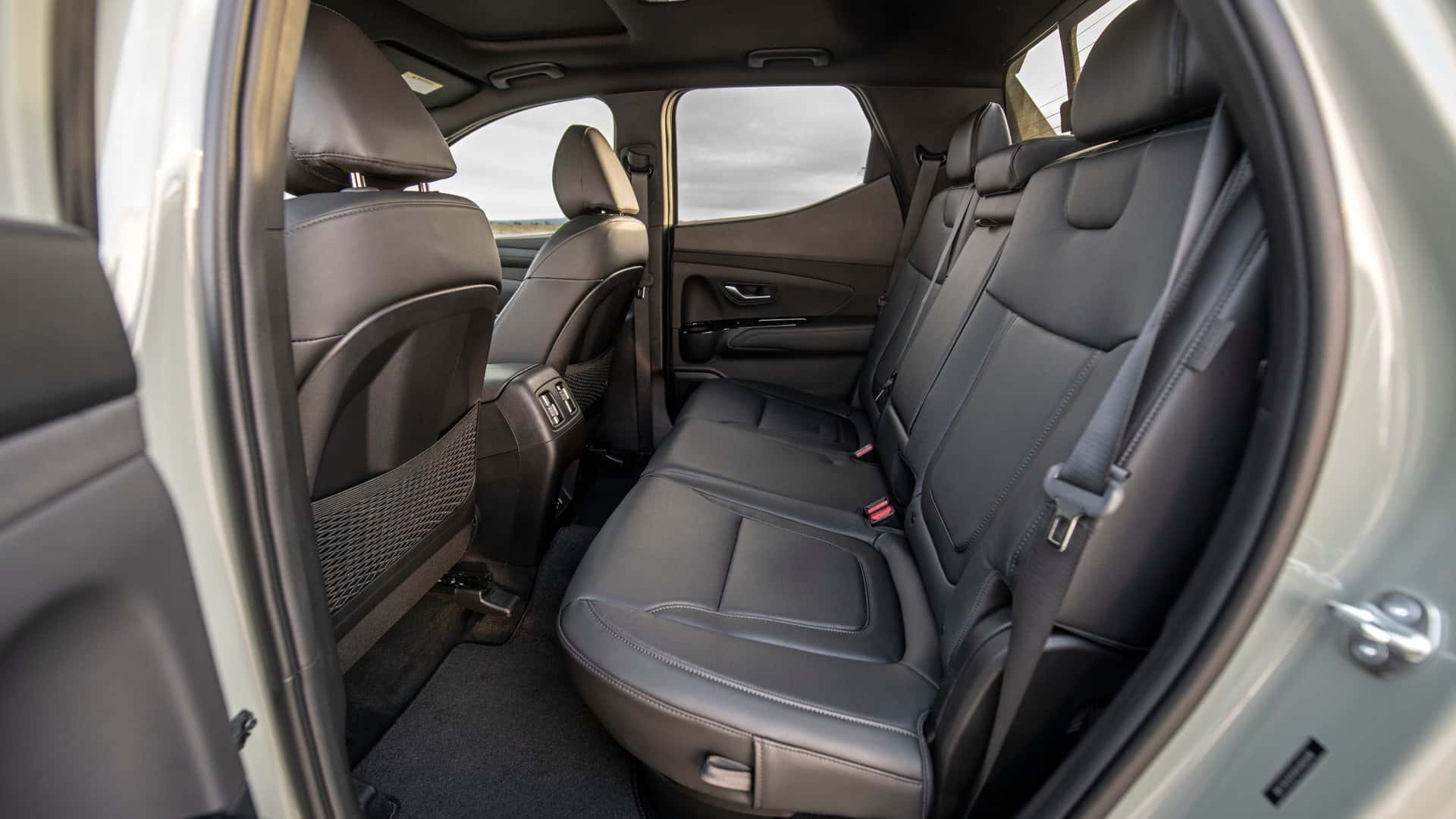
The interior supports five passengers with multiple seating materials, including cloth, H-Tex® seating surfaces, and leather trim. The driver’s seat ranges from a 6-way manual adjustment to an 8-way power-adjustable configuration with lumbar support. The passenger seat is available with 6-way power adjustment on higher trims.
Heated front seats are standard on several trims, while ventilated front seats are available on the highest trim. Rear seats use a 60/40 split design with tip-up lower cushions, allowing additional storage beneath the seat base.
Interior dimensions include 41.4 inches of front legroom and 36.5 inches of rear legroom. Headroom measures 40.2 inches in the front without a sunroof and 39.6 inches in the rear. Shoulder room measures 57.7 inches in the front and 56.1 inches in the rear.
Infotainment Systems and Connectivity Features
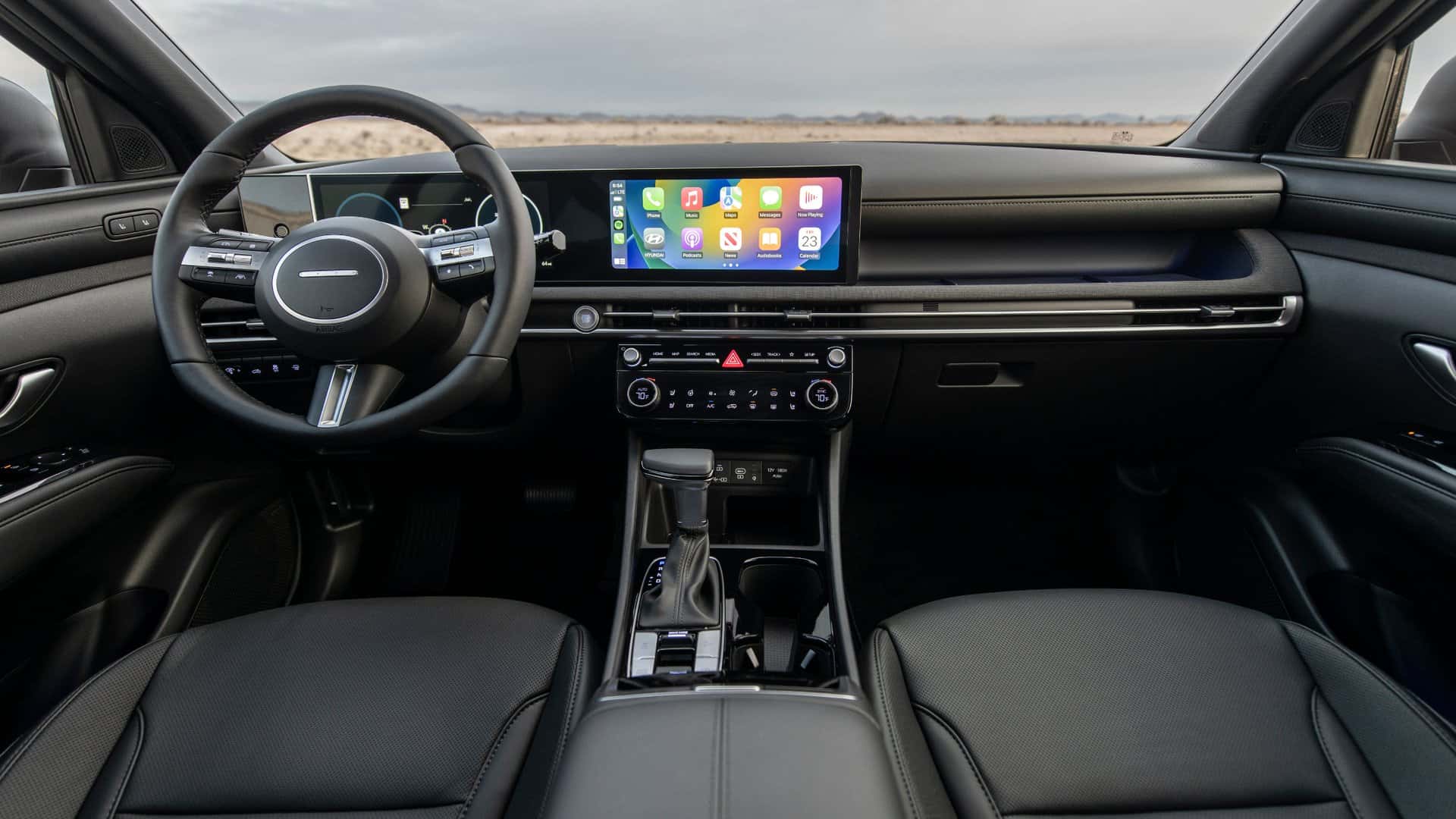
The 2026 Hyundai Santa Cruz includes a 12.3-inch touchscreen display with a six-speaker audio system on standard trims. Higher trims include a 12.3-inch navigation system with expanded functionality. Wireless Apple CarPlay® and Android Auto™ are standard across all trims.
The system supports SiriusXM® satellite radio, HD Radio™, and dynamic voice recognition on higher trims. Over-the-air update capability allows software and multimedia updates without manual installation. USB-C ports are provided for both front and rear passengers.
A Bose® premium audio system is available, providing enhanced sound quality. Instrumentation includes either a 4.2-inch multi-information display or a 12.3-inch digital instrument cluster, displaying vehicle data and driver assistance information.
Additional features include wireless device charging at 15 watts, proximity key entry, push-button start, and Hyundai Digital Key 2 Touch on select trims.
Climate Control and Cabin Functionality
Climate control systems include manual air conditioning on base trims and dual automatic temperature control with an auto defogger on higher trims. Rear seat heater ducts and center console-mounted rear air vents improve airflow distribution.
The cabin includes a rear sliding glass window with a defroster on select trims. A cabin air filter is standard. The steering wheel includes tilt and telescoping adjustment, with audio, Bluetooth®, and cruise control buttons integrated into the design.
Interior lighting includes LED map lights, dome lighting with delay and auto cut-off, and illuminated switches. Ambient lighting with multiple color options is available on higher trims.
Safety Systems and Driver Assistance Technologies
The 2026 Hyundai Santa Cruz includes a comprehensive set of passive and active safety systems. Airbags include front, side-impact, curtain, and rear side airbags with rollover sensors. Seatbelt systems include pretensioners and load limiters, with adjustable anchors.
Standard driver assistance features include forward collision-avoidance assist with pedestrian detection, blind-spot collision warning, and rear cross-traffic collision-avoidance assist. Lane keeping assist and lane following assist provide steering support to maintain lane position.
Driver attention warning monitors driver behavior, while safe exit warning alerts occupants of approaching traffic. Rear occupant alert monitors rear seating areas after vehicle shutdown.
Higher trims include forward collision-avoidance assist with cyclist and junction turning detection, a surround view monitor, a blind-spot view monitor, and highway driving assist. Navigation-based smart cruise control adjusts speed based on road curvature and navigation data. Intelligent speed limit assist provides speed guidance based on detected road signs.
Dimensions, Capacities, and Performance Metrics
The 2026 Hyundai Santa Cruz has a wheelbase of 118.3 inches and an overall length of 195.7 inches. Width measures 75.0 inches, and height measures approximately 66.7 inches with roof rails. Ground clearance is 8.6 inches, with an increased approach angle on the XRT trim.
The cargo bed length measures up to 74.8 inches with the tailgate open. Bed width measures 53.9 inches at maximum and 42.7 inches between wheel housings. Bed depth is 19.2 inches. Total bed volume is 27.0 cubic feet.
Interior volume totals 101.8 cubic feet. The maximum payload capacity is approximately 1,411 pounds. Maximum towing capacity reaches 3,500 pounds with trailer brakes and 1,653 pounds without trailer brakes.
Fuel tank capacity is 17.7 gallons. Fuel economy varies by configuration, with front-wheel-drive models achieving up to 22 mpg city and 30 mpg highway, while all-wheel-drive turbocharged models achieve 18 mpg city and 25 mpg highway.
Disclaimer: *2026 SANTA CRUZ SE, SEL and SEL Activity FWD: 22 City/30 Hwy/25 Combined MPG. 2026 SANTA CRUZ SE, SEL and SEL Activity AWD: 21 City/29 Hwy/24 Combined MPG. 2026 SANTA CRUZ XRT and Limited AWD: 18 City/25 Hwy/20 Combined MPG. All figures are EPA estimates and for comparison purposes only. Actual mileage may vary with options, driving conditions, driving habits and vehicle’s condition.
Schedule a Test Ride at ALM Hyundai Florence
We invite you to examine the 2026 Hyundai Santa Cruz in detail at ALM Hyundai Florence near Conway, SC. Our team can walk you through the engine configurations, drivetrain systems, and integrated cargo features so you can assess their operation directly. A test drive allows you to evaluate the transmission response, steering precision, and suspension performance under controlled conditions. You can also explore the infotainment system, driver assistance technologies, and interior configurations during your visit. Contact us to arrange a test drive and review the full range of technical specifications in person.