

2026 Hyundai Santa Cruz near Myrtle Beach, SC
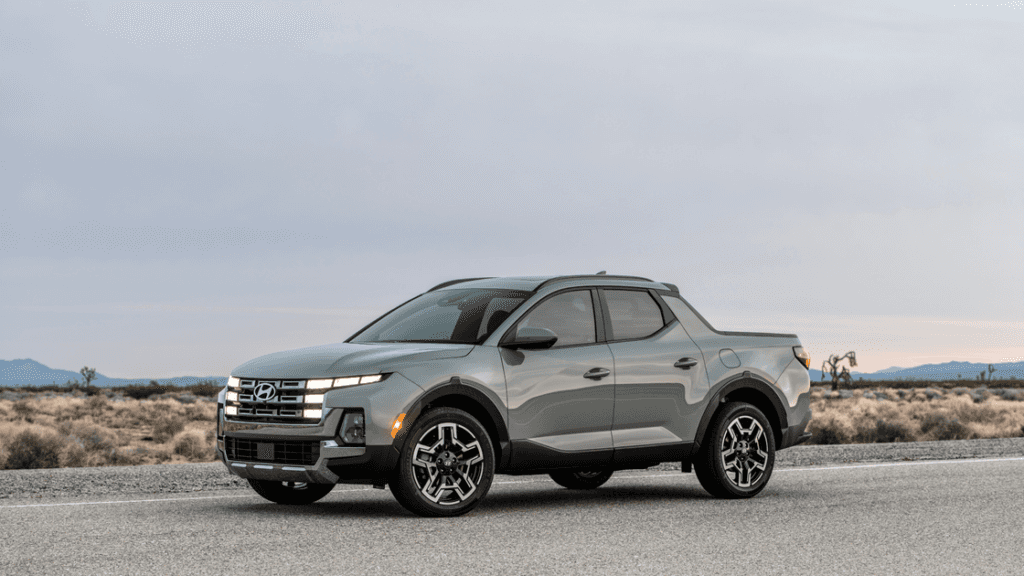
The 2026 Hyundai Santa Cruz is engineered with 2 Smartstream® powertrains that emphasize controlled output and structural efficiency. Both engines use a 2.5-liter displacement with a dual overhead cam, a sixteen-valve layout, and an aluminum block and head combination. The naturally aspirated version produces 191 horsepower at 6100 rpm and reaches 181 pound-feet of torque at 4000 rpm. It operates with a 13.0 compression ratio and a variable intake system managed for consistent airflow. The turbocharged version produces 281 horsepower at 5800 rpm and delivers 311 pound-feet of torque through a wide 1700 to 4000 rpm range. It maintains a 10.5 compression ratio and incorporates a turbocharged intake system that supplies boosted pressure for higher output demand. Both engines are designed to operate on regular unleaded fuel with an Ultra Low Emission Vehicle rating. Bore and stroke dimensions for both systems measure 85.5 millimeters by 101.5 millimeters, which supports a long stroke design and steady torque delivery. The ignition structure uses a distributorless configuration and a 12-volt 1.2 kW starter. Alternator output is rated at 13.5 volts and 150 amps to maintain electrical capacity throughout varying load conditions.
The entire engine lineup pairs with an 8-speed automatic torque converter transmission that provides consistent shift quality and balanced power transfer. The 2.5-liter naturally aspirated model offers front-wheel drive as standard with the option for active on-demand all-wheel drive. The 2.5-liter turbocharged model uses active on-demand all-wheel drive as standard. Gear ratios are specific to each configuration and are designed to supply controlled acceleration, midrange pull, and highway efficiency. The final gear ratio for the naturally aspirated configuration is 4.081, and the turbocharged configuration uses 3.51 gearing. Center console-mounted drive modes are included across the lineup, and the XRT trim benefits from Terrain Mode Select for surface-specific performance adaptations.
Brake, Steering, and Structural Systems
The braking system uses ventilated front discs measured at 12.8 inches by 1.2 inches and solid rear discs measured at 12.8 inches by 0.5 inches. Anti-lock braking with electronic brake force distribution monitors load changes to maintain stability. Additional support is provided by Hillstart Assist Control, Brake Assist, Downhill Brake Control, and an electronic parking brake with automatic vehicle hold. Steering uses a motor-driven power steering unit with a rack and pinion structure and a column-mounted motor. The system has a 14.2 overall ratio with 2.62 turns lock to lock and achieves a turning diameter of 39.6 feet. This setup provides predictable response and smooth directional control.
The suspension system is designed to stabilize weight distribution and maintain structural composure. The front suspension uses a MacPherson® strut assembly with gas-pressurized shock absorbers. The rear uses a multi-link structure that also incorporates gas-pressurized shock absorbers with self-leveling capability to support load variation. The chassis uses a unibody construction with advanced high-strength steels and high-tensile steel in primary structural areas. This configuration improves stiffness and reduces torsional movement under heavier cargo or towing force.
Exterior Engineering and Utility Features
The exterior of the 2026 Hyundai Santa Cruz incorporates practical components intended for visibility, structural support, and work-focused use. All trims include Bi-LED headlights for high and low beams, LED daytime running lights, LED taillights, and automatic headlight controls. High Beam Assist is standard for all models, and a roof-mounted center high-mount stop lamp is included. LED cargo lighting is standard across the range, and LED bed lighting is included on SEL Activity, XRT, and Limited models. Wheel options include 18-inch alloy wheels on the SE, SEL, and SEL Activity and 20-inch alloys on the Limited trim. All configurations use all-season tires and carry a temporary spare.
The exterior mirror lineup includes heated mirrors on SEL and above, along with turn signal indicators and integrated warning indicators for Blind Spot Collision and Rear Cross Traffic Avoidance Assist systems. The Limited trim carries dark chrome grille and tailgate handle accents, while the XRT uses matte black door handles and side mirror housings. Privacy glass for rear and back windows is standard, along with solar glass for front door and windshield areas, plus an acoustic laminated windshield. A rear sliding glass window with a defroster is included on the SEL Activity, XRT, and Limited. Available roof equipment includes a conventional-type sunroof on SEL Activity and Limited and roof side rails on SEL and above.
The open bed area integrates a lockable under-bed storage compartment, a sheet-molded composite bed structure, sidewall storage spaces, heavy-duty cargo D-rings, and a multi-functional tailgate with assisted opening and closing. Integrated rear bumper side steps support easier access. Models with the built-in tonneau cover include two T-slot accessory tracks along with a dual C-channel adjustable utility track rail system. An available 115-volt power outlet is located in the sidewall storage compartment for powered accessories.
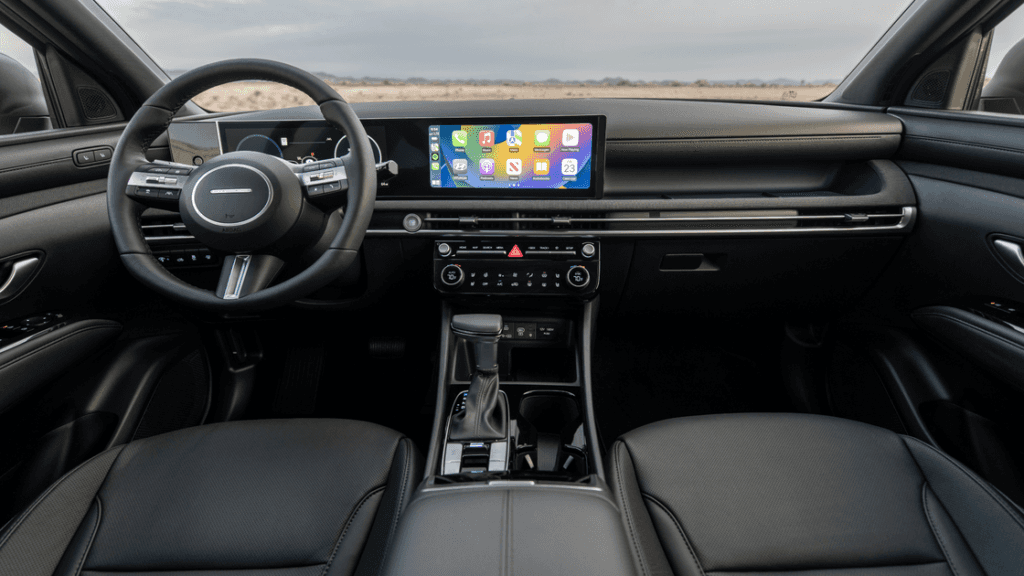
Interior Design, Displays, and Cabin Technology
The seating layout includes a five-passenger capacity across the lineup. Surface materials vary by trim and include stain- and odor-resistant cloth on the SE, H-Tex® leatherette on the SEL, SEL Activity, and XRT, and leather-trimmed seating on the Limited. Each trim includes 60-40 split tip-up lower rear seat cushions for added storage adaptability. Driver seat adjustments vary from a 6-way manual arrangement on the SE to an 8-way power driver seat with power lumbar support on all other trims. The Limited includes a 6-way power passenger seat along with ventilated front seating.
Cabin technology centers around a 12.3-inch touchscreen display with six speakers on the SE, SEL, and SEL Activity. These trims also include AM, FM, HD Radio™, SiriusXM®, Bluelink® plus connectivity, and wireless Apple CarPlay® and Android Auto™. XRT and Limited carry a 12.3-inch audio-video navigation display with onboard navigation and dynamic voice recognition. The Limited also features a Bose® premium audio system. Over-the-air update capability applies to ECU and multimedia systems, with map updates available for XRT and Limited. All trims include front and rear USB Type-C ports and a standard rearview camera.
Interior trim elements include black roof trim across all models, metal paint door handles, integrated door armrests, front passenger seatback map pockets, sliding sunvisors with illumination from SEL and above, and a leather-wrapped shift knob for XRT and Limited. Climate systems begin with manual air conditioning on the SE and dual automatic temperature control with full capacitive touch controls from the SEL and above. Cabin air filtration, rear seat heating ducts, and a rear window defroster are included. Steering wheel equipment features audio controls, Bluetooth® controls, cruise controls, and tilt and telescoping adjustment across all models. The Limited adds leather wrapping and heating capability.
Instrumentation includes a 4.2-inch multi-information display on the SE and SEL and a 12.3-inch digital cluster on the SEL Activity, XRT, and Limited. Standard indicators include speedometer, tachometer, coolant temperature, fuel level, odometer, trip odometer, gear position display, cruise control, high beam assist, tire pressure monitoring, and several operational warning displays. The XRT and Limited add Smart Cruise Control 2, Stop-and-Go functionality, Intelligent Speed Limit Assist, Forward Attention Warning, navigation-based Smart Cruise Control with Curve Control, Blind Spot View Monitor, Surround View Monitor, and Highway Driving Assist 1.
Convenience features include power door locks, remote keyless entry, proximity key entry with remote start, a fixed armrest storage box, hood and tailgate remote release, interior cupholders, a twelve-volt outlet, assist grips, a damped glove compartment, interior illumination, wireless device charging on SEL Activity and above, and rain-sensing wipers on the Limited.
Safety and Driver Assistance Systems
Restraint systems include advanced front airbags for the driver and passenger with seat weight and track sensing capability. Side impact thorax airbags for front occupants are included along with side curtain airbags for front and rear passengers and rear side airbags. Three-point seatbelts across all positions, pretensioners, load limiters, adjustable front shoulder belt anchors, child safety locks, a window lockout function, and LATCH anchors are standard. Active safety systems include anti-lock braking, electronic stability control with traction control, brake assist, vehicle stability management, individual tire pressure monitoring, Blind Spot Collision Warning, Rear Cross Traffic Collision Avoidance Assist, Driver Attention Warning, Lane Keeping Assist, Lane Following Assist, Safe Exit Warning, and Rear Occupant Alert. Advanced systems available on higher trims include Forward Collision Avoidance with pedestrian, cyclist, and junction turning detection along with Surround View Monitor, Blind Spot View Monitor, Intelligent Speed Limit Assist, Forward Attention Warning, Leading Vehicle Departure Alert, and Highway Driving Assist 1.
Dimensional Measurements and Load Capacities
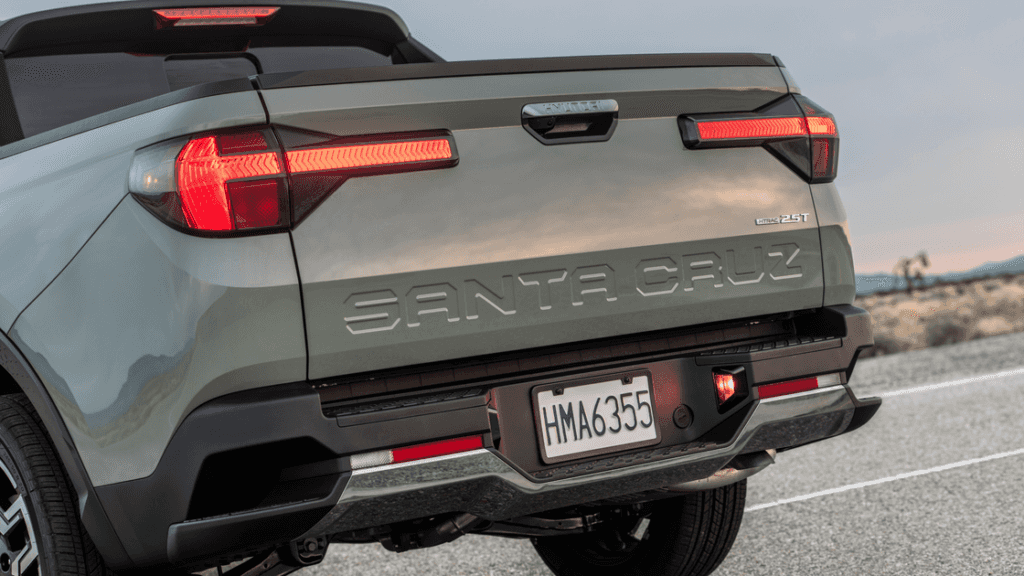
Exterior dimensions include an 118.3-inch wheelbase, up to 195.7 inches in overall length, 75.0 inches in width, and up to 66.9 inches in height with roof rails. Ground clearance measures 8.6 inches. Approach angle reaches 16.9 degrees on most trims and 19.9 degrees on the XRT. Departure angle is 23.2 degrees, and the breakover angle is 18.6 degrees. Coefficient of drag is measured at 0.36. The bed length ranges from 48.4 to 52.1 inches with the tailgate closed and 74.8 inches when open. Maximum bed width is 53.9 inches and 42.7 inches between wheelhouses. Bed depth measures 19.2 inches, and bed height above ground is 31.9 inches. Bed volume is 27.0 cubic feet.
Interior measurements include front and rear headroom of 40.2 and 39.6 inches without the sunroof and 38.2 and 39.6 inches with the sunroof. Legroom is 41.4 inches in the front and 36.5 inches in the rear. Shoulder room measures 57.7 inches in the front and 56.1 inches in the rear. Hip room is 54.5 inches in the front and 53.5 inches in the rear. Total passenger volume is 101.8 cubic feet. Fuel capacity is 17.7 gallons. Maximum trailer weight with brakes is 3,500 pounds and 1,653 pounds without brakes. Maximum vehicle load limit reaches 1,411 pounds.
Fuel economy for the naturally aspirated front-wheel-drive version is 22 city, 30 highway, and 25 combined miles per gallon. The all-wheel-drive variation of the naturally aspirated engine is rated at 21 city, 29 highway, and 24 combined miles per gallon. The turbocharged engine with all-wheel drive is rated at 18 city, 25 highway, and 20 combined miles per gallon.
Disclaimer: 2026 SANTA CRUZ SE, SEL, and SEL Activity FWD: 22 City/30 Hwy/25 Combined MPG. 2026 SANTA CRUZ SE, SEL, and SEL Activity AWD: 21 City/29 Hwy/24 Combined MPG. 2026 SANTA CRUZ XRT and Limited AWD: 18 City/25 Hwy/20 Combined MPG. All figures are EPA estimates and for comparison purposes only. Actual mileage may vary with options, driving conditions, driving habits, and the vehicle’s condition.
Schedule a Test Ride at ALM Hyundai Florence
Drivers who want to evaluate the performance characteristics and engineering features of the 2026 Hyundai Santa Cruz can schedule a visit to experience its capabilities in motion at ALM Hyundai Florence near Myrtle Beach, SC. A test drive provides an opportunity to assess power delivery from both engine options and examine how the suspension and steering systems respond under changing conditions. It also allows a closer review of the advanced driver assistance technologies and interior interfaces. Many drivers find it helpful to explore the open bed features and storage systems in person to understand how they support daily use. Our team is available to help arrange a time that fits your schedule and to answer technical questions about specifications across the full model range.