

2026 Hyundai Santa Fe Hybrid in Florence, SC
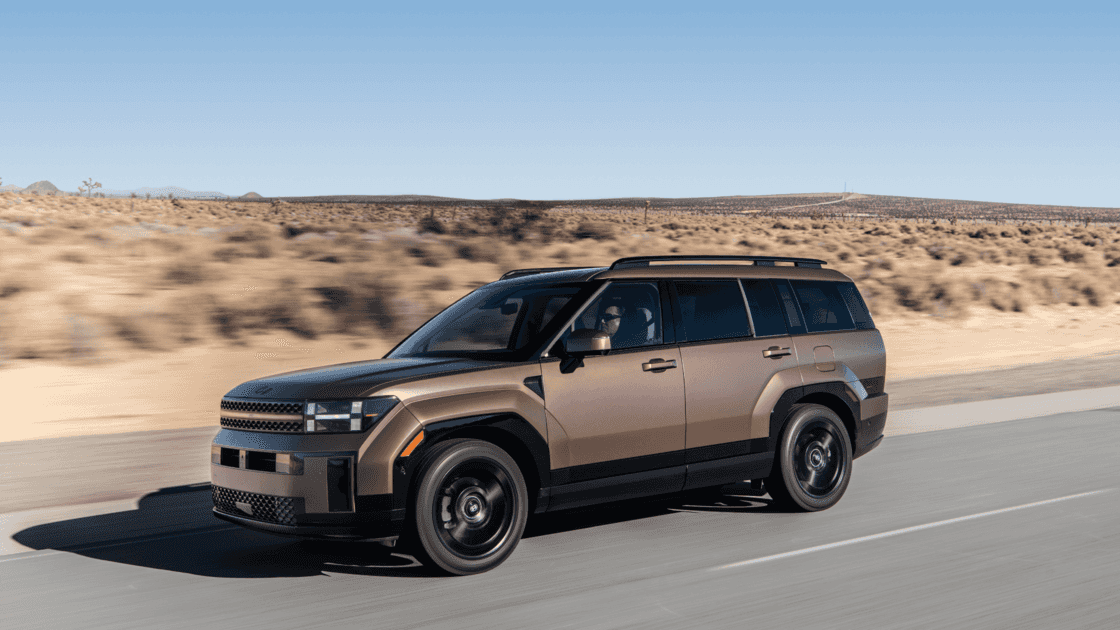
The 2026 Hyundai Santa Fe Hybrid is engineered as a midsize sport utility vehicle that prioritizes efficiency, system integration, and mechanical balance. This model combines a turbocharged internal combustion engine with an electric motor and lithium-ion battery system to deliver controlled power output while reducing fuel consumption. The vehicle architecture is based on a unibody structure constructed primarily from high-strength steel, supporting rigidity, predictable handling behavior, and optimized crash energy management. Every major system, from propulsion to driver assistance, is designed to function cohesively through electronic control and calibrated mechanical components. The result is a hybrid SUV focused on measured performance, structural efficiency, and standardized technology integration.
Hybrid Powertrain Configuration and Output Specifications
The 2026 Hyundai Santa Fe Hybrid is powered by a Smartstream® 1.6-liter turbocharged gasoline direct injection DOHC inline four-cylinder engine paired with a permanent magnet synchronous electric motor. The gasoline engine produces 178 horsepower at 5,500 rpm and 195 pound-feet of torque across a broad operating range from 1,500 to 4,500 rpm. Turbocharging improves low- and mid-range torque delivery while maintaining stable combustion under variable load conditions. The engine block and cylinder head are constructed of aluminum to reduce mass and improve thermal efficiency.
The electric motor contributes an estimated 44.2 kilowatts of output, equivalent to approximately 60 horsepower, with peak torque measured at 195 pound-feet between 1,600 and 2,100 rpm. When operating together, the gasoline engine and electric motor generate a total combined system output of 231 horsepower and 271 pound-feet of torque. Combined torque is available from 1,000 to 4,100 rpm, supporting steady acceleration during low-speed operation and consistent response during highway driving.
Energy storage is provided by a lithium-ion battery system with a capacity of 1.49 kilowatt-hours and a maximum voltage rating of 270 volts. The battery is designed for frequent charge and discharge cycles while maintaining stable temperature regulation and long-term durability. Regenerative braking supports battery recharging during deceleration, while system logic manages the transition between electric-only operation, hybrid assist, and engine-driven propulsion.
Transmission Architecture and Drivetrain Control
Power delivery in the 2026 Hyundai Santa Fe Hybrid is managed through a 6-speed automatic transmission calibrated specifically for hybrid operation. Gear ratios are selected to balance efficiency with torque delivery, ensuring smooth acceleration and reduced engine load during cruising. Shift-by-wire technology replaces traditional mechanical linkage, allowing electronic actuation of gear selection and reducing interior packaging constraints. Manual shift capability is provided through SHIFTRONIC® paddle shifters, enabling controlled gear selection during grade changes or specific driving conditions.
The 2026 Hyundai Santa Fe Hybrid is available with either front-wheel drive or the Hyundai HTRAC all-wheel-drive system. The all-wheel-drive system uses active on-demand torque distribution, varying power delivery between the front and rear axles based on traction requirements and selected drive mode. Torque distribution can range from a front-biased configuration to an equal split depending on road surface and driving input.
Drive Mode Select functionality allows the driver to adjust vehicle response through Comfort, Eco, Sport, Smart, and Snow modes. Each mode modifies throttle mapping, transmission behavior, steering assistance, and all-wheel-drive engagement. These calibrations are designed to support predictable control under varying driving environments without altering mechanical hardware.
Suspension Design and Steering System Characteristics
The 2026 Hyundai Santa Fe Hybrid uses a fully independent suspension system engineered for balanced ride comfort and handling stability. The front suspension consists of a MacPherson® strut arrangement with coil springs and gas-pressurized shock absorbers featuring advanced internal valving. This configuration supports controlled wheel movement and efficient packaging within the engine bay.
The rear suspension employs a multi-link independent design with separated springs and shock absorbers. This layout improves wheel articulation and reduces the transmission of road irregularities into the cabin. Stabilizer bars are installed at both the front and rear to limit body roll during cornering.
Steering is provided through a motor-driven power steering system using a rack-and-pinion layout with column-mounted assistance. The steering system has an overall ratio of 13.7 and requires approximately 2.6 turns lock-to-lock. Turning diameter is measured at approximately 37.9 feet curb-to-curb, supporting maneuverability in confined spaces.
Brake System Engineering and Vehicle Control Systems
The braking system on the 2026 Hyundai Santa Fe Hybrid consists of ventilated front disc brakes and solid rear disc brakes, each measuring 12.8 inches in diameter. An anti-lock braking system with electronic brake-force distribution manages braking pressure across all four wheels. Integrated electric brake boosting is used on hybrid models, supporting consistent pedal response under regenerative and friction braking conditions.
Additional control systems include hill-start assist control, downhill brake control, trailer sway control, and brake assist. An electronic parking brake with automatic vehicle hold functionality is standard. These systems are managed through electronic stability control and traction control modules that monitor wheel speed, steering input, and vehicle yaw.
Exterior Structure and Functional Design Elements
Exterior dimensions of the 2026 Hyundai Santa Fe Hybrid include a wheelbase of 110.8 inches, an overall length of 190.2 inches, and an overall width of 74.8 inches. Overall height measures 67.7 inches with roof rails installed. Ground clearance is rated at 7.0 inches, supporting daily driving across varied road conditions. The coefficient of drag is measured at 0.294, contributing to reduced aerodynamic resistance.
Lighting systems include LED projector headlights with LED accents, LED daytime running lights, LED taillights, and automatic headlight functionality. High Beam Assist is standard and adjusts headlight output based on traffic conditions. Exterior mirrors are heated and include integrated LED turn signal indicators. Acoustic laminated windshield and front side glass reduce exterior noise intrusion.
Wheel configurations for hybrid trims include 18-inch alloy wheels paired with all-season tires. A tire mobility kit is included in place of a temporary spare tire. Roof rails are standard on most trims, with a load capacity rated at 220 pounds. A hands-free smart liftgate with adjustable height settings is also standard, supporting cargo access without manual operation.
Interior Dimensions and Seating Configuration
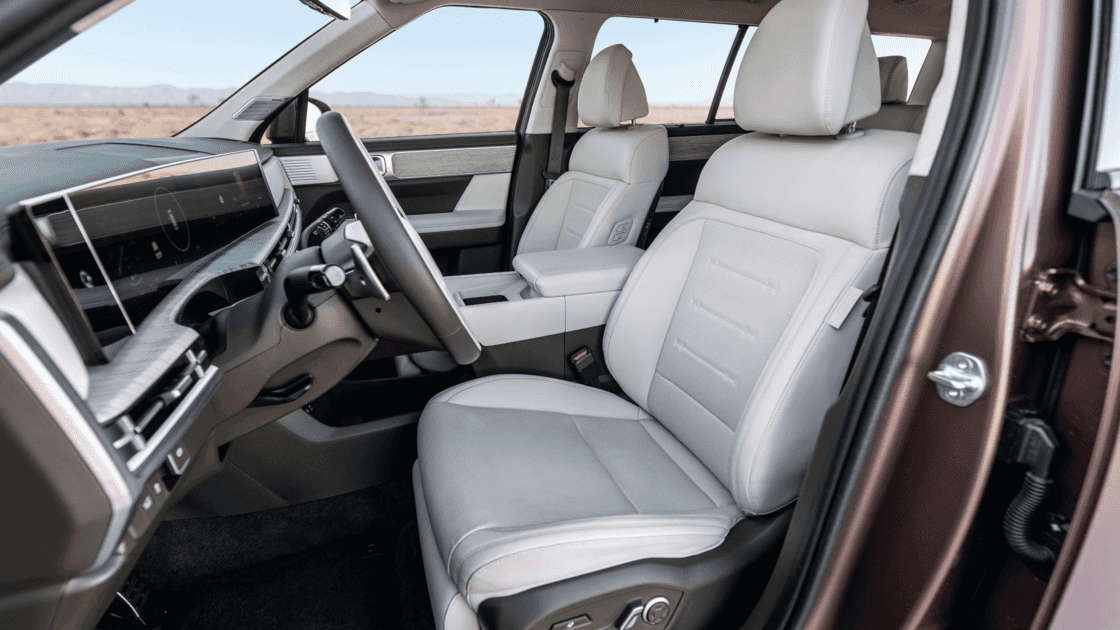
Interior seating capacity varies by trim and configuration, with options for 6 or 7 occupants. Front headroom measures up to 41.1 inches, with second-row headroom measuring 40.6 inches and third-row headroom measuring 37.7 inches. Legroom measures 44.4 inches in the front row, 42.3 inches in the second row, and 30.0 inches in the third row.
Seat materials range from stain-resistant cloth to H-Tex® leatherette and available leather or Nappa leather trims. Front seating options include power adjustment, lumbar support, heating, ventilation, integrated memory functions, and a driver relaxation seat with one-touch positioning on select trims. Second-row seating includes a 60-40 split-fold configuration with available captain’s chairs and optional heating. The third row uses a 50-50 split-fold design with integrated lighting.
Cargo capacity measures 79.6 cubic feet behind the front seats, 40.5 cubic feet behind the second row, and 14.6 cubic feet behind the third row. Underfloor storage and remote-release folding second-row seats enhance interior flexibility.
Infotainment Systems and Digital Integration
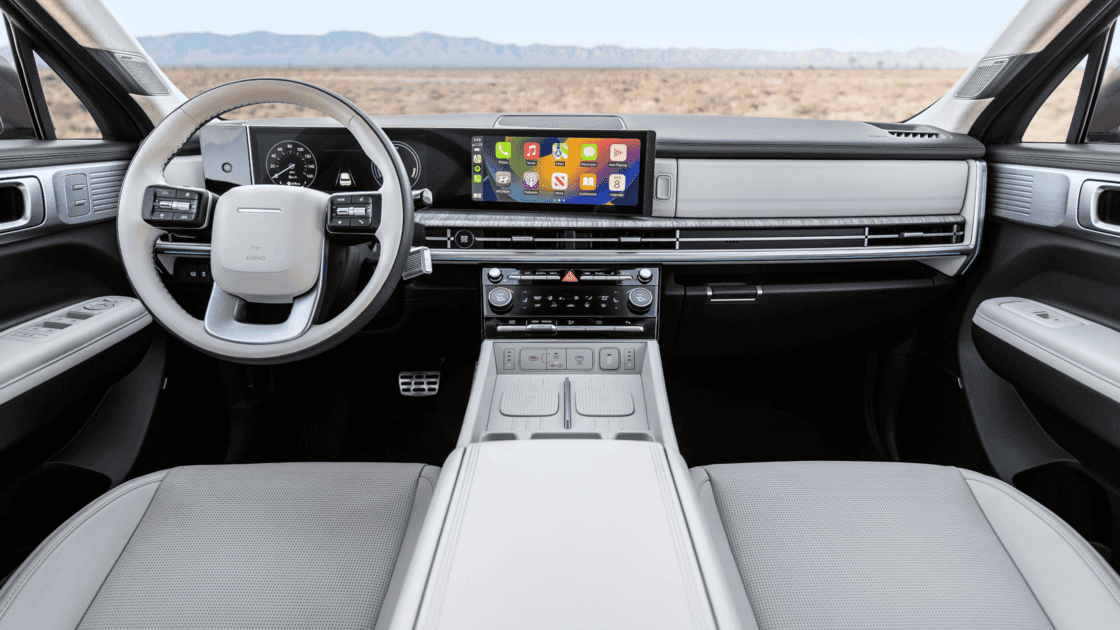
The 2026 Hyundai Santa Fe Hybrid is equipped with a digital infotainment system that includes either a 12.3-inch display audio unit or a 12.3-inch touchscreen with integrated navigation, traffic data, and Wi-Fi hotspot capability. Wireless Apple CarPlay® and Android Auto™ are standard across trims, supporting smartphone connectivity without physical cables.
Audio system options include a standard multi-speaker setup and an available Bose® premium audio system with 12 speakers. Additional technology features include wireless device charging, dynamic voice recognition, rear seat quiet mode, and an available head-up display projected onto the windshield.
Instrumentation includes either a 4.2-inch color multi-information display or a fully digital 12.3-inch instrument cluster depending on trim. These displays present vehicle speed, power flow, safety alerts, and system status information. Over-the-air update capability allows supported software systems to receive updates without dealership visits.
Active and Passive Safety System Integration
Safety systems in the 2026 Hyundai Santa Fe Hybrid are designed to support occupant protection and collision avoidance. Passive safety equipment includes advanced front airbags, front knee airbags for the driver, front and rear side airbags, and full-length side curtain airbags. Seatbelt pretensioners and load limiters are installed for front seating positions, along with LATCH anchors for child seats.
Active safety systems include forward collision-avoidance assist with pedestrian, cyclist, and junction turning detection; lane keeping assist; lane following assist; driver attention warning; forward attention warning; and safe exit assist. Blind-spot collision-avoidance warning and rear cross-traffic collision-avoidance assist are standard across trims. Higher trims add blind-spot collision-avoidance assist, parking collision-avoidance assist, surround view monitoring, and remote smart parking assist.
Fuel Efficiency, Towing Capacity, and Practical Metrics
Fuel economy for the 2026 Hyundai Santa Fe Hybrid is rated at up to 37 miles per gallon city, 36 miles per gallon highway, and 36 miles per gallon combined in front-wheel-drive configurations. All-wheel-drive variants are rated at up to 35 miles per gallon city, 34 miles per gallon highway, and 34 miles per gallon combined. Emissions performance meets SULEV standards with a global warming score rating of 7.
The fuel tank capacity is rated at 17.7 gallons. Curb weight ranges from approximately 4,431 to 4,575 pounds depending on drivetrain configuration. Maximum towing capacity for the hybrid model is rated at 2,000 pounds when equipped with trailer brakes. Trailer sway control and trailering pre-wiring are standard.
Disclaimer: 2026 SANTA FE Hybrid SE, SEL, Limited and Calligraphy FWD: 37 City/36 Highway/36 Combined MPG. 2026 SANTA FE Hybrid SE, SEL, Limited and Calligraphy AWD: 35 City/34Highway/34 Combined MPG. All figures are EPA estimates and for comparison purposes only. Actual mileage may vary with options, driving conditions, driving habits and vehicle’s condition.
Schedule a Test Ride in Florence, SC
We invite interested drivers to schedule a test drive of the 2026 Hyundai Santa Fe Hybrid at ALM Hyundai Florence in Florence, SC. A test drive allows direct evaluation of hybrid power delivery, system responsiveness, and integrated driver-assistance technologies. Experiencing the vehicle firsthand provides clarity on interior space, digital displays, and ride control. Our team can assist with questions related to drivetrain configuration, technology features, and safety systems. Appointments can be arranged to ensure adequate time for a focused and informative driving experience.