

2026 Hyundai Santa Fe near Conway, SC
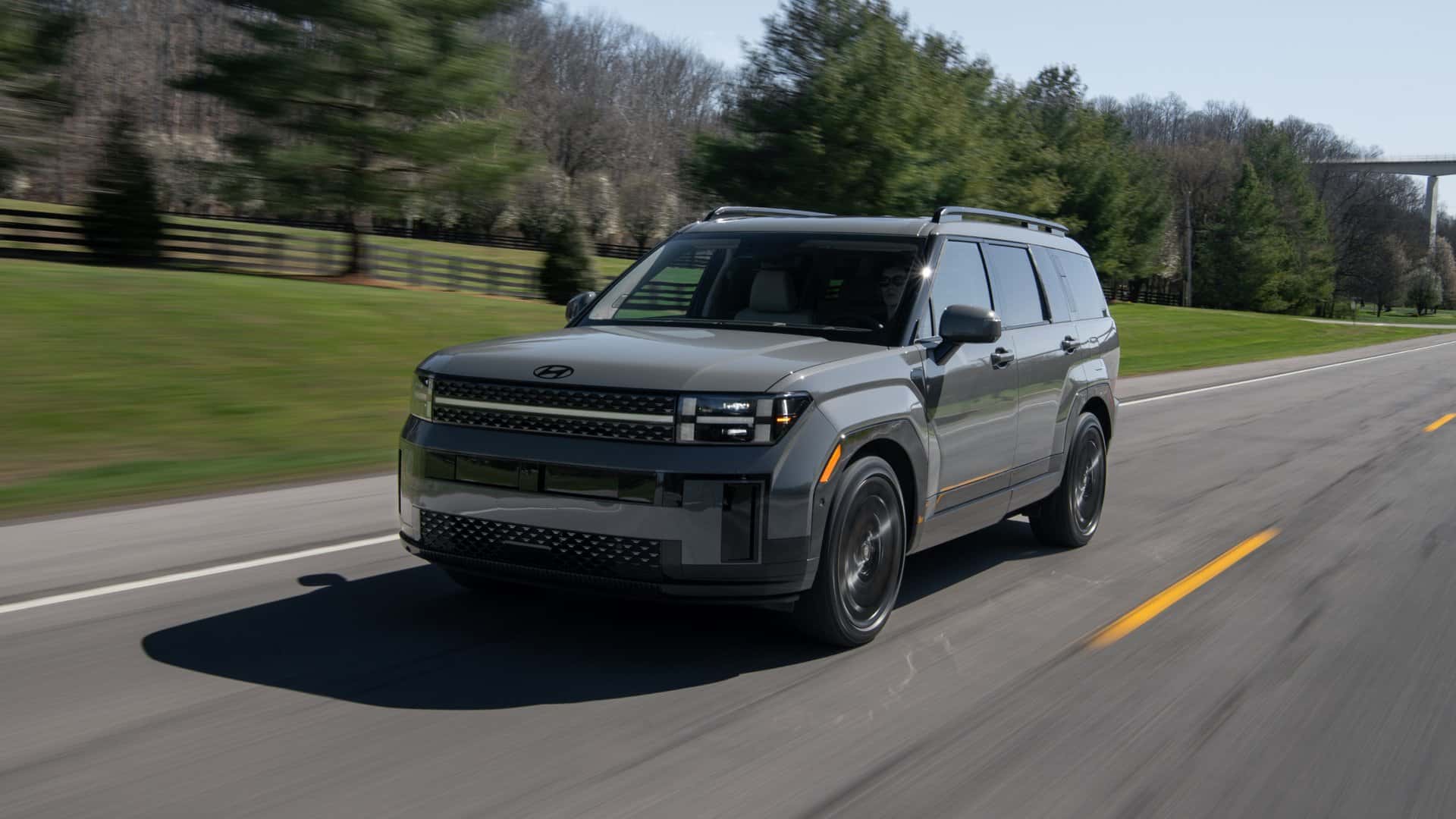
The 2026 Hyundai Santa Fe is designed with a focus on measurable performance, structural integrity, and integrated vehicle systems. It offers a combination of turbocharged gasoline and hybrid powertrains, advanced transmission systems, and configurable drivetrain options. The vehicle platform incorporates high-strength materials, multi-link suspension geometry, and electronically controlled driving systems.
Turbocharged and Hybrid Powertrain Architecture
The standard powertrain configuration includes a Smartstream® 2.5-liter turbocharged inline four-cylinder engine with dual overhead camshafts and 16 valves. This engine produces 277 horsepower at 5,800 rpm and 311 lb-ft of torque at 4,000 rpm. The engine uses gasoline direct injection combined with multi-point injection, which supports optimized fuel atomization and combustion stability. The compression ratio is set at 10.5 to 1, and the aluminum block and head construction reduce overall engine weight while maintaining thermal efficiency.
The hybrid powertrain integrates a Smartstream® 1.6-liter turbocharged inline four-cylinder engine with an electric motor system. The combined system output is 231 horsepower, with a total torque output of 271 lb-ft available between 1,000 and 4,100 rpm. The electric motor generates approximately 60 horsepower and 195 lb-ft of torque, supported by a lithium-ion battery with a maximum voltage of 270 volts and a capacity of 1.49 kWh. This configuration provides additional torque during initial acceleration and supports reduced fuel consumption during steady-state driving.
Both powertrains operate on regular unleaded fuel and incorporate emissions systems compliant with SULEV standards. The turbocharged gasoline engine includes Idle Stop and Go functionality, which reduces fuel consumption during idle conditions.
Transmission Systems and Drive Configuration
The 2.5-liter turbocharged engine is paired with an 8-speed automatic transmission. This transmission includes optimized gear ratios for both acceleration and highway efficiency. The hybrid powertrain is equipped with a 6-speed automatic transmission that is tuned to integrate electric motor assistance with combustion engine output.
Both configurations include SHIFTRONIC® manual shift capability, allowing the driver to select gears manually when required. The Shift-by-Wire system replaces a conventional mechanical linkage with an electronic interface, enabling precise gear selection and reducing mechanical complexity.
The 2026 Hyundai Santa Fe is available with front-wheel drive and HTRAC all-wheel drive. The HTRAC system distributes torque dynamically between the front and rear axles based on traction requirements. Torque distribution ranges from a fully front-biased configuration to a balanced 50 to 50 split. Drive modes include Comfort, Eco, Sport, Smart, Snow, and additional terrain-specific modes such as Sand and Mud for applicable trims. The AWD Lock function maintains a consistent torque split to improve traction on low-friction surfaces.
Suspension Geometry and Steering Calibration
The front suspension system uses a MacPherson® strut design with coil springs and a stabilizer bar. The rear suspension uses a multi-link independent configuration with separate springs and shock absorbers. Both front and rear systems include gas-pressurized shock absorbers with advanced valving to manage vertical wheel movement and maintain tire contact with the road surface.
The steering system uses Motor Driven Power Steering with a rack-and-pinion layout mounted to the steering column. The steering ratio is 13.7, and the system requires 2.6 turns from lock to lock. The turning diameter measures 37.9 feet, which supports maneuverability in confined areas. Steering input is electronically assisted, allowing consistent response across different speeds.
The body structure is a unibody design constructed primarily from high-strength steel. This design increases torsional rigidity and supports predictable chassis behavior during cornering and braking.
Brake System Engineering and Stability Control
The braking system includes ventilated front disc brakes and solid rear disc brakes, each with a diameter of 12.8 inches. The system integrates Anti-lock Braking System functionality with Electronic Brake-force Distribution to maintain consistent braking force across all four wheels.
Additional systems include Downhill Brake Control, which regulates speed during descents, and Hill Start Assist Control, which prevents rollback on inclines. Brake Assist increases braking pressure during emergency stops, and Trailer Sway Control stabilizes the vehicle when towing. The electric parking brake includes an automatic vehicle hold function, allowing the vehicle to remain stationary without continuous brake pedal input.
Exterior Configuration and Functional Design Elements
The exterior configuration includes multiple wheel and tire combinations. Standard configurations use 18-inch alloy wheels with 235 or 245 width tires. Higher trims include 20-inch alloy wheels with 255-width tires, and the top trim offers 21-inch alloy wheels with 245-width tires. Tire specifications vary by trim and drivetrain configuration.
The lighting system includes LED projector headlights with integrated LED accents, LED daytime running lights, LED taillights, and automatic headlight control. High Beam Assist adjusts headlight intensity based on detected traffic conditions.
Functional exterior components include a hands-free smart liftgate with adjustable height settings, roof rails, and trailer pre-wiring connections. The vehicle also includes a shark-fin antenna and an integrated rear spoiler. Select trims offer rain-sensing windshield wipers and dual-pane sunroof configurations.
The XRT configuration includes modifications such as increased ground clearance of 8.3 inches, all-terrain tires, and a towing capacity of up to 4,500 pounds. These changes are supported by suspension and drivetrain calibration adjustments.
Interior Configuration and Seating Systems
The interior is configured for either six or seven passengers, depending on the selected trim. Seating materials include stain-resistant cloth, H-Tex® synthetic leather, standard leather, and Nappa leather. The front seats include manual or power adjustments, with higher trims offering 8-way power adjustment, lumbar support, heating, ventilation, and memory functions.
The driver relaxation seat includes a one-touch adjustment feature that alters seat position for reduced fatigue during extended driving periods. The second row includes either a 60 to 40 split bench seat or optional captain’s chairs. The third row includes a 50 to 50 split folding seat with integrated lighting.
Cargo capacity measures 79.6 cubic feet with the second and third rows folded. With the second row in place, cargo capacity is 40.5 cubic feet. With all seating positions in use, cargo capacity is 14.6 cubic feet. The cargo area includes underfloor storage and remote seat release functionality.
Integrated Infotainment and Digital Systems
The infotainment system includes a 12.3-inch touchscreen display with navigation capability and traffic data integration. Lower trims include a 12.3-inch display audio system without built-in navigation. Wireless Apple CarPlay® and Android Auto™ are standard across all trims.
Higher trims include a Bose® premium audio system with 12 speakers, a head-up display, and a surround view monitoring system. The system also supports Hyundai Pay functionality for in-vehicle transactions.
Additional features include dual wireless charging pads, multiple USB charging ports, and dynamic voice recognition. The system supports over-the-air updates through the Bluelink® connected services platform, allowing software enhancements without manual updates.
Safety Systems and Driver Assistance Technology
The vehicle includes a comprehensive airbag system with front airbags, side airbags for both rows, curtain airbags, and a driver knee airbag. Seatbelt systems include pretensioners and load limiters for the front seats, along with LATCH anchors for child seat installation.
Active safety systems include Forward Collision-Avoidance Assist with detection for pedestrians, cyclists, and turning scenarios. Blind-Spot Collision-Avoidance systems provide both warning and intervention functions on applicable trims. Rear Cross-Traffic Collision-Avoidance Assist monitors approaching traffic when reversing.
Lane Keeping Assist and Lane Following Assist maintain vehicle positioning within detected lane markings. Driver Attention Warning monitors driver behavior, while Forward Attention Warning uses driver monitoring systems to detect inattentiveness.
Additional features include Highway Driving Assist for supported trims, Safe Exit Assist, and Remote Smart Parking Assist. Parking distance warning systems use multiple sensors to detect obstacles around the vehicle.
Dimensions, Capacity, and Structural Specifications
The 2026 Hyundai Santa Fe has a wheelbase of 110.8 inches and an overall length of 190.2 inches. The width measures 74.8 inches, and the height measures 67.7 inches with roof rails, or 69.7 inches depending on configuration. Ground clearance is 7.0 inches for standard trims and 8.3 inches for the XRT configuration.
The fuel tank capacity is 17.7 gallons for both gasoline and hybrid variants. The maximum towing capacity is 3,500 pounds for standard configurations and up to 4,500 pounds for the XRT trim. The roof rails support a load capacity of 220 pounds.
Interior measurements include 44.4 inches of front legroom and 42.3 inches of second-row legroom. Shoulder room measures 59.5 inches in the front row and 58.1 inches in the second row. These dimensions support passenger space across all seating positions.
Visit ALM Hyundai Florence for a Test Ride
We encourage you to examine the 2026 Hyundai Santa Fe in person to assess its engineering and system integration. At ALM Hyundai Florence near Conway, SC, our team can provide a detailed walkthrough of the powertrain configurations, drivetrain systems, and safety technologies. A test drive allows you to evaluate engine response, transmission behavior, and ride stability under controlled conditions. You can also experience the infotainment interface, seating configurations, and driver assistance systems directly. Contact our team to arrange a test drive and review the technical capabilities of the 2026 Hyundai Santa Fe in a practical setting.