

2026 Hyundai Sonata near Conway, SC
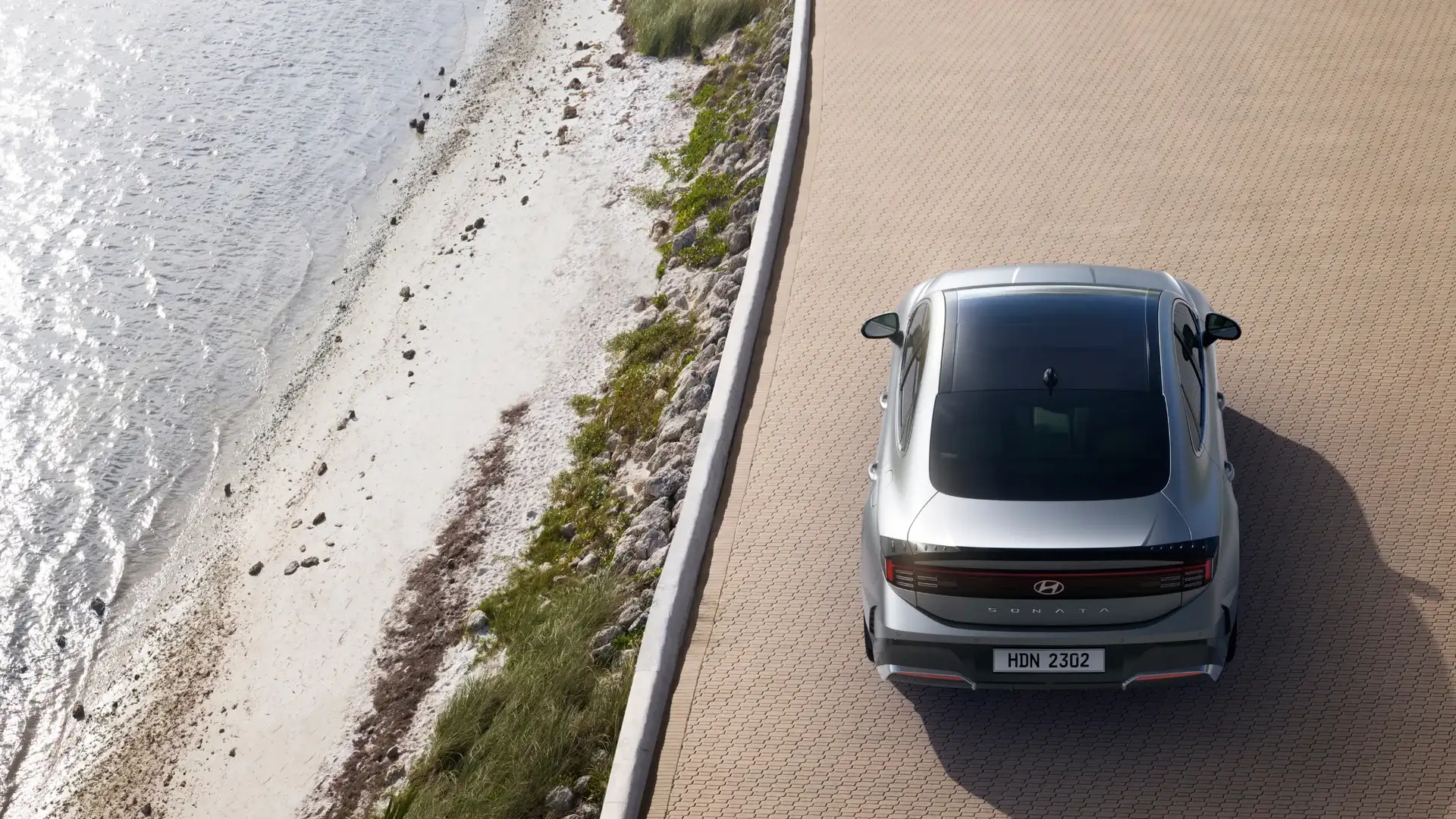
The 2026 Hyundai Sonata is engineered with three distinct powertrain configurations that address efficiency, balanced performance, and high-output driving requirements. The standard configuration uses a Smartstream® 2.5-liter GDI plus MPI DOHC 16-valve inline four-cylinder engine with a displacement of 2,497 cubic centimeters. This engine produces 191 horsepower at 6,100 rpm and 181 lb-ft of torque at 4,000 rpm. It operates with continuously variable valve timing and a 13.0:1 compression ratio. Fuel delivery combines gasoline direct injection and multi-point injection to improve combustion efficiency and emissions control.
The higher-output configuration is found in the N Line trim, which uses a Smartstream® 2.5-liter turbocharged GDI plus MPI DOHC 16-valve inline four-cylinder engine. This version produces 290 horsepower at 5,800 rpm and 311 lb-ft of torque across a broad range from 1,650 to 4,000 rpm. The compression ratio is reduced to 10.5:1 to accommodate forced induction. The engine maintains four valves per cylinder and utilizes hydraulic and conventional rubber motor mounts for vibration control.
The hybrid configuration uses a 2.0-liter GDI DOHC 16-valve inline four-cylinder engine with aluminum block and cylinder heads. Output from the gasoline engine is 150 horsepower at 6,000 rpm and 139 lb-ft of torque at 5,000 rpm. This system integrates a permanent magnet synchronous electric motor that produces 51 horsepower and 151 lb-ft of torque at low rotational speeds. The combined system output is 192 horsepower. The hybrid battery is a lithium-ion unit with a maximum voltage of 270 volts, a capacity of 1.62 kilowatt-hours, and a power output of 56 kilowatts.
Transmission Engineering and Drive Layouts
Transmission configurations vary based on the selected powertrain. The standard 2.5-liter engine uses an 8-speed electronic automatic transmission with an overdrive lock-up torque converter. This transmission supports smooth gear transitions and includes available steering wheel-mounted paddle shifters on SEL Sport trims. Drive configuration is front-wheel drive as standard, with available all-wheel drive on SEL Sport models through the HTRAC system.
The N Line trim uses an 8-speed wet dual-clutch transmission. This system employs a wet-friction twin clutch to support higher torque loads and deliver faster gear changes. The transmission is paired exclusively with front-wheel drive. Gear ratios are optimized for acceleration and mid-range responsiveness.
Hybrid models use a 6-speed electronic automatic transmission with SHIFTRONIC® manual shift mode. Paddle shifters in hybrid configurations control regenerative braking levels in most driving modes. In Sport mode, these paddles enable manual gear selection. The hybrid system operates with front-wheel drive only and integrates the electric motor within the transmission assembly.
Structural Engineering, Suspension, and Steering Systems
The 2026 Hyundai Sonata uses a unibody chassis constructed primarily from high-tensile steel. This structure supports rigidity while managing weight distribution across the platform. The front suspension uses a MacPherson® strut design with a stabilizer bar and gas shock absorbers. The rear suspension uses a multi-link configuration, also equipped with a stabilizer bar and gas shock absorbers. This arrangement provides consistent handling and stability across all trims.
Steering is managed through a rack-and-pinion system with motor-driven power assistance. Standard 2.5-liter and hybrid models use a column-mounted electric motor system with an overall steering ratio of 13.27 and 2.6 turns lock-to-lock. The N Line trim uses a rack-mounted motor-driven system with a quicker 12.35 overall ratio and 2.44 turns lock-to-lock. The turning diameter remains consistent at 35.9 feet across all configurations.
Braking System Specifications and Control Systems
The braking system is power-assisted and includes pressure proportioning valves. All models are equipped with anti-lock braking system with electronic brake-force distribution, brake assist, and electronic stability control. The system uses four channels and four sensors with traction control integration.
Front brake disc sizes differ by trim. Standard and hybrid models use 12.0-inch ventilated front discs and 11.2-inch solid rear discs. The N Line trim uses larger 13.6-inch ventilated front discs and 12.8-inch solid rear discs to support increased performance demands. All models include an electronic parking brake with automatic vehicle hold functionality.
Exterior Dimensions, Wheel Configurations, and Lighting Systems
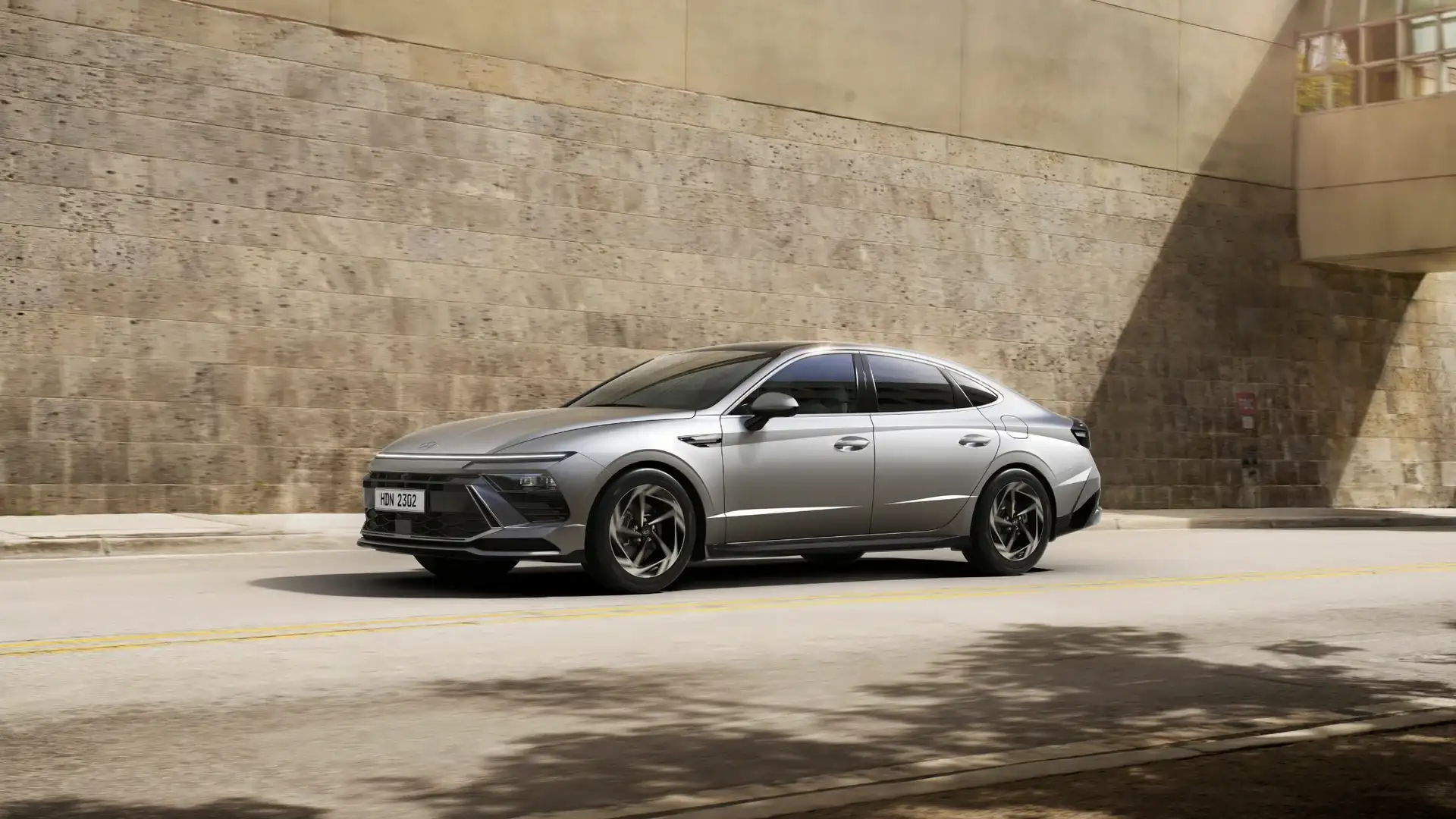
The 2026 Hyundai Sonata maintains a consistent exterior footprint across all trims. The wheelbase measures 111.8 inches, while the overall length is 193.3 inches. The vehicle width is 73.2 inches, excluding mirrors, and the overall height is 56.9 inches. Ground clearance is 5.3 inches. The coefficient of drag is rated at 0.27 for standard models and 0.24 for hybrid variants.
Wheel and tire configurations vary based on trim level. The SE trim uses 16-inch aluminum alloy wheels paired with 205/65R16 tires. SEL Sport trims use 18-inch aluminum alloy wheels with 235/45R18 tires. The N Line trim uses 19-inch aluminum alloy wheels with 245/40R19 tires. Hybrid Blue models use 16-inch alloy wheels, while hybrid SEL and Limited models use 17-inch alloy wheels with 215/55R17 tires.
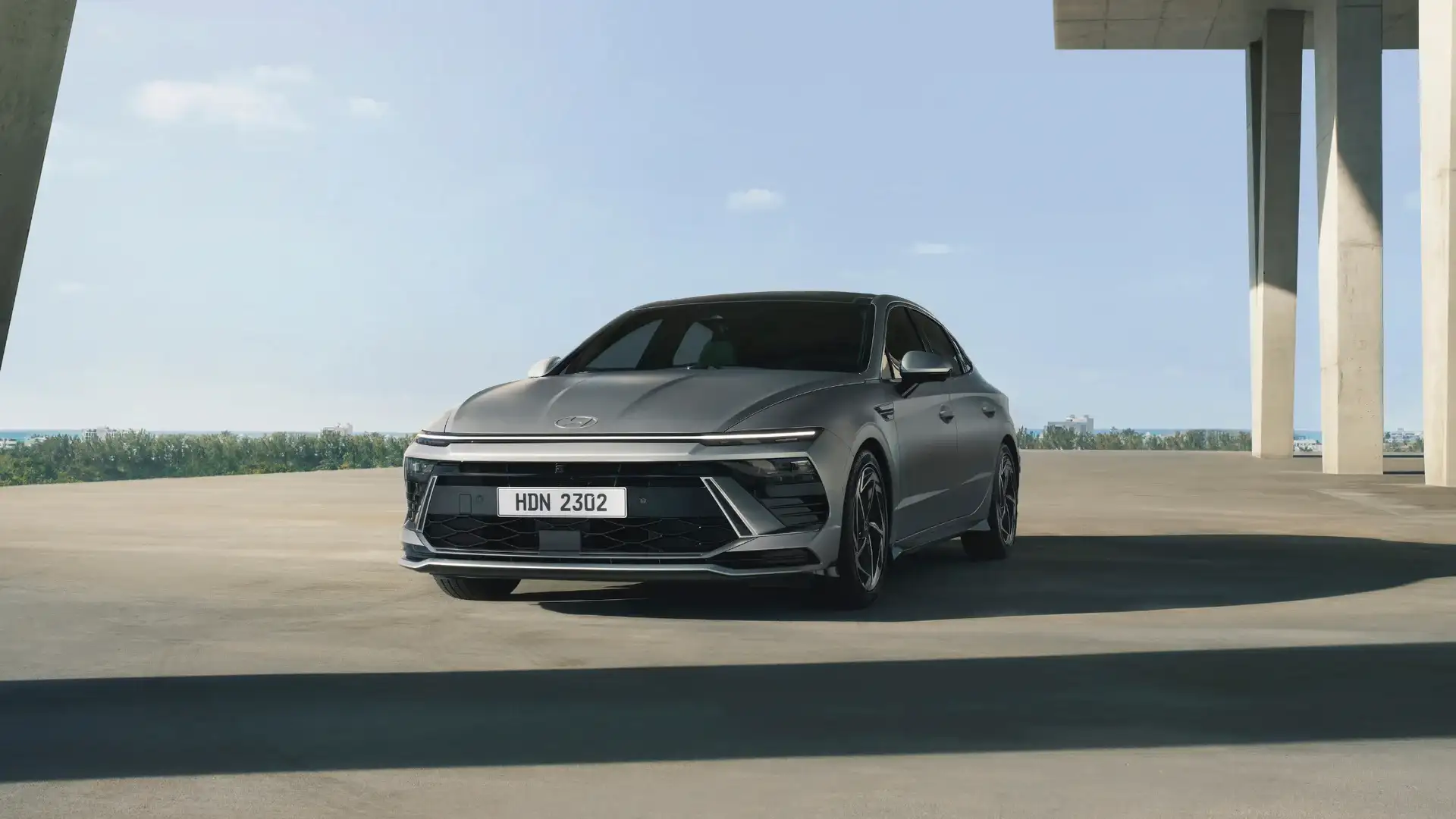
Lighting systems include LED projector-type headlights with automatic light control and automatic high beam assist. LED rear combination taillights are standard. Select trims include fender-mounted LED turn signal indicators. Solar control glass and acoustic film windshield are standard across the lineup, with additional acoustic film front door glass on select trims.
Interior Space Allocation and Seating Configurations
The 2026 Hyundai Sonata provides seating for five passengers with a total passenger volume of 104.4 cubic feet. Trunk capacity measures 15.6 cubic feet, resulting in a combined interior volume of 120.0 cubic feet. Front headroom measures 40.0 inches without a sunroof and 38.4 inches with a sunroof. Rear headroom measures 37.8 inches without a sunroof and 37.4 inches with a sunroof. Front legroom is 46.1 inches, and rear legroom is 34.8 inches. Shoulder room measures 57.9 inches in front and 56.1 inches in the rear.
Seating materials differ by trim. Standard models use premium cloth seating surfaces. N Line trims include H-Tex® bolsters with microfiber suede-like inserts and sport seat design. Higher hybrid trims use leather-trimmed seating surfaces. The driver’s seat is available with 8-way power adjustment and power lumbar support. The front passenger seat is available with 6-way power adjustment. Integrated memory system is available for the driver’s seat and side mirrors.
Additional features include heated front seats with three levels, ventilated front seats with three levels, and a 60/40 split fold-down rear seat configuration. Rear seating includes a center armrest with dual cup holders.
Digital Interface, Audio Systems, and Connectivity
The standard infotainment system includes a 12.3-inch HD touchscreen with AM/FM and MP3 functionality. The system integrates six speakers consisting of front door speakers, tweeters, and rear speakers. HD Radio™ and SiriusXM® satellite radio are included. Smartphone integration supports both Apple CarPlay® and Android Auto™ in wired and wireless formats. Bluelink® connected services are also included.
Higher trims include a 12.3-inch navigation system paired with a Bose® premium audio system with 12 speakers. The audio system includes a center channel, dash-mounted speakers, front tweeters, door-mounted speakers, rear speakers, and a rear subwoofer. This configuration also includes dynamic voice recognition, HERE HD traffic, and in-car payment capability through Hyundai Pay. Wi-Fi hotspot capability is included in equipped trims.
Interior connectivity includes front USB input, rear USB charging ports, wireless device charging, and a 12-volt outlet. The system also includes natural language voice recognition in navigation-equipped trims.
Climate Control and Interior Functional Systems
Climate control systems vary by trim. Base trims use manual air conditioning and heating. Higher trims include dual automatic climate control with automatic defog functionality. Rear seat air vents are included in higher trims to improve airflow distribution.
Additional interior systems include a cabin air filter, a rear window defroster with a timer, and steering wheel-mounted controls for audio, Bluetooth® phone operation, and cruise control. Select trims include a heated steering wheel and paddle shifters. Shift control is managed through either a shift-by-cable console-mounted system or a shift-by-wire column-mounted system depending on trim.
Integrated Driver Assistance and Safety Systems
The 2026 Hyundai Sonata includes a comprehensive set of driver assistance and safety systems. Standard features include forward collision-avoidance assist with pedestrian and cyclist detection and junction turning capability. Blind-spot collision warning with rear cross-traffic collision-avoidance assist is also standard. Lane keeping assist, lane following assist, and driver attention warning are included.
Additional systems include a rear occupant alert, a safe exit warning, and high beam assist. Advanced trims include a blind-spot view monitor, parking collision-avoidance assist for the rear, park distance warning for forward, side, and reverse zones, and a surround view monitor. Remote smart parking assist and highway driving assist are included in higher trims.
Passive safety systems include advanced airbags, including driver, front passenger, driver knee, side-impact, and side curtain airbags. The structure includes front and rear crumple zones, bodyside reinforcements, and an energy-absorbing steering column. Additional systems include seatbelt pretensioners, LATCH anchors, a tire pressure monitoring system with individual tire indicators, and an immobilizer.
Capacity, Weight Distribution, and Efficiency Ratings
Fuel tank capacity is 15.9 gallons for gasoline models and 13.2 gallons for hybrid models. Engine oil capacity ranges from 5.5 to 6.7 quarts depending on engine type. Curb weight varies by trim, starting at 3,232 pounds for SE models. SEL Sport models range from 3,305 pounds in front-wheel drive configuration to 3,466 pounds in all-wheel drive configuration. The N Line trim weighs 3,534 pounds. Hybrid models range from 3,439 pounds to 3,687 pounds depending on trim.
Fuel economy ratings vary by configuration. The SE achieves 28 city, 38 highway, and 32 combined mpg. The SEL Sport achieves 25 city, 36 highway, and 29 combined mpg in front-wheel drive and 24 city, 33 highway, and 27 combined mpg in all-wheel drive. The N Line achieves 23 city, 32 highway, and 27 combined mpg. Hybrid Blue achieves 47 city, 56 highway, and 51 combined mpg. Hybrid SEL and Limited achieve 44 city, 51 highway, and 47 combined mpg.
Disclaimer: 2026 SONATA SE: 28 City/38 Hwy/32 Combined MPG. 2026 SONATA SEL SPORT: 25 City/36 Hwy/29 Combined MPG. 2026 SONATA SEL SPORT AWD: 24 City/33 Hwy/27 Combined MPG. 2026 SONATA N Line: 23 City/32 Hwy/27 Combined MPG. All figures are EPA estimates and for comparison purposes only. Actual mileage may vary with options, driving conditions, driving habits and vehicle’s condition.
Visit ALM Hyundai Florence to Schedule a Test Ride
We invite you to schedule a test drive of the 2026 Hyundai Sonata at ALM Hyundai Florence near Conway, SC. This allows direct evaluation of the 2.5-liter engine, the turbocharged N Line configuration, and the hybrid system under controlled driving conditions. You can assess transmission response, steering calibration, braking performance, and ride quality across different trims. The in-vehicle display, connectivity features, and driver assistance systems can also be reviewed during operation. Our team is available to provide detailed explanations of specifications and system functions during your visit.