

2026 Hyundai Tucson close to Columbia SC
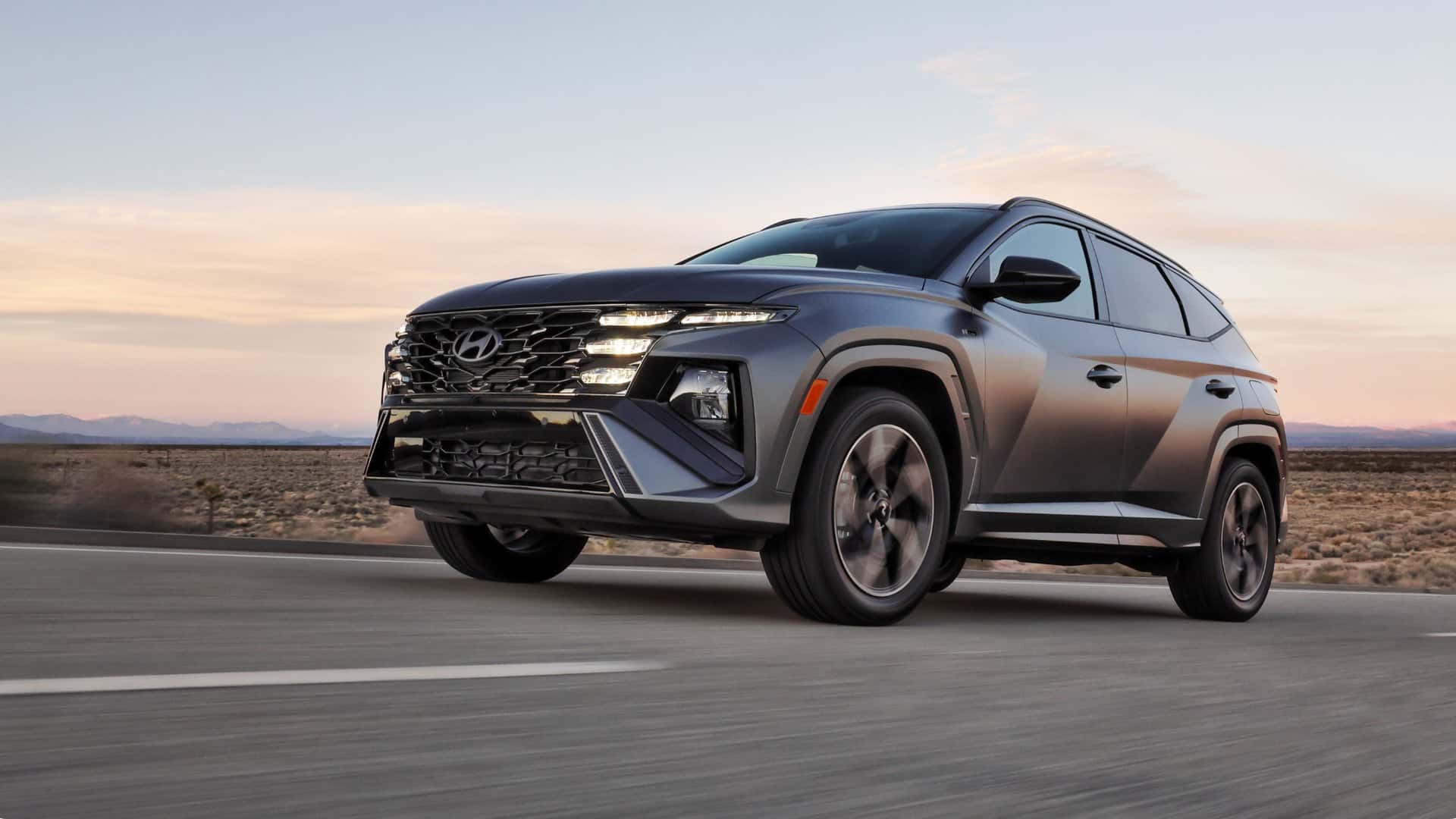
The 2026 Hyundai Tucson is engineered as a compact sport utility vehicle with multiple drivetrain configurations built on a shared unibody platform. The model lineup includes internal combustion engine variants, hybrid electric variants, and plug-in hybrid electric variants. All versions utilize advanced high-strength steel and high-tensile steel within the body structure to enhance rigidity, collision performance, and long-term durability. The platform design supports front-wheel drive and available all-wheel drive systems while maintaining consistent exterior dimensions and interior packaging across powertrain types.
Smartstream® Gasoline Engine Architecture
Gasoline-powered versions of the 2026 Hyundai Tucson are equipped with a Smartstream® 2.5-liter GDI and MPI inline four-cylinder engine. This engine features dual overhead camshafts with sixteen valves and a displacement of 2,497 cubic centimeters. Continuous variable valve timing is applied to improve combustion efficiency across a wide operating range. The aluminum engine block and cylinder head reduce mass while supporting effective thermal management.
Maximum output for the gasoline engine is rated at 187 horsepower at 6,100 revolutions per minute, with peak torque measured at 178 pound-feet at 4,000 revolutions per minute. A variable intake system adjusts airflow based on engine load to support consistent throttle response. The compression ratio is set at 13.0:1, and the engine is calibrated for regular unleaded fuel. Idle Stop and Go functionality is included to reduce fuel consumption during stationary operation.
Hybrid and Plug-In Hybrid Powertrain Systems
Hybrid and plug-in hybrid 2026 Hyundai Tucson models utilize a Smartstream® 1.6-liter Turbo-GDI inline four-cylinder engine combined with an electric motor. This engine features continuously variable valve duration technology, which dynamically adjusts valve opening time to balance power output and fuel efficiency. Displacement is measured at 1,598 cubic centimeters, and the compression ratio is 10.5:1.
In hybrid configuration, the combined system output reaches 231 horsepower with total system torque rated at 271 pound-feet. Plug-in hybrid models increase combined system output to 268 horsepower while maintaining the same torque figure. Electric motor output differs between the two systems, with the hybrid motor producing 64 horsepower and the plug-in hybrid motor producing 97 horsepower. Electric motor torque is delivered at low revolutions per minute to support immediate response during acceleration.
High-Voltage Battery and Charging Systems
The 2026 Hyundai Tucson Hybrid is equipped with a lithium-ion battery system rated at 1.49 kilowatt-hours with a maximum voltage of 270 volts. Plug-in hybrid models utilize a larger lithium-ion battery rated at 13.8 kilowatt-hours with a maximum voltage of 360 volts. Battery placement is engineered to preserve interior space while maintaining a low center of gravity.
Plug-in hybrid models include a charge port and an onboard charger rated at 7.2 kilowatts when connected to a 240-volt power source. Estimated charging time is approximately two hours under optimal conditions. Battery power output is rated at 64 kilowatts for hybrid models and 88 kilowatts for plug-in hybrid models.
Disclaimer: Estimated charging time is based on a Level 2 240V charger. Actual charging time varies based on a number of factors, including current battery charge level, output of the charging unit, vehicle and battery settings, battery temperature and outside temperature. Level 2 240V charger and cable are not included.
Transmission Design and Drivetrain Control
Gasoline-powered 2026 Hyundai Tucson use an 8-speed automatic transmission with a torque converter. This transmission is calibrated for smooth gear transitions and efficient highway operation. Hybrid and plug-in hybrid models are paired with a 6-speed automatic transmission designed to integrate electric motor assistance during gear changes.
Drive type availability includes front-wheel drive as standard on select configurations and HTRAC all-wheel drive as an available system across gasoline and electrified models. HTRAC actively distributes torque between the front and rear axles based on traction conditions and driver inputs. A center-console-mounted drive mode selector allows adjustment of drivetrain behavior to suit varying road conditions.
Steering, Suspension, and Chassis Dynamics
The steering system uses motor-driven power steering with a column-mounted rack-and-pinion design. Steering ratio is set at 13.7:1, with lock-to-lock steering measured at 2.41 turns. The turning diameter is rated at 38.6 feet curb to curb.
Front suspension consists of a MacPherson® strut layout with coil springs and gas-pressurized shock absorbers. The rear suspension uses a multi-link configuration with stabilizer bars and gas-pressurized dampers. This setup is designed to balance ride comfort with consistent wheel control during cornering and braking maneuvers.
Brake Systems and Vehicle Stability Technologies
All 2026 Hyundai Tucson models are equipped with four-wheel disc brakes. Front brakes use ventilated discs measuring 12.8 inches in diameter, while rear brakes use solid discs measuring 12.0 inches. Anti-lock braking is standard, supported by electronic brake-force distribution and brake assist functionality.
Additional stability systems include electronic stability control, traction control, vehicle stability management, hill start assist control, downhill brake control, and an electronic parking brake with automatic vehicle hold. These systems operate in coordination to maintain directional stability during acceleration, braking, and cornering.
Exterior Lighting, Wheels, and Functional Elements
Exterior lighting is fully LED-based across all trims. Bi-LED headlights provide both high and low beam functions, while LED daytime running lights and LED taillights enhance visibility. Automatic headlights and high beam assist are standard features.
Wheel options include 17-inch, 18-inch, and 19-inch alloy wheels depending on trim and drivetrain. Tire sizes are matched accordingly to maintain consistent ride height and handling characteristics. Roof rails are available and support a load capacity of up to 220 pounds. A hands-free smart liftgate with adjustable height functionality is available on select trims.
Interior Dimensions, Seating, and Cargo Capacity
The 2026 Hyundai Tucson interior is configured for five passengers with a focus on efficient space utilization. Front headroom measures up to 40.1 inches, while rear headroom reaches 39.5 inches without a sunroof. Legroom measures 41.4 inches in the front and up to 41.3 inches in the rear, depending on powertrain.
Cargo capacity with rear seats upright is rated at 38.1 cubic feet on gasoline and hybrid models. With rear seats folded, maximum cargo volume reaches up to 74.8 cubic feet. Plug-in hybrid models offer slightly reduced cargo capacity due to battery placement, with 31.9 cubic feet behind the rear seats and up to 66.3 cubic feet with seats folded.
Digital Instrumentation and Infotainment Systems
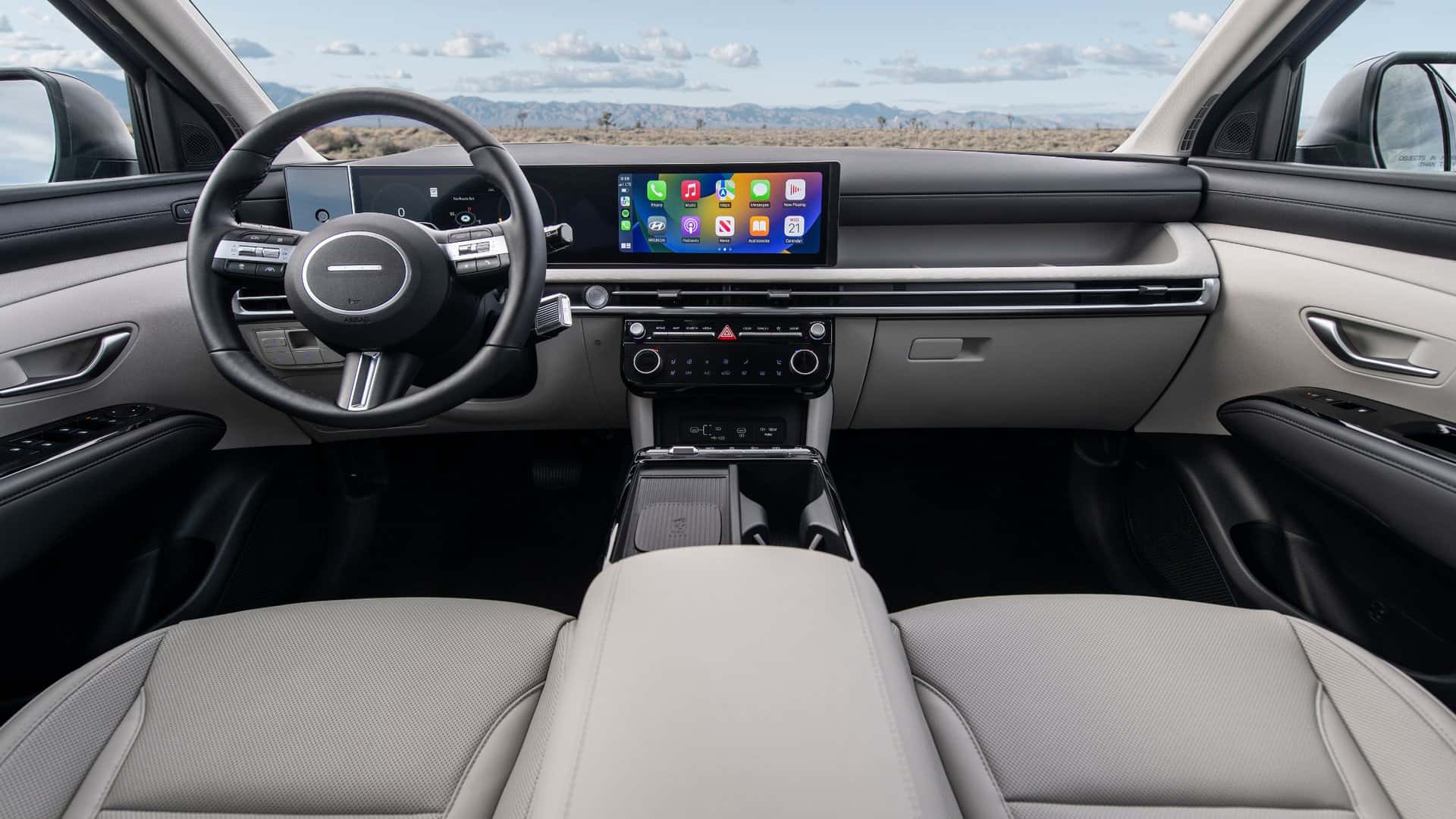
Standard infotainment equipment includes a 12.3-inch color touchscreen display supporting wireless Apple CarPlay® and Android Auto™. Higher trims add onboard navigation and over-the-air update capability for both multimedia software and map data. Audio output ranges from a 6-speaker system to an available Bose® premium audio system with an 8-speaker configuration and digital signal processing.
USB Type-C ports are provided for both data and charging in the front seating area, with additional high-output charging ports for rear passengers. A digital instrument cluster measuring up to 12.3 inches is available on select trims, providing configurable vehicle information and driver assistance indicators.
Advanced Driver Assistance and Safety Integration
Every 2026 Hyundai Tucson includes a comprehensive suite of active safety technologies. Standard systems include forward collision-avoidance assist with pedestrian, cyclist, and junction turning detection; blind-spot collision warning; rear cross-traffic collision-avoidance assist; lane keeping assist; lane following assist; driver attention warning; intelligent speed limit assist; and safe exit warning.
Available safety enhancements include surround view monitoring, blind-spot view monitoring, parking collision-avoidance assist in reverse, parking distance warning sensors, highway driving assist, navigation-based smart cruise control with curve control, and advanced rear occupant alert using radar detection.
Structural Safety and Occupant Protection Systems
Passive safety systems include multiple airbags positioned throughout the cabin, including front, side-impact, curtain, and rear side airbags. Seatbelt pretensioners and load limiters are installed for both front and rear outboard seating positions. Child safety features include LATCH anchor systems, rear door safety locks, and power window lockout controls.
The body structure incorporates reinforced side impact beams and crumple zones designed to manage collision energy. A tire pressure monitoring system provides individual tire status readings to support consistent vehicle operation.
Schedule a Test Ride close to Columbia SC
Drivers interested in evaluating the 2026 Hyundai Tucson can review its engineering details and system integration in person at ALM Hyundai Florence close to Columbia, SC. Experiencing the Smartstream® powertrain options, transmission calibration, and driver assistance technologies firsthand provides a clear understanding of how these systems function together. A scheduled test drive allows direct evaluation of steering response, braking performance, and cabin technology interfaces. The opportunity also supports comparison between gasoline, hybrid, and plug-in hybrid configurations under similar driving conditions. Appointments can be arranged to ensure dedicated time for reviewing the vehicle’s specifications and operational characteristics in a controlled environment.