

2026 Hyundai Tucson Hybrid close to Columbia, SC
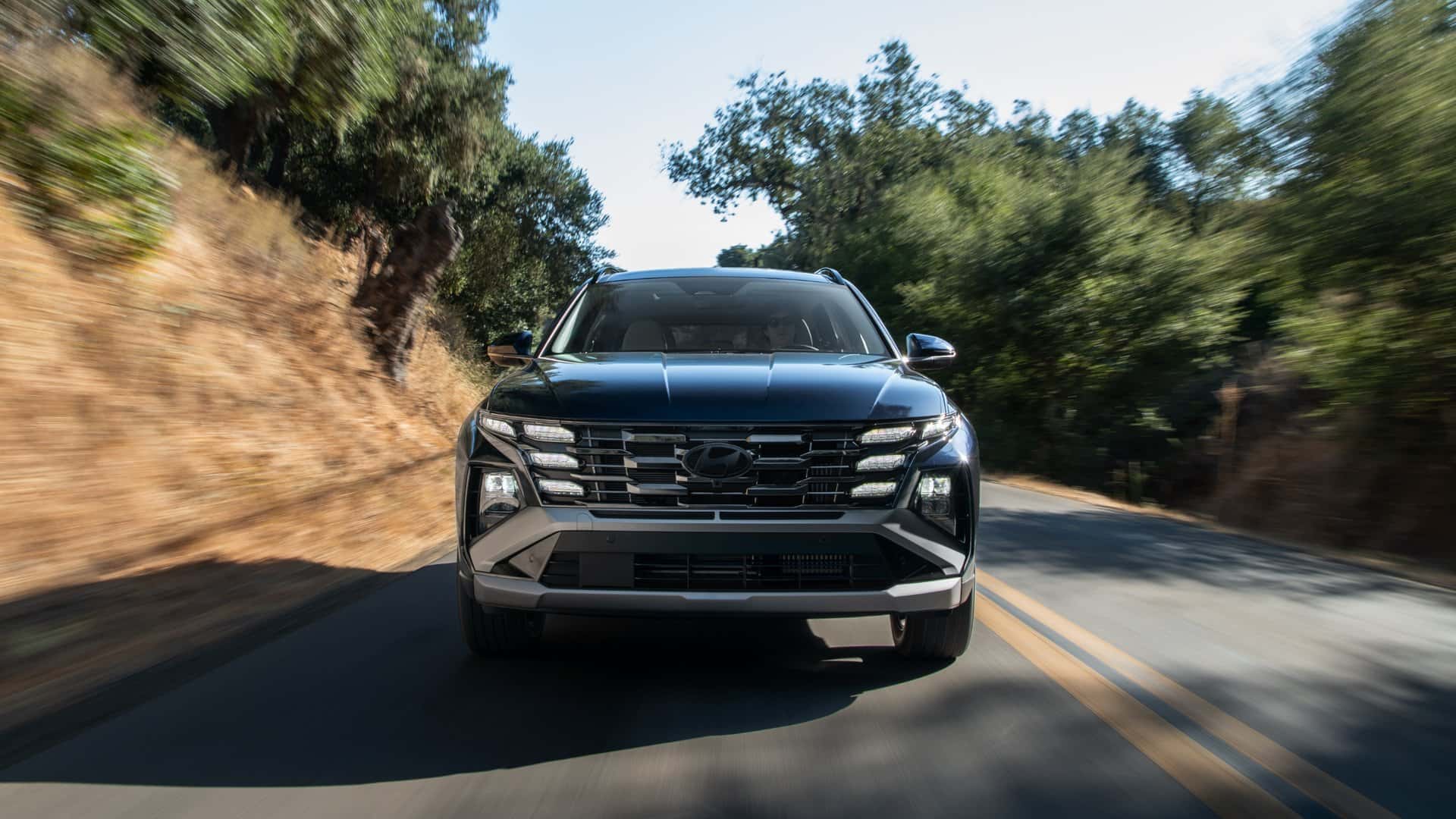
The 2026 Hyundai Tucson Hybrid is engineered as a compact SUV that integrates a turbocharged gasoline engine with an electric motor system. This configuration is designed to provide balanced power output, efficient operation, and stable drivetrain performance within the small SUV segment. The vehicle incorporates Hyundai’s Smartstream® hybrid powertrain architecture along with a reinforced unibody chassis, a multi-link suspension system, and a comprehensive range of safety technologies.
The 2026 Hyundai Tucson Hybrid also integrates advanced digital interfaces and connectivity systems that support driver interaction and cabin functionality. A large touchscreen display, digital instrumentation, and a connected vehicle platform support navigation, media access, and system updates. These elements operate alongside a series of driver assistance systems that monitor surrounding traffic conditions and assist with vehicle control.
Turbocharged Hybrid Powertrain Architecture
The 2026 Hyundai Tucson Hybrid uses a Smartstream® 1.6-liter Turbo-GDI DOHC 16-valve inline four-cylinder gasoline engine paired with an electric motor. The gasoline engine produces 178 horsepower at 5,500 rpm and generates 195 lb-ft of torque across a range from 1,500 to 4,500 rpm. The engine operates with Continuously Variable Valve Duration technology, which adjusts valve timing duration to improve combustion efficiency and support engine responsiveness across different operating conditions.
The hybrid power system integrates a permanent magnet synchronous electric motor rated at 47.7 kW, equivalent to 64 horsepower. The electric motor produces 195 lb-ft of torque at approximately 1,700 rpm. When the gasoline engine and electric motor function together, the combined hybrid system produces a total output of 231 horsepower and 271 lb-ft of torque. This combined output allows the vehicle to maintain strong acceleration and consistent torque delivery during both low-speed and highway driving.
Energy for the hybrid system is supplied by a lithium-ion battery pack with a capacity of 1.49 kWh. The battery operates at a maximum voltage of 270 volts and supports hybrid propulsion as well as regenerative braking functions. Regenerative braking converts kinetic energy generated during deceleration into electrical energy that recharges the battery. This system contributes to improved energy efficiency and reduced reliance on the gasoline engine during certain driving phases.
The engine uses an aluminum block and aluminum cylinder head construction. The intake system uses a variable intake design that supports airflow optimization across different engine loads. The compression ratio for the turbocharged engine is rated at 10.5. The vehicle operates on regular unleaded fuel and incorporates a SULEV30 emissions control system designed to meet stringent emission standards.
Transmission Systems and HTRAC All-Wheel Drive
Power from the hybrid powertrain is delivered through a six-speed automatic transmission with a torque converter. This transmission configuration is designed to provide predictable gear changes and consistent torque distribution during acceleration and deceleration. The transmission includes Shift-by-Wire functionality that replaces traditional mechanical linkages with electronic shift controls.
The 2026 Hyundai Tucson Hybrid is equipped with Hyundai’s HTRAC all-wheel-drive system. This drivetrain system continuously monitors traction conditions and distributes engine torque between the front and rear wheels when additional grip is required.
A center console-mounted drive mode selector allows the driver to adjust drivetrain characteristics and throttle response. Steering wheel paddle shifters are also included to provide manual gear selection when desired.
Suspension, Steering, and Braking Systems
The 2026 Hyundai Tucson Hybrid uses a suspension system designed to balance ride comfort with stability. The front suspension uses a MacPherson® strut configuration with coil springs and a stabilizer bar. Gas-pressurized shock absorbers support damping control and help maintain wheel contact with the road surface.
The rear suspension uses a multi-link design that supports independent wheel movement and improved ride stability. This configuration helps reduce body roll during cornering and improves overall handling characteristics. Stabilizer bars are also included in the rear suspension assembly.
Steering functions are managed through a motor-driven power steering system using a rack-and-pinion layout. The steering system has an overall ratio of 13.7:1 and requires approximately 2.41 turns from lock to lock. The turning diameter measured curb-to-curb is 38.6 feet, supporting maneuverability in urban driving conditions.
The braking system consists of ventilated front disc brakes measuring 12.8 inches in diameter and solid rear disc brakes measuring 12.0 inches. The braking system operates with anti-lock braking functionality and electronic brake-force distribution. Additional braking technologies include downhill brake control, hill start assist control, brake assist, and an electronic parking brake with automatic vehicle hold functionality.
Structural Engineering and Body Construction
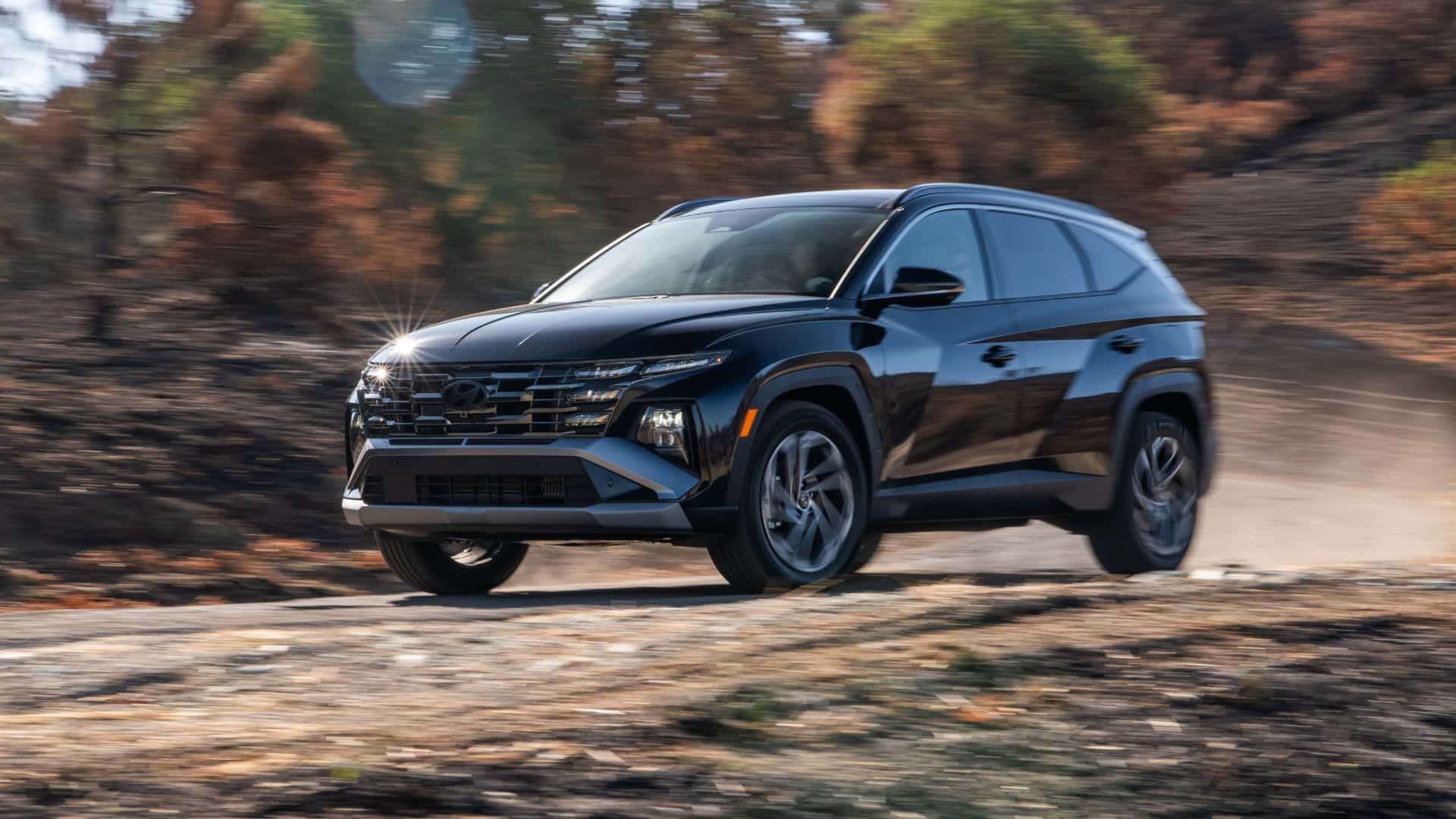
The body structure of the 2026 Hyundai Tucson Hybrid uses a unibody monocoque chassis built primarily from advanced high-strength steel and high-tensile steel. This construction method improves structural rigidity and contributes to occupant protection during impact events. The reinforced body structure also supports suspension mounting points and drivetrain integration.
The vehicle’s aerodynamic profile includes a coefficient of drag measured at 0.33. Exterior dimensions support balanced proportions within the compact SUV category. The vehicle has a wheelbase of 108.5 inches and an overall length of 182.7 inches. The width measures 73.4 inches, and the height reaches 66.3 inches for all-wheel drive configurations with roof rails installed.
Minimum ground clearance ranges from 7.1 inches to 8.3 inches depending on drivetrain configuration. Roof rails installed on the vehicle support a maximum load capacity of 220 pounds. These structural and dimensional characteristics contribute to vehicle stability, cargo functionality, and aerodynamic efficiency.
Exterior Lighting and Functional Design
The exterior lighting system of the 2026 Hyundai Tucson Hybrid incorporates LED technology for both visibility and efficiency. The vehicle uses bi-LED headlights that provide both high-beam and low-beam illumination. LED daytime running lights operate during daylight driving to improve vehicle visibility to surrounding traffic.
LED front turn signals are integrated into the front lighting assembly. The rear of the vehicle includes LED taillights and LED license plate lighting. Automatic headlight functionality activates exterior lighting when ambient light conditions change. High Beam Assist automatically adjusts high-beam operation to prevent glare for oncoming vehicles.
Exterior mirror housings are body-colored and include heating functionality on most trim levels. Mirrors also incorporate blind spot warning indicators that provide visual alerts when vehicles approach from adjacent lanes. Some configurations include turn signal indicators integrated into the mirror assemblies.
The vehicle is equipped with alloy wheel options measuring 17 inches, 18 inches, or 19 inches in diameter, depending on trim configuration. Tire sizes include 235/65R17, 235/60R18, and 235/55R19. A temporary spare tire or tire mobility kit is included depending on configuration.
Interior Space and Seating Configuration
The cabin of the 2026 Hyundai Tucson Hybrid accommodates five passengers across two seating rows. Seating materials vary by trim level and include cloth upholstery, H-Tex® leatherette surfaces, and leather seating surfaces. The front driver’s seat may include eight-way power adjustment and power lumbar support depending on configuration.
Front seats include heating functionality with three adjustable levels. Higher trim levels incorporate ventilated front seats and an integrated memory system that stores driver seat and mirror positions. The front passenger seat may also include eight-way power adjustment on certain trims.
Rear seating includes a 60-40 split fold-down design with reclining seatbacks. Adjustable rear head restraints are included for outboard seating positions. Rear seat heating functionality is available on certain trims. The cargo area incorporates a dual-level cargo floor design and remote-release folding rear seats accessible from the cargo compartment.
Interior measurements support passenger comfort and cargo versatility. Front headroom measures approximately 40.1 inches, while rear headroom measures 39.5 inches without a sunroof. Front legroom measures 41.4 inches, and rear legroom measures approximately 41.3 inches. Shoulder room measures 57.6 inches in the front and 56.0 inches in the rear.
Cargo capacity behind the rear seats measures 38.7 cubic feet. Folding the rear seats expands cargo capacity to approximately 74.5 cubic feet in hybrid models.
Digital Displays and Multimedia Technology
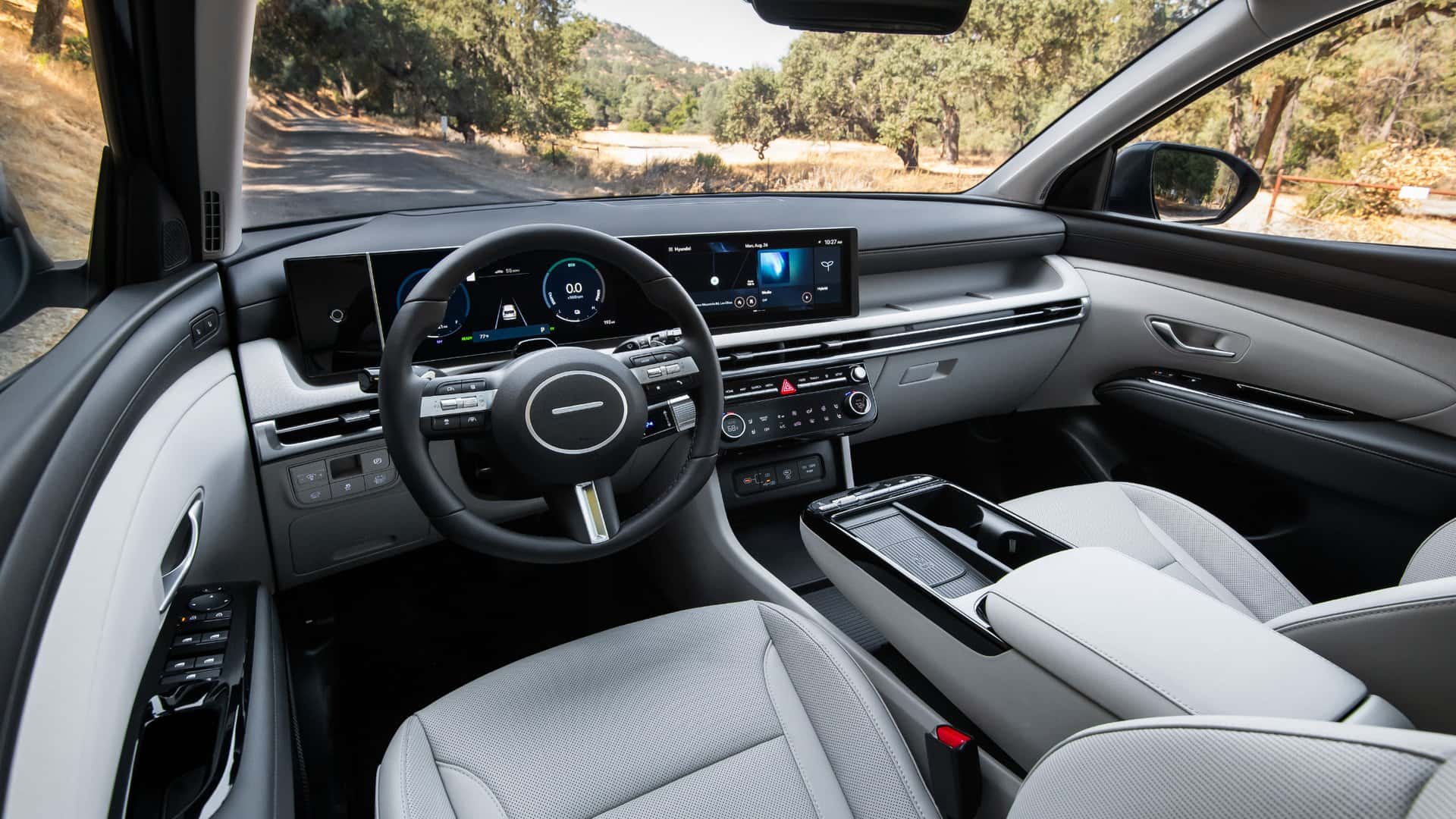
The 2026 Hyundai Tucson Hybrid incorporates a digital infotainment system centered around a 12.3-inch color touchscreen display. The display provides access to AM/FM radio, HD Radio™, and SiriusXM® satellite radio functionality. Wireless Apple CarPlay® and Android Auto™ connectivity are included for smartphone integration.
The infotainment system also supports over-the-air software updates that allow map and multimedia system updates without requiring dealership installation. Dual USB-C ports in the front row provide both data connectivity and charging capability. Two additional USB charging ports are installed for rear passengers.
A rearview camera provides a live display of the area behind the vehicle during reversing maneuvers. Certain trim levels incorporate an onboard navigation system integrated into the infotainment interface.
Higher trims include a Bose® premium audio system that uses an eight-channel digital amplifier and eight speakers positioned throughout the cabin. Speaker placement includes tweeters, door speakers, a center instrument panel speaker, and a rear quarter panel woofer.
The driver instrument cluster is available in either a 4.2-inch multi-information display or a full 12.3-inch digital instrument panel, depending on the trim level. The display provides vehicle information, including speed, fuel level, trip data, safety alerts, and drivetrain status.
Driver Assistance and Safety Technologies
The 2026 Hyundai Tucson Hybrid integrates a comprehensive set of driver assistance and safety technologies designed to support vehicle awareness and collision prevention. Passive safety components include front airbags, side-impact airbags, side curtain airbags with rollover sensors, and rear side airbags.
Seatbelt systems include three-point seatbelts for all seating positions with pretensioners and load limiters for front occupants. LATCH child-seat anchors and tether points are included in the rear seating positions.
Active driver assistance systems monitor surrounding traffic conditions using cameras and radar sensors. Forward Collision Avoidance Assist detects vehicles, pedestrians, and cyclists and can provide automatic braking intervention if a potential collision is detected.
Blind Spot Collision Warning monitors adjacent lanes and alerts the driver if another vehicle enters the blind spot area. Rear Cross Traffic Collision Avoidance Assist provides warnings and braking support when reversing out of parking spaces with approaching traffic.
Lane Keeping Assist monitors lane markings and can apply steering input to maintain lane positioning. Lane Following Assist provides continuous steering support to keep the vehicle centered in its lane during highway travel.
Driver Attention Warning monitors driver input patterns and provides alerts if signs of reduced attention are detected. Intelligent Speed Limit Assist detects posted speed limit signs and provides visual notifications through the instrument cluster.
Higher trims include additional technologies such as Surround View Monitor, Blind Spot View Monitor, Parking Distance Warning, and Highway Driving Assist. These systems provide enhanced situational awareness and assist with vehicle positioning in complex driving environments.
Schedule a Test Ride close to Columbia, SC
Drivers interested in examining the engineering and hybrid powertrain technology of the 2026 Hyundai Tucson Hybrid can schedule a test drive through ALM Hyundai Florence, close to Columbia, SC. A test drive provides the opportunity to observe the hybrid system’s combined power output, evaluate the operation of the six-speed transmission, and experience the vehicle’s steering and suspension configuration. The digital displays, infotainment interface, and connected vehicle technology can also be explored during the drive. Driver assistance systems and visibility features become easier to understand during normal operation on public roads. Scheduling a test drive allows prospective drivers to examine the 2026 Hyundai Tucson Hybrid’s technical systems and overall functionality in a controlled driving environment.