

2026 Hyundai Tucson Hybrid close to Myrtle Beach
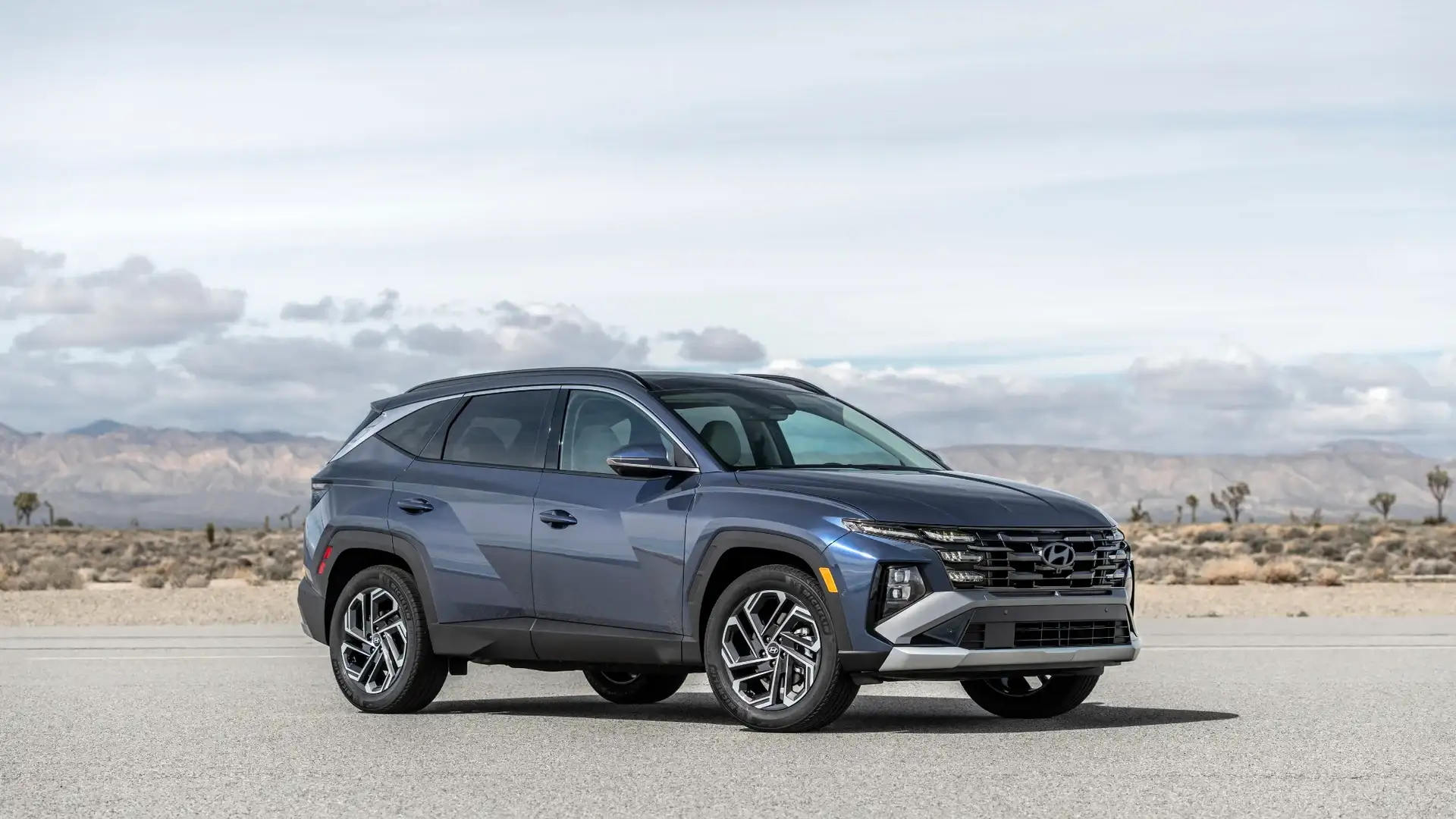
The 2026 Hyundai Tucson Hybrid combines turbocharged hybrid performance, all-wheel drive capability, advanced cabin technology, and a wide range of safety systems within the brand’s compact SUV platform. The Hybrid trim uses a dedicated electrified powertrain designed to improve efficiency while maintaining strong torque delivery and balanced driving dynamics. Hyundai integrates the hybrid system with a turbocharged gasoline engine, a lithium-ion battery system, and a 6-speed automatic transmission to create a drivetrain focused on responsive operation and controlled power distribution.
The 2026 Hyundai Tucson Hybrid also incorporates updated exterior styling, revised interior technology, expanded driver-assistance systems, and flexible cargo functionality. The platform supports five-passenger seating, multiple trim configurations, advanced multimedia integration, and standard HTRAC all-wheel drive on hybrid models. The result is a compact SUV that prioritizes technical capability, interior functionality, and connected driving features.
Turbocharged Hybrid Powertrain Engineering
The 2026 Hyundai Tucson Hybrid uses the brand’s Smartstream® 1.6-liter Turbo-GDI DOHC 16-valve inline 4-cylinder engine. The engine has a displacement of 1,598 cc and includes an aluminum block and aluminum cylinder head construction. Hyundai equips the engine with Continuously Variable Valve Duration technology to improve combustion management and operating efficiency across varying engine speeds.
The gasoline engine independently produces 178 horsepower at 5,500 rpm and 195 lb-ft of torque from 1,500 to 4,500 rpm. The turbocharged configuration allows the engine to maintain low-end torque delivery across a broad rpm range. Hyundai pairs the combustion engine with a permanent magnet synchronous electric motor that produces 47.7 kW, equivalent to 64 horsepower, and 195 lb-ft of torque. Combined system output reaches 231 horsepower and 271 lb-ft of torque.
The hybrid system uses a lithium-ion battery pack with a maximum voltage of 270 V and a battery system capacity of 1.49 kWh. Battery power output reaches 64 kW. Hyundai calibrates the system to support smooth transitions between gasoline and electric operation while maintaining consistent acceleration response. The 2026 Hyundai Tucson Hybrid uses regular unleaded fuel and complies with SULEV30 emissions standards.
Six-Speed Automatic Transmission and HTRAC AWD
The 2026 Hyundai Tucson Hybrid uses a 6-speed automatic torque-converter transmission. Hyundai integrates paddle shifters into the steering wheel to provide manual gear selection control when needed. The Hybrid trim also includes shift-by-wire technology, replacing the conventional mechanical shifter with an electronically controlled interface positioned within the center console layout.
HTRAC Active On-Demand all-wheel drive comes standard on Hybrid models. The system monitors traction conditions and adjusts torque distribution between the front and rear axles as necessary. Hyundai also includes a center-console-mounted Drive Mode selector, allowing drivers to modify vehicle response characteristics depending on road conditions and driving preferences.
The 2026 Hyundai Tucson Hybrid uses a final gear ratio of 3.320. Hyundai configures the drivetrain to balance fuel efficiency, low-speed torque delivery, and highway cruising stability. The electrified system also eliminates the idle stop & go function used on gasoline-only models because the hybrid drivetrain automatically manages power transitions during idle operation.
Chassis Structure and Suspension Configuration
The 2026 Hyundai Tucson Hybrid uses a unibody chassis structure constructed primarily from advanced high-strength steel and high-tensile steel. This construction supports structural rigidity while maintaining controlled overall vehicle weight. Hyundai combines the chassis with a MacPherson® strut front suspension and a multi-link rear suspension configuration.
Gas-pressurized shock absorbers and stabilizer bars are standard at both the front and rear. This suspension layout is designed to improve ride stability, steering response, and handling consistency across different driving conditions. Hyundai also equips the 2026 Hyundai Tucson Hybrid with Motor Driven Power Steering using a rack-and-pinion steering system mounted to the steering column.
The steering system uses a 13.7:1 steering ratio and requires 2.41 turns lock-to-lock. The curb-to-curb turning diameter measures 38.6 feet. Braking performance is supported by 12.8-inch ventilated front disc brakes and 12.0-inch solid rear disc brakes. Hyundai also includes Electronic Brake-force Distribution, Brake Assist, Downhill Brake Control, Hill Start Assist Control, and an Electronic Parking Brake with Automatic Vehicle Hold functionality.
Exterior Design and Utility Features
The 2026 Hyundai Tucson Hybrid maintains the updated Tucson exterior design language with revised lighting elements, aerodynamic body shaping, and integrated utility features. Hybrid trims receive anodized aluminum HEV badging along with the updated anodized aluminum TUCSON rear badge.
Hybrid configurations are available with 17-inch, 18-inch, or 19-inch alloy wheels depending on trim level. Tire sizes include 235/65R17, 235/60R18, and 235/55R19 configurations. Hybrid models use a Tire Mobility Kit in place of a temporary spare tire.
The exterior lighting system includes bi-LED headlights, LED front turn signals, LED daytime running lights, automatic headlights, and high beam assist. Higher trims add projector-type LED headlight systems and premium half-mirror-type daytime running light designs. LED taillights and LED license plate lighting are also included on upper trims.
The 2026 Hyundai Tucson Hybrid includes body-color bumpers, an integrated rear spoiler design, acoustic laminated windshield glass, roof side rails, trailer pre-wiring, and a hands-free Smart Liftgate with adjustable height settings on higher trims. Limited models add a panoramic sunroof with one-touch open functionality and a powered rear sunshade. Hyundai also includes solar glass on the windshield and front doors to improve cabin temperature management.
Passenger Space and Cargo Flexibility
The 2026 Hyundai Tucson Hybrid provides seating for five passengers. Interior dimensions are configured to maximize cabin usability while maintaining compact SUV proportions. Front headroom measures 40.1 inches without a sunroof, while rear headroom measures 39.5 inches. Panoramic sunroof-equipped Hybrid models provide 38.1 inches of front headroom and 38.7 inches of rear headroom.
Front legroom measures 41.4 inches, while rear legroom measures 41.3 inches. Front shoulder room reaches 57.6 inches, and rear shoulder room measures 56.0 inches. Front and rear hip room measurements are 54.5 inches and 53.9 inches, respectively.
Cargo capacity remains a major functional component of the 2026 Hyundai Tucson Hybrid platform. With the rear seats upright, the Hybrid model provides 38.7 cubic feet of cargo space under SAE measurement standards. With the rear seats folded down, total cargo capacity expands to 74.5 cubic feet. Hyundai also includes a dual-level cargo floor, cargo tie-down anchors, remote-release folding rear seats accessible from the cargo area, and second-row seatback bag hooks.
Interior Materials and Seating Systems
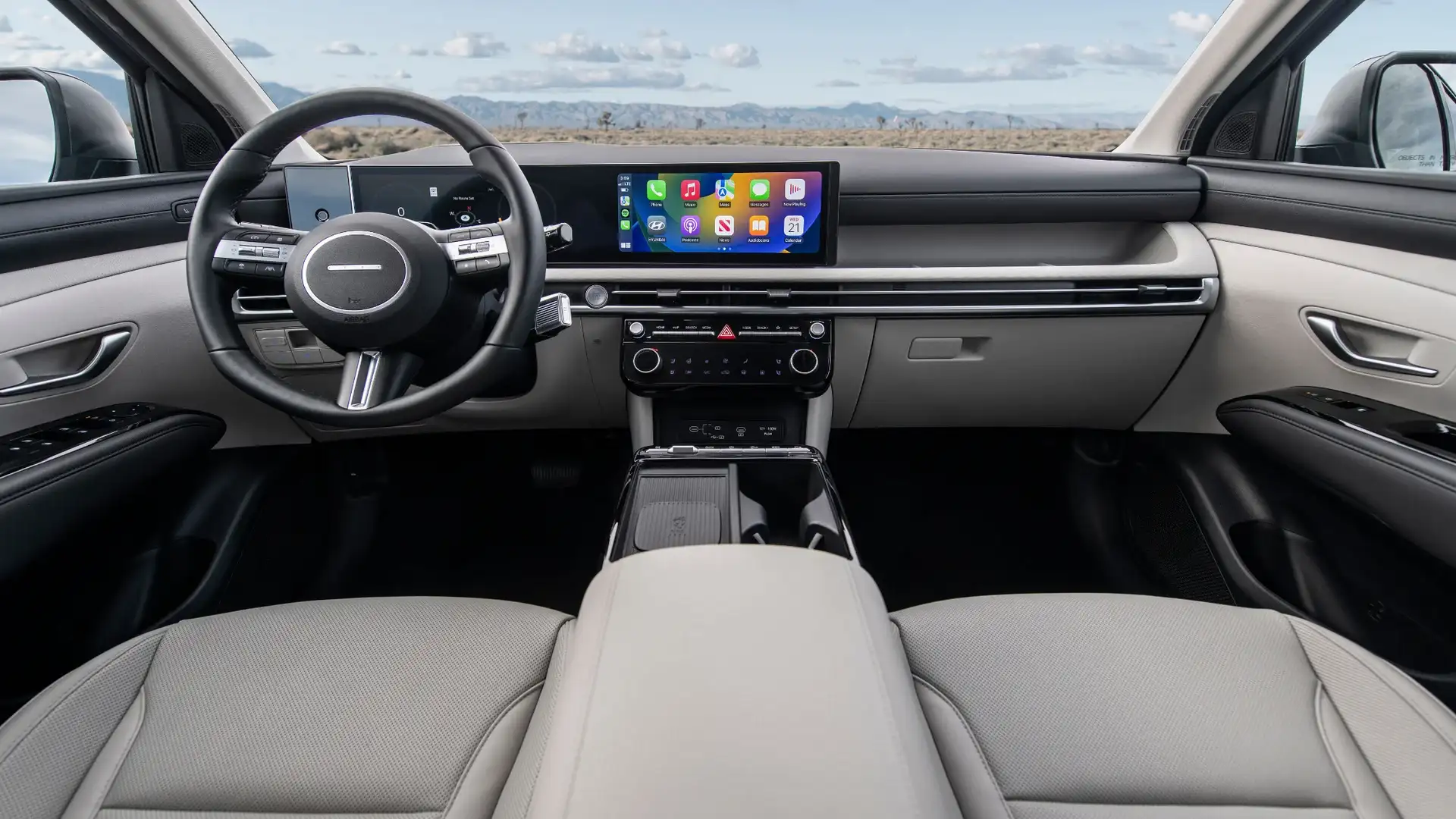
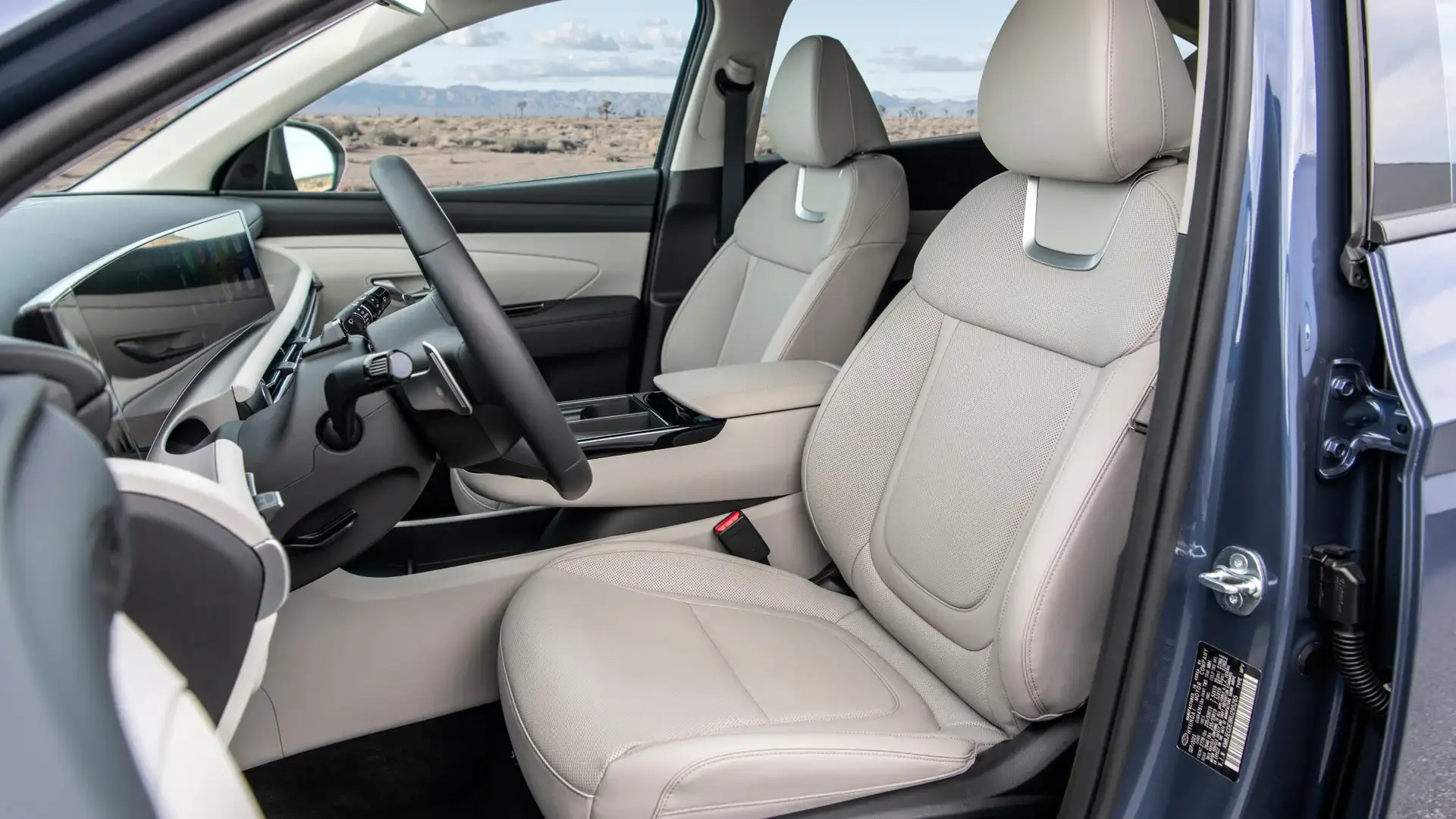
The 2026 Hyundai Tucson Hybrid interior uses a layered dashboard layout with integrated display technology and centrally positioned climate controls. Depending on the trim level, seating surfaces include stain-resistant cloth upholstery, H-Tex®-trimmed seating surfaces, or leather-trimmed seats.
Hybrid SEL and Limited models include an 8-way power-adjustable driver’s seat with lumbar support. Heated front seats are also included. Limited models add an 8-way power-adjustable front passenger seat, ventilated front seats, heated rear seats, and an integrated memory system for driver seating and outside mirror positioning.
The rear seats use a 60/40 split-folding configuration with reclining seatbacks and adjustable rear head restraints. Hyundai also integrates rear A/C vents into the center console and includes rear heater ducts throughout the Hybrid lineup.
The steering wheel includes tilt-and-telescoping adjustment, integrated audio controls, Bluetooth® phone controls, and cruise control operation buttons. Higher trims add leather-wrapped steering wheel surfaces and heated steering wheel functionality.
Advanced Multimedia and Connectivity Systems
The 2026 Hyundai Tucson Hybrid includes a 12.3-inch color touchscreen infotainment display. Standard multimedia equipment includes AM/FM radio, HD Radio™ technology, SiriusXM® satellite radio capability, wireless Apple CarPlay®, and wireless Android Auto™ integration. Hyundai also includes over-the-air controller update capability across the lineup.
Front occupants receive dual USB Type-C ports, including one data and charging port along with one dedicated charging port delivering a 27W output. Rear passengers also receive dual USB charging ports with 27W charging capability.
Higher Hybrid trims add onboard navigation functionality along with map and multimedia over-the-air update capability. Limited models include a Bose® premium audio system with eight speakers, Digital Signal Processing, Dynamic Speed Compensation, and a digital 8-channel amplifier. The audio system includes dedicated tweeters, door-mounted speakers, a center instrument panel speaker, and a rear quarter-panel woofer.
The 2026 Hyundai Tucson Hybrid also supports Hyundai Digital Key 2 Premium functionality using NFC, BLE, and UWB technology. Additional connected technology includes Bluelink®+ Connected Car System integration and Hyundai Pay capability on select configurations.
Driver Assistance and Active Safety Technologies
The 2026 Hyundai Tucson Hybrid incorporates a broad range of driver-assistance systems and active safety technologies. Standard equipment includes Forward Collision-Avoidance Assist with pedestrian, cyclist, and junction turning detection capability. Hyundai also includes Blind-Spot Collision Warning, Rear Cross-Traffic Collision-Avoidance Assist, Lane Keeping Assist, Lane Following Assist, Driver Attention Warning, Intelligent Speed Limit Assist, and Safe Exit Warning.
Smart Cruise Control with Stop and Go functionality is standard across the Hybrid lineup. Steering wheel haptic feedback is also integrated into Lane Keeping Assist and Blind-Spot Collision systems to improve driver awareness during warning events.
Higher trims add Highway Driving Assist 1, Navigation-based Smart Cruise Control with Curve Control, Blind-Spot View Monitor, Surround View Monitor, Parking Collision-Avoidance Assist Reverse, and Parking Distance Warning systems for front, rear, and side detection coverage. Hyundai also equips upper trims with Forward Attention Warning using an in-cabin camera-based Driver Monitoring System.
Passive safety systems include advanced front airbags, front-seat side-impact airbags, rear side airbags, and side curtain airbags with rollover sensors. Hyundai also integrates front and rear outboard seatbelt pretensioners, load limiters, LATCH child-seat anchors, rear child safety locks, and bodyside reinforcements throughout the vehicle structure.
Visit ALM Hyundai Florence, close to Myrtle Beach
Drivers interested in the 2026 Hyundai Tucson Hybrid can explore the vehicle’s hybrid performance systems, cargo flexibility, interior technology, and safety features at ALM Hyundai Florence, close to Myrtle Beach. A closer inspection of the Hybrid trim allows drivers to evaluate the turbocharged hybrid powertrain, standard all-wheel-drive system, and integrated driver assistance technologies in detail. The cabin layout, multimedia systems, seating configurations, and cargo management features can also be reviewed directly during a visit to our dealership. Test drives provide an opportunity to experience the acceleration response, steering calibration, and ride quality of the 2026 Hyundai Tucson Hybrid across different driving conditions. The brand’s updated Hybrid platform combines electrified efficiency, advanced connectivity, and compact SUV practicality within a single integrated design.