

2026 Hyundai Tucson near Conway, SC
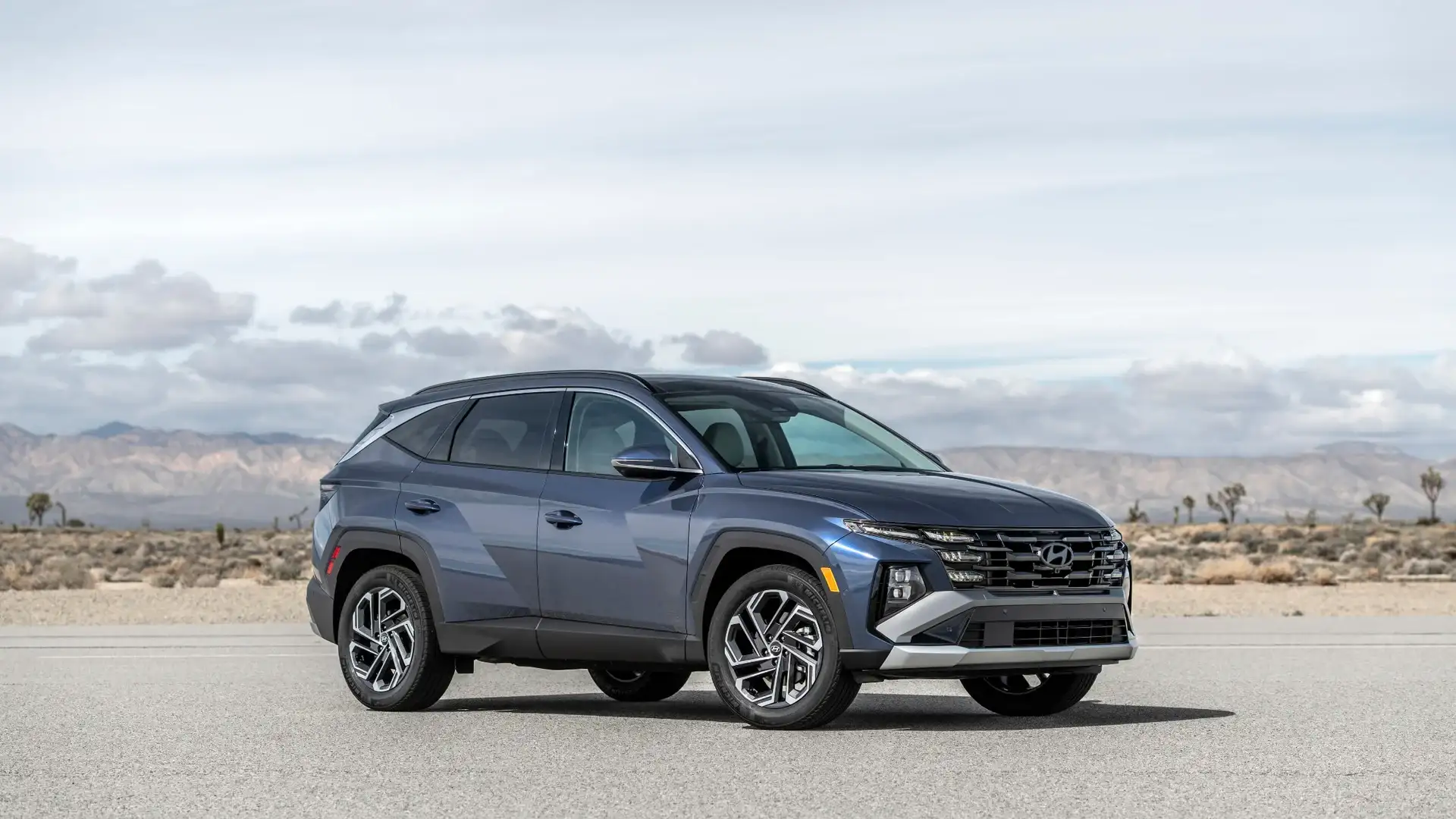
The 2026 Hyundai Tucson offers three distinct powertrain configurations, each designed to deliver specific performance characteristics through measured engineering specifications. The standard internal combustion option uses a Smartstream® 2.5-liter GDI plus MPI DOHC 16-valve inline 4-cylinder engine with a displacement of 2,497 cc. This engine produces 187 horsepower at 6,100 rpm and 178 lb-ft of torque at 4,000 rpm. It incorporates Continuously Variable Valve Timing and a variable intake system to regulate airflow and combustion efficiency. The engine uses an aluminum block and head construction, paired with a compression ratio of 13.0, and operates on regular unleaded fuel. Idle Stop and Go functionality is included to manage fuel consumption during stationary conditions.
Hybrid and plug-in hybrid configurations use a Smartstream® 1.6-liter Turbo-GDI DOHC 16-valve inline 4-cylinder engine with a displacement of 1,598 cc. This engine produces 178 horsepower at 5,500 rpm and 195 lb-ft of torque within a range of 1,500 to 4,500 rpm. It features Continuously Variable Valve Duration, which adjusts valve operation based on engine load. The hybrid system integrates a permanent magnet synchronous motor, delivering a combined output of 231 horsepower and 271 lb-ft of torque. The plug-in hybrid system increases total output to 268 horsepower while maintaining 271 lb-ft of torque. The hybrid battery operates at 270 volts with a capacity of 1.49 kWh, while the plug-in hybrid battery operates at 360 volts with a capacity of 13.8 kWh. The plug-in hybrid includes a 7.2 kW onboard charger and supports a charging time of approximately two hours at 240 volts.
Transmission Systems and Drivetrain Configuration
The gasoline-powered 2026 Hyundai Tucson uses an 8-speed automatic transmission with a torque converter, providing a structured gear ratio progression for consistent power delivery. Hybrid and plug-in hybrid models use a 6-speed automatic transmission designed to integrate with the electric motor system. Gear ratios are calibrated to balance acceleration and efficiency, with final drive ratios set at 3.648 for the 2.5-liter engine and 3.320 or 3.367 for hybrid and plug-in hybrid models.
Front-wheel drive is standard on gasoline models, while HTRAC all-wheel drive is available. Hybrid and plug-in hybrid models include HTRAC all-wheel drive as standard equipment. The system operates as an active on-demand drivetrain, adjusting torque distribution based on traction requirements. Drive modes are controlled through a center-console-mounted selector, allowing the driver to adjust system responses. Paddle shifters are available on gasoline models and standard on electrified models, while shift-by-wire functionality is integrated into higher configurations.
Structural Engineering and Suspension Systems
The 2026 Hyundai Tucson uses a unibody structure composed of advanced high-strength steel and high-tensile steel. This construction supports rigidity and impact energy management. The suspension system uses a MacPherson® strut front setup with coil springs and a multi-link rear configuration. Stabilizer bars are included at both the front and rear, along with gas-pressurized shock absorbers designed to manage vertical movement and maintain consistent tire contact.
The steering system uses motor-driven power steering with a rack-and-pinion configuration. It has an overall steering ratio of 13.7:1 and completes 2.41 turns lock-to-lock. The turning diameter measures 38.6 feet, supporting controlled maneuverability in confined environments.
Braking Architecture and Stability Control
The braking system includes four-wheel disc brakes with ventilated front discs measuring 12.8 inches in diameter and 1.2 inches in thickness, and solid rear discs measuring 12.0 inches in diameter and 0.4 inches in thickness. Anti-lock Braking System with Electronic Brake-force Distribution operates across four channels with four sensors. Additional systems include Brake Assist, Downhill Brake Control, and Hillstart Assist Control.
An electronic parking brake with Automatic Vehicle Hold is standard, maintaining braking force during stationary periods. Electronic Stability Control and Traction Control System function alongside Vehicle Stability Management to maintain directional control. Tire Pressure Monitoring System provides individual tire pressure readings.
Exterior Dimensions and Functional Equipment
The 2026 Hyundai Tucson measures 182.7 inches in overall length, 73.4 inches in width, and has a wheelbase of 108.5 inches. Overall height measures 65.6 inches for front-wheel drive configurations and 66.3 inches for all-wheel drive configurations when equipped with roof rails. Ground clearance measures 7.1 inches for front-wheel drive models and 8.3 inches for all-wheel drive models. The coefficient of drag is 0.33, reflecting aerodynamic shaping within the body structure.
Wheel configurations include 17-inch, 18-inch, and 19-inch alloy wheels. Tire specifications vary from 235/65R17 to 235/55R19. Exterior lighting includes Bi-LED headlights, LED daytime running lights, LED front turn signals, and LED taillights on higher trims. Automatic headlights and High Beam Assist are standard across all models. Exterior functional elements include roof side rails, trailer pre-wiring, and a hands-free smart liftgate with adjustable height. Additional features include a rear spoiler integrated with a center high-mount stop lamp and a shark-fin antenna.
Interior Configuration and Seating Systems
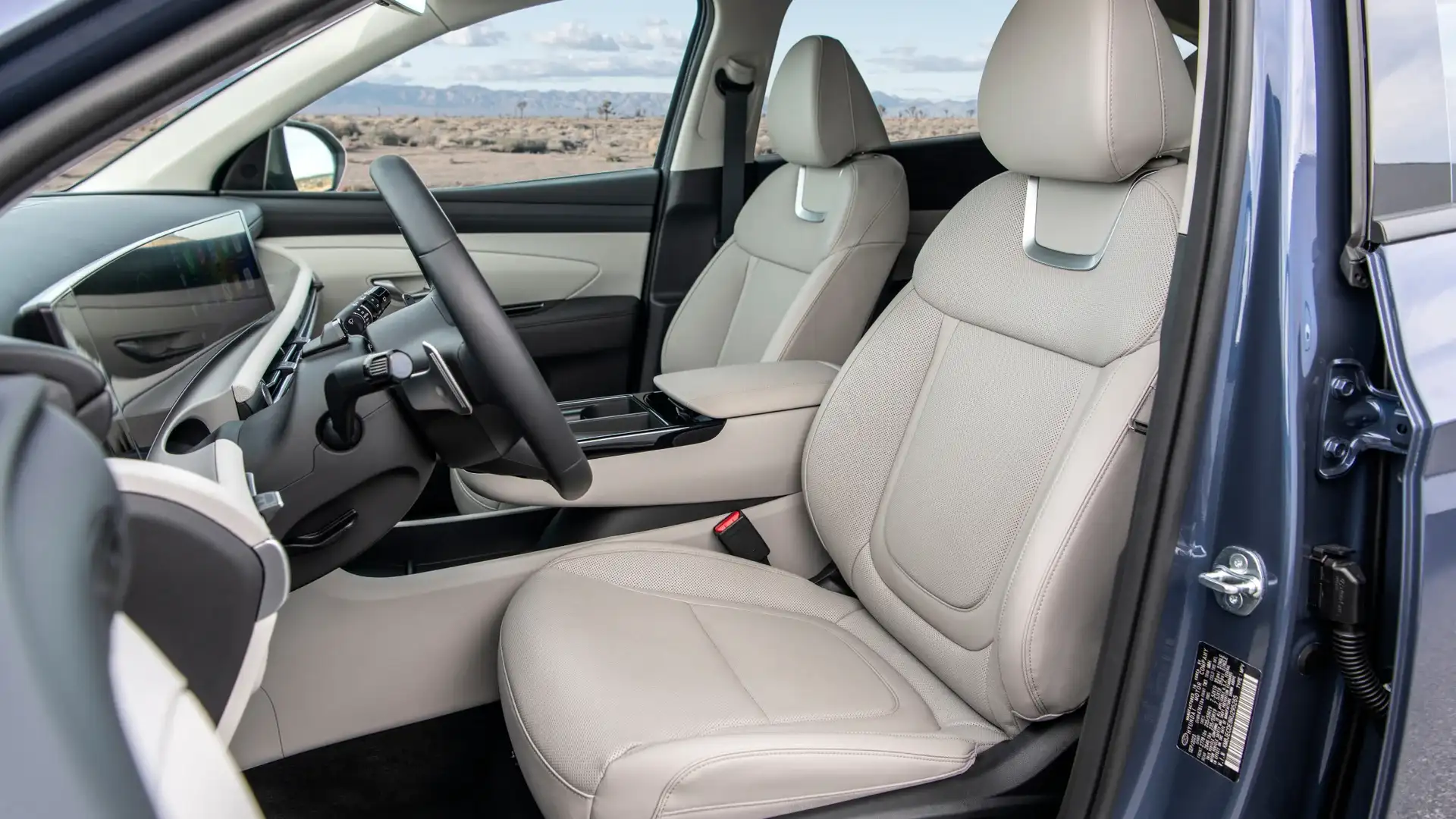
The interior accommodates five passengers with multiple seating materials available, including cloth, H-Tex® synthetic leather, and leather surfaces depending on trim level. The driver seat is available with 6-way manual adjustment or 8-way power adjustment with lumbar support. Heated front seats are standard on mid-level trims, while ventilated front seats and heated rear seats are available on higher trims. An Integrated Memory System stores driver seat and mirror positions.
Rear seating includes a 60/40 split folding design with reclining capability and adjustable head restraints. Cargo management includes a dual-level cargo floor and remote-release folding rear seats accessible from the cargo area. Cargo capacity measures up to 38.7 cubic feet behind the rear seats in gasoline and hybrid models and up to 74.8 cubic feet with the rear seats folded. Plug-in hybrid models provide reduced cargo capacity due to battery placement, measuring 31.9 cubic feet behind the rear seats and 66.3 cubic feet with seats folded.
Digital Interface and Multimedia Systems
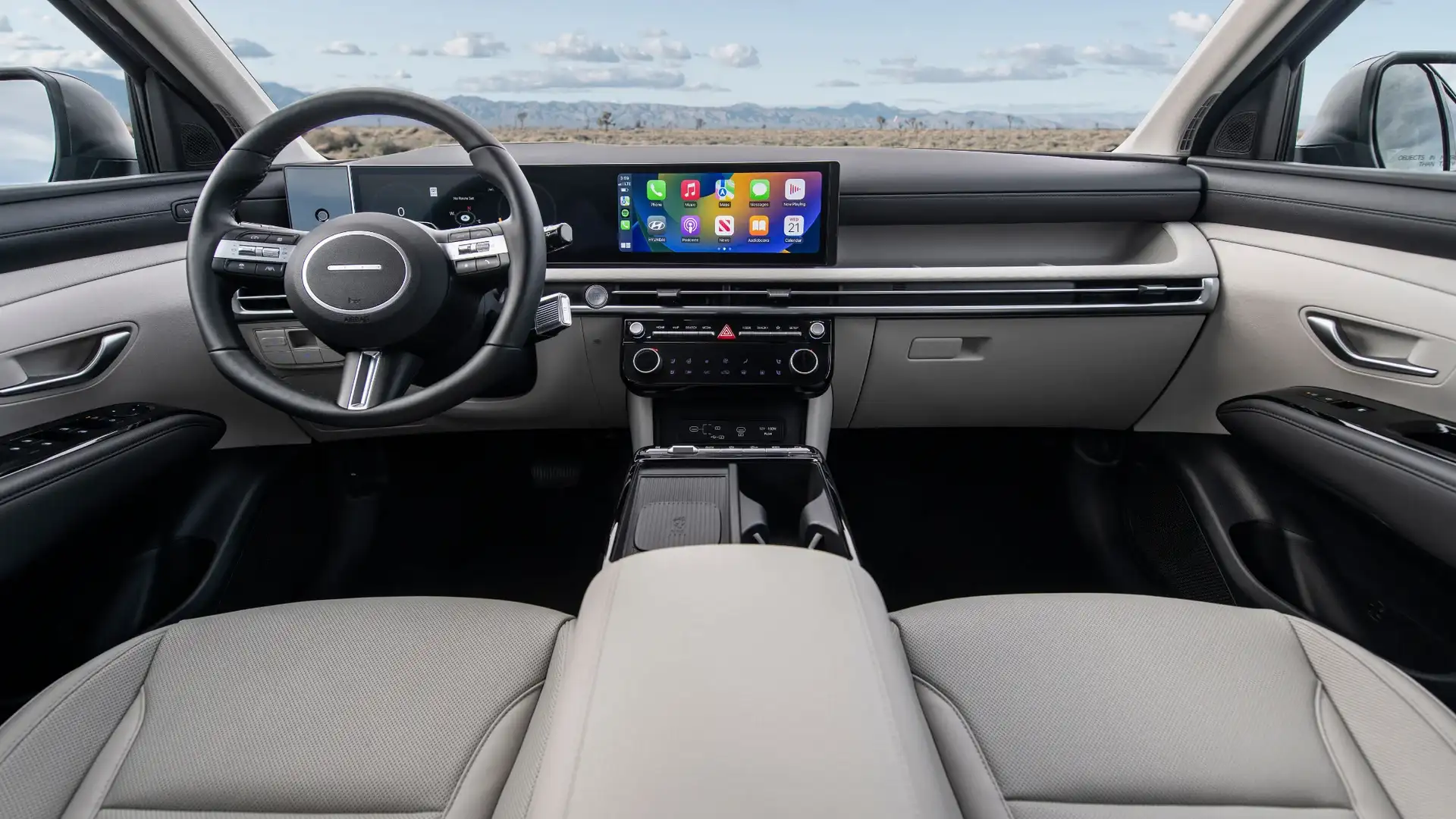
The 2026 Hyundai Tucson integrates a 12.3-inch color touchscreen across all trims. Base configurations include AM and FM radio, HD Radio™, SiriusXM® satellite radio compatibility, and a six-speaker audio system. Higher trims include a navigation-equipped 12.3-inch display and a Bose® premium audio system with eight speakers, including a center-mounted speaker and rear woofer.
Wireless Apple CarPlay® and Android Auto™ are standard. USB Type-C ports are installed in both front and rear seating areas, supporting data transfer and charging up to 27 watts. Over-the-air update capability is included for system controllers, with navigation-equipped models supporting map updates. Additional systems include a rearview camera and dynamic voice recognition on select trims.
Connected features include Bluelink® Plus services; Hyundai Digital Key 2 Premium using NFC, Bluetooth® Low Energy, and Ultra-Wideband technology; and wireless device charging rated at 15 watts. Ambient lighting with 64 selectable colors is available, along with Remote Smart Parking Assist in higher trims.
Advanced Driver Assistance and Safety Systems
The 2026 Hyundai Tucson includes a comprehensive suite of active and passive safety systems. Standard driver assistance features include Forward Collision-Avoidance Assist with pedestrian, cyclist, and junction turning detection, Blind-Spot Collision Warning, and Rear Cross-Traffic Collision-Avoidance Assist. Lane Keeping Assist and Lane Following Assist maintain lane positioning, while Driver Attention Warning monitors driver behavior.
Additional features include Intelligent Speed Limit Assist and Safe Exit Warning. Higher trims add Parking Collision-Avoidance Assist for reverse maneuvers, Parking Distance Warning with front, rear, and side detection, and a Surround View Monitor. Blind-Spot View Monitor provides a camera-based display of adjacent lanes.
Highway Driving Assist integrates with navigation-based Smart Cruise Control with curve control to maintain speed and following distance. Forward Attention Warning uses an in-cabin camera to monitor driver engagement. Rear Occupant Alert systems are available in both standard and radar-based advanced forms.
Passive safety systems include front airbags, side-impact airbags, curtain airbags with rollover sensors, and rear side airbags. Seatbelt systems include pretensioners and load limiters. Child safety features include LATCH anchors and rear door child safety locks. Bodyside reinforcements and an immobilizer contribute to structural and theft protection.
Interior Space and Capacity Measurements
Interior space measurements show front headroom at 40.1 inches and rear headroom at 39.5 inches in models without a sunroof. Legroom measures 41.4 inches in the front and 41.3 inches in the rear for gasoline and hybrid models. Plug-in hybrid rear legroom measures 39.5 inches. Shoulder room measures 57.6 inches in the front and 56.0 inches in the rear. Hip room measures 54.5 inches in the front and 53.9 inches in the rear.
Total interior volume reaches 146.9 cubic feet in gasoline models and 146.7 cubic feet in hybrid models. Plug-in hybrid models provide 137.8 cubic feet of total interior volume. Fuel tank capacity measures 14.3 gallons for gasoline models, 13.7 gallons for hybrid models, and 11.1 gallons for plug-in hybrid models.
Visit ALM Hyundai Florence near Conway, SC
We encourage you to schedule a test drive to examine the mechanical systems, drivetrain configurations, and interior technologies of the 2026 Hyundai Tucson in operation. At ALM Hyundai Florence near Conway, SC, our team provides access to each available powertrain, including gasoline, hybrid, and plug-in hybrid variants. A test drive allows you to evaluate steering response, braking systems, cabin ergonomics, and digital interface functionality under controlled conditions. You can compare drivetrain behavior, seating configurations, and safety system alerts across trims. Contact our dealership to arrange a time and review the technical specifications directly through a guided driving experience.