

2026 Hyundai Tucson near Myrtle Beach, SC
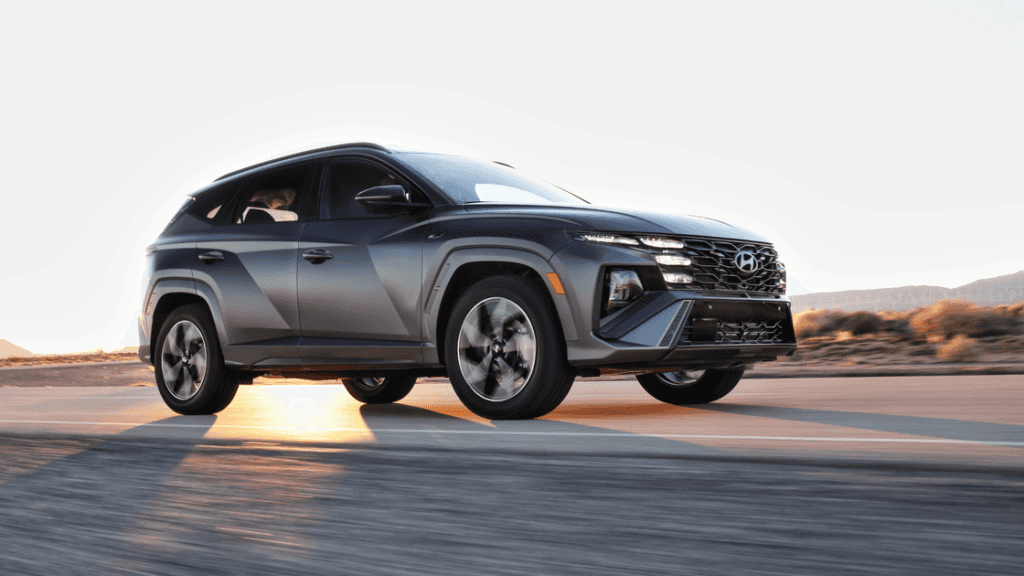
The 2026 Hyundai Tucson presents a detailed collection of technical systems designed to support performance, efficiency, and functional operation. Each component of the vehicle is structured around clear engineering objectives that prioritize capability and dependable operation. The model offers multiple powertrains, refined mechanical systems, structural enhancements, and an extensive range of integrated technologies. This overview focuses exclusively on verified specifications to provide a factual examination of the vehicle’s design.
Multifaceted Powertrain Structure
The gasoline configuration uses a 2.5-liter GDI and MPI DOHC sixteen-valve inline four-cylinder engine. Its displacement measures 2497 cc with a full engine cover, and the block and head are both aluminum. It produces 187 horsepower at 6100 rpm and 178 pound-feet of torque at 4000 rpm. The system uses Continuously Variable Valve Timing and a variable intake system to optimize airflow. Idle Stop and Go is included for efficiency. The compression ratio is 13.0, and the recommended fuel is regular unleaded.
The hybrid and plug-in hybrid models use a 1.6-liter Turbo GDI DOHC 16-valve inline four-cylinder engine with Continuously Variable Valve Duration. This engine delivers 178 horsepower at 5500 rpm and 195 pound-feet of torque from 1500 to 4500 rpm. It features an aluminum block and head along with a variable intake system. The hybrid configuration pairs the engine with a permanent magnet synchronous motor that brings total system output to 231 horsepower and 271 pound-feet of torque. The motor itself produces 64 horsepower at 1800 to 2100 rpm and 195 pound-feet of torque at 1700 rpm.
The plug-in hybrid system raises total system output to 268 horsepower and 271 pound-feet of torque. Its motor delivers 97 horsepower at 2300 to 3600 rpm and 224 pound-feet of torque at 2200 rpm. The hybrid model uses a 1.49 kWh lithium-ion battery with a maximum voltage of 270V. The plug-in hybrid uses a 13.8 kWh lithium-ion battery with a maximum voltage of 360 V. Battery power output is rated at 64 kW for the hybrid and 88 kW for the plug-in hybrid.
Transmission Systems and Drivetrain Configuration
The 2.5-liter gasoline model pairs with an 8-speed automatic torque converter transmission. Gear ratios begin with 4.717 in first gear and progress through ratios engineered for controlled power delivery and highway efficiency. Reverse is set at 3.239. The final gear ratio is 3.648. Hybrid and plug-in hybrid models use a 6-speed automatic torque converter transmission. These models include Shift By Wire controls and steering wheel paddle shifters.
Drive type varies by configuration. Gasoline models include front-wheel drive as standard, with HTRAC all-wheel drive available. Hybrid and plug-in hybrid models feature available HTRAC all wheel drive with active on-demand operation. Drive mode selection is located on the center console.
Structural Design and Mechanical Systems
The 2026 Hyundai Tucson uses a unibody structure made from advanced high-strength steel. This type of construction supports rigidity for predictable handling and stable performance. The suspension system uses a MacPherson® strut front design with coil springs and gas-pressurized shock absorbers. The rear uses a multi-link setup with gas-pressurized shock absorbers. Stabilizer bars on both ends are included for additional stability.
Steering is managed by a Motor Driven Power Steering system with a rack and pinion configuration. The overall steering ratio is 13.7 to 1. The number of turns lock to lock is 2.41. The turning diameter from curb to curb measures 38.6 feet.
The braking system includes ventilated front discs measuring 325 mm by 30 mm along with solid rear discs measuring 300 mm by 10 mm. Features include ABS with Electronic Brake Force Distribution, Hillstart Assist Control, Downhill Brake Control, Brake Assist, and an electronic parking brake with automatic vehicle hold.
Exterior Construction and Functional Elements
Wheel availability depends on trim level and includes 17-inch, 18-inch, and 19-inch alloy configurations. Tire dimensions match wheel size to complete a balanced footprint for stability and ride support. Compact temporary spares or tire mobility kits appear depending on the model.
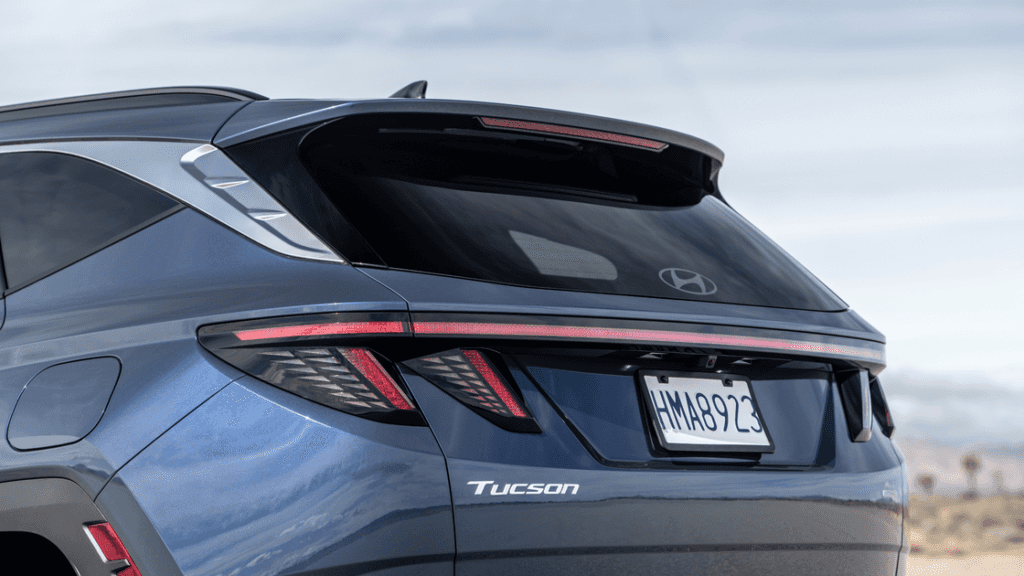
Multiple lighting systems are standard across trims. Bi-LED headlights manage both high and low beams. LED turn signals, LED Daytime Running Lights, and High Beam Assist are included. Premium Daytime Running Lights appear on specific trims. LED taillights and LED license plate lighting are included on upper trims. Automatic headlights are standard across all models.
Exterior mirrors include body-color housings with heating capability on most trims. Indicators for Blind Spot Collision Warning and Rear Cross Traffic Collision Avoidance Assist appear on all mirrors. Turn signal indicators are added on higher trims.
Glass features include privacy glass for mid and upper trims along with solar glass for the front doors and windshield. Acoustic laminated glass for the windshield is standard, and upper trims add acoustic laminated front side windows.
Functional exterior systems include roof side rails, optional cross rails, integrated rear spoilers, and hands-free smart liftgate operation with adjustable height settings. Trailer pre-wiring is standard.
Cabin Design and Interior Technology
Interior capacity supports five passengers. Seating materials range from cloth with stain- and odor-resistant properties to H-Tex® leatherette and leather on higher trims. Driver seat options include 6-way manual adjustment or 8-way power adjustment with lumbar support. Ventilated front seats, heated rear seats, an Integrated Memory System for the driver, and a dual-level cargo floor appear on upper trims. Rear seats feature a 60/40 split fold-down design with reclining seatbacks and adjustable head restraints.
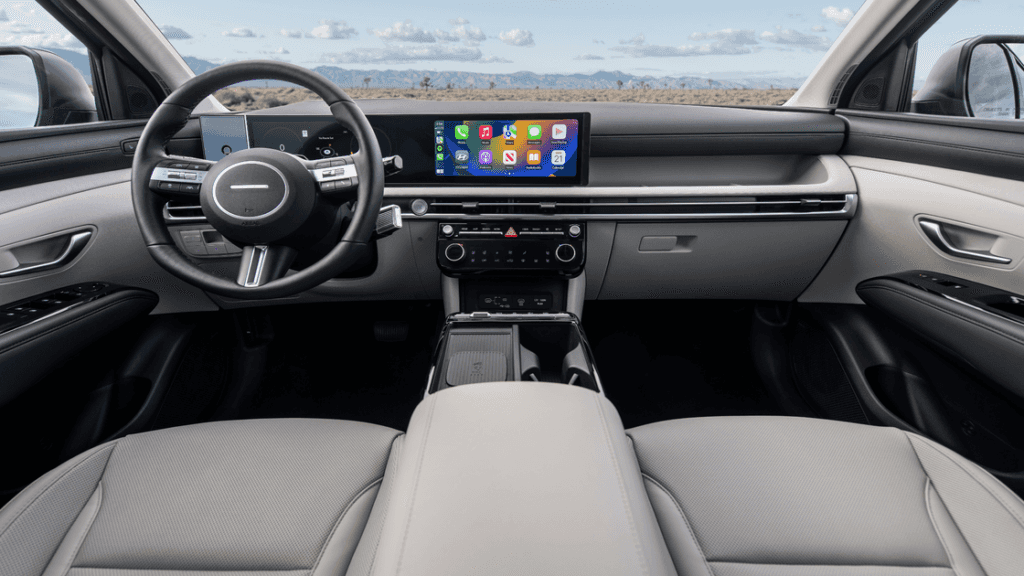
Multimedia equipment includes a 12.3-inch touchscreen with AM/FM, HD Radio™, and SiriusXM®. Wireless Apple CarPlay® and Android Auto™ appear across all trims. Navigation capability, Bose® audio, and digital enhancements are included on select trims. Updates for the controller and multimedia software use over-the-air support. Dual USB-C ports in the front and rear supply data and charging capability. Rearview cameras are standard.
Interior controls include manual air conditioning or dual automatic temperature control depending on the trim. Auto Defogger, cabin air filtration, rear seat heater ducts, After Blow logic, and rear window defrosters with timers are also included. Floor console-mounted rear air vents appear on hybrid and plug-in hybrid as well as upper gasoline trims.
Instrument cluster options include a 4.2-inch multi-information display or a 12.3-inch digital instrument cluster. Readouts include speed, coolant temperature, fuel level, odometer, trip data, and system indicators. Illumination adjustment is standard.
Convenience features include Smart Cruise Control with Stop and Go, proximity key entry with push button start, storage compartments, a fixed armrest with storage, cupholders, 12-volt outlets in the front and cargo area, coat hangers, and glove compartment dampers. Auto-dimming mirrors, wireless device charging, rain-sensing wipers, and Remote Smart Parking Assist appear on upper trims. Interior lighting includes LED overhead lighting in the front and rear along with LED cargo area lighting. Ambient interior lighting appears on specific trims with 64 available colors.
Comprehensive Safety Engineering
The 2026 Hyundai Tucson incorporates structural reinforcements, multi-stage airbags, side impact protection, and side curtain airbags with rollover sensors. Additional elements include rear side airbags, adjustable front seat belt anchors, pretensioners and load limiters, LATCH anchors, power window lockout, and child safety locks.
Active safety systems include Forward Collision Avoidance Assist with detection for pedestrians, cyclists, and junction turning. Blind Spot Collision Warning and Rear Cross Traffic Collision Avoidance Assist are included. Parking Collision Avoidance Assist, Parking Distance Warning, Surround View Monitor, and Blind Spot View Monitor appear on upper trims. Driver Attention Warning, Forward Attention Warning, Lane Keeping Assist, Lane Following Assist, Intelligent Speed Limit Assist, Safe Exit Warning, Highway Driving Assist 1, and Navigation-based Smart Cruise Control with Curve Control complete the system suite. The steering wheel provides haptic feedback for certain safety functions.
Spatial Measurements and Utility Figures
Dimensions include a wheelbase of 108.5 inches, a length of 182.7 inches, a width of 73.4 inches, and a height of up to 66.3 inches. Ground clearance is 7.1 inches for front-wheel drive and 8.3 inches for all-wheel drive. The coefficient of drag is 0.33. Roof rail load capacity is 220 pounds.
Interior measurements vary slightly by powertrain. Headroom, legroom, shoulder room, and hip room are engineered to support occupant space with consistency across configurations. Cargo volume ranges from 31.9 cubic feet in plug-in hybrid models with seats up to 80.3 cubic feet in gasoline models with seats folded.
Fuel tank capacity measures 14.3 gallons for gasoline models, 13.7 gallons for hybrid models, and 11.1 gallons for plug-in hybrid models.
Schedule a Test Ride near Myrtle Beach, SC
Drivers who want to experience the technical capabilities of the 2026 Hyundai Tucson can explore its powertrains, structural systems, and technology features in person. A test drive provides an opportunity to evaluate engine response along with transmission behavior during normal operation. It also allows assessment of interior controls, digital interfaces, and the full range of driver assistance systems. A visit offers a straightforward way to determine which configuration aligns with individual driving requirements. Interested customers can schedule a test drive at ALM Hyundai Florence near Myrtle Beach, SC, to examine the model directly.