

2026 Hyundai Venue near Conway, SC
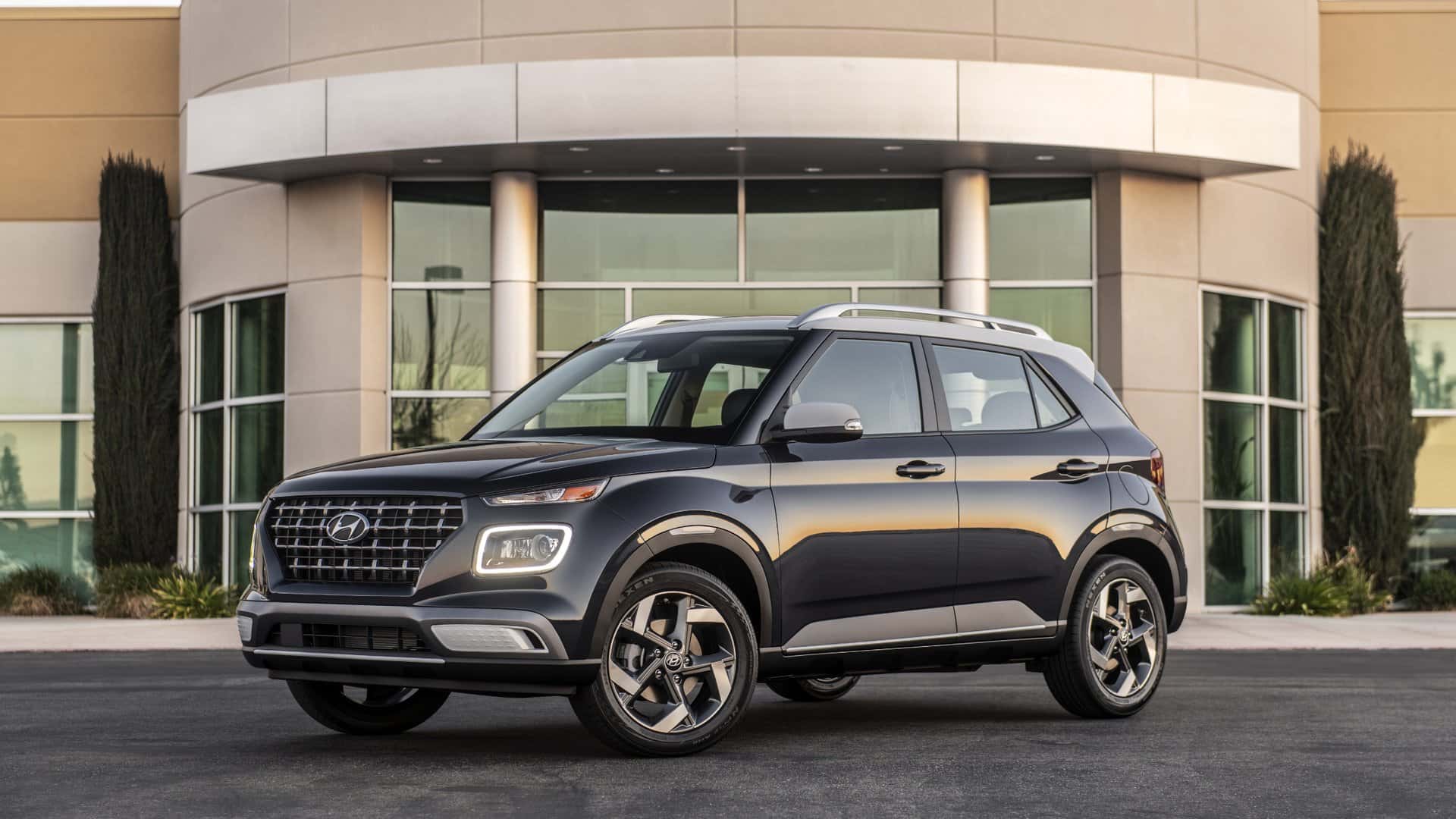
The 2026 Hyundai Venue is a subcompact sport utility vehicle designed with a focus on efficient performance, compact dimensions, and integrated technology systems. It utilizes a unibody construction composed primarily of high-tensile steel, which supports structural rigidity while maintaining a relatively low curb weight ranging from 2,612 to 2,738 pounds. The platform is configured with front-wheel drive and optimized for urban maneuverability, supported by a compact wheelbase of 99.2 inches and an overall length of 159.1 inches. The design approach prioritizes functional engineering, balancing mechanical efficiency with occupant space and integrated driver assistance systems.
Engine Configuration and Output Characteristics
The 2026 Hyundai Venue operates with a Gamma Gen 2 1.6-liter inline four-cylinder engine with a total displacement of 1,598 cubic centimeters. This engine uses a dual overhead camshaft configuration with 16 valves and is mounted transversely. Fuel delivery is managed through a dual-port fuel injection system, which distributes fuel efficiently to improve combustion consistency and reduce emissions output.
The engine produces 121 horsepower at 6,300 revolutions per minute and 113 pound-feet of torque at 4,500 revolutions per minute. The bore and stroke measure 75.6 millimeters by 89 millimeters, supporting a balance between efficiency and torque generation. The compression ratio is set at 11.2 to 1, which contributes to improved thermal efficiency. Mid-phase continuously variable valve timing adjusts intake and exhaust valve operation based on engine speed and load conditions.
The engine block and cylinder head are constructed from aluminum to reduce overall weight. The exhaust system uses a single outlet configuration, and emissions control is managed through a catalytic converter system that meets LEV3 ULEV70 standards. The vehicle operates on unleaded fuel and includes an alternator management system to regulate electrical output and reduce unnecessary engine load.
Transmission System and Drivetrain Layout
The drivetrain of the 2026 Hyundai Venue is configured with a front-wheel-drive layout paired with an Intelligent Variable Transmission. This transmission system is designed to provide smooth acceleration by continuously adjusting gear ratios within a defined range. The IVT features a gate-type shifter and includes SHIFTRONIC® manual control capability for driver-selected gear simulation.
The gear ratio range spans from 0.385 to 2.680, allowing the transmission to adapt to both low-speed and highway driving conditions. A final drive ratio supports efficient torque delivery to the front wheels. The system also includes Hill Start Assist Control, which prevents rollback when starting on an incline, and an ignition key interlock system for added operational safety.
Electrical components supporting the drivetrain include a 12-volt starter rated at 0.9 kilowatts, a 13.5-volt alternator rated at 110 amps, and a 45 amp-hour battery. The ignition system uses a distributor-less electronic configuration with individual coil-on-plug ignition.
Suspension Geometry and Steering Response
The front suspension system uses a MacPherson® strut configuration with coil springs and a stabilizer bar. This design provides a balance between ride comfort and handling stability. The rear suspension uses a coupled torsion beam axle with twin-tube shock absorbers, supporting consistent performance under varying load conditions.
Gas-filled twin-tube shock absorbers are installed on both front and rear systems to improve damping characteristics. The steering system uses a rack-and-pinion layout supported by a column-mounted motor-driven power steering unit. This configuration provides assistance based on steering input and vehicle speed.
The steering ratio is set at 14.4 with 2.7 turns from lock to lock, which contributes to responsive directional control. The minimum turning radius measures 5.1 meters, and the curb-to-curb turning diameter is 16.6 feet. These specifications support maneuverability in confined driving environments.
Braking Hardware and Control Systems
The braking system includes ventilated front disc brakes with a diameter of 11.0 inches. Rear braking configurations vary by trim and include either drum brakes with an 8.0-inch diameter or disc brakes measuring 10.3 inches. The system incorporates Anti-lock Braking System functionality with Electronic Brake-force Distribution to maintain balanced braking force between front and rear wheels.
A vacuum-assisted brake booster with a diameter of 10.0 inches supports consistent pedal response. The master cylinder uses a tandem design with a diameter of 0.87 inches, ensuring reliable hydraulic pressure distribution. Brake Assist functionality is included to increase braking force during emergency situations.
Exterior Dimensions and Functional Design Elements
The exterior dimensions of the 2026 Hyundai Venue reflect its compact classification. The overall width measures 69.7 inches, and the height is 61.6 inches. Ground clearance is set at 6.69 inches, providing sufficient clearance for standard road conditions. The approach angle is 21.3 degrees, the departure angle is 32.0 degrees, and the ramp breakover angle is 19.2 degrees.
The aerodynamic profile includes a drag coefficient of 0.34, which contributes to reduced air resistance. Wheel configurations include 15-inch alloy wheels with 185/65 tires and 17-inch alloy wheels with 205/55 tires. A temporary compact spare tire is included for emergency use.
Lighting systems include projector headlights, automatic headlight control, and a one-touch triple turn signal feature. The taillights use a lenticular design for improved visibility. Exterior mirrors are power adjustable, with heated functionality available on higher trims. Additional features include tinted glass, front intermittent wipers, and a power tilt-and-slide sunroof on select configurations.
Interior Layout and Seating Configuration
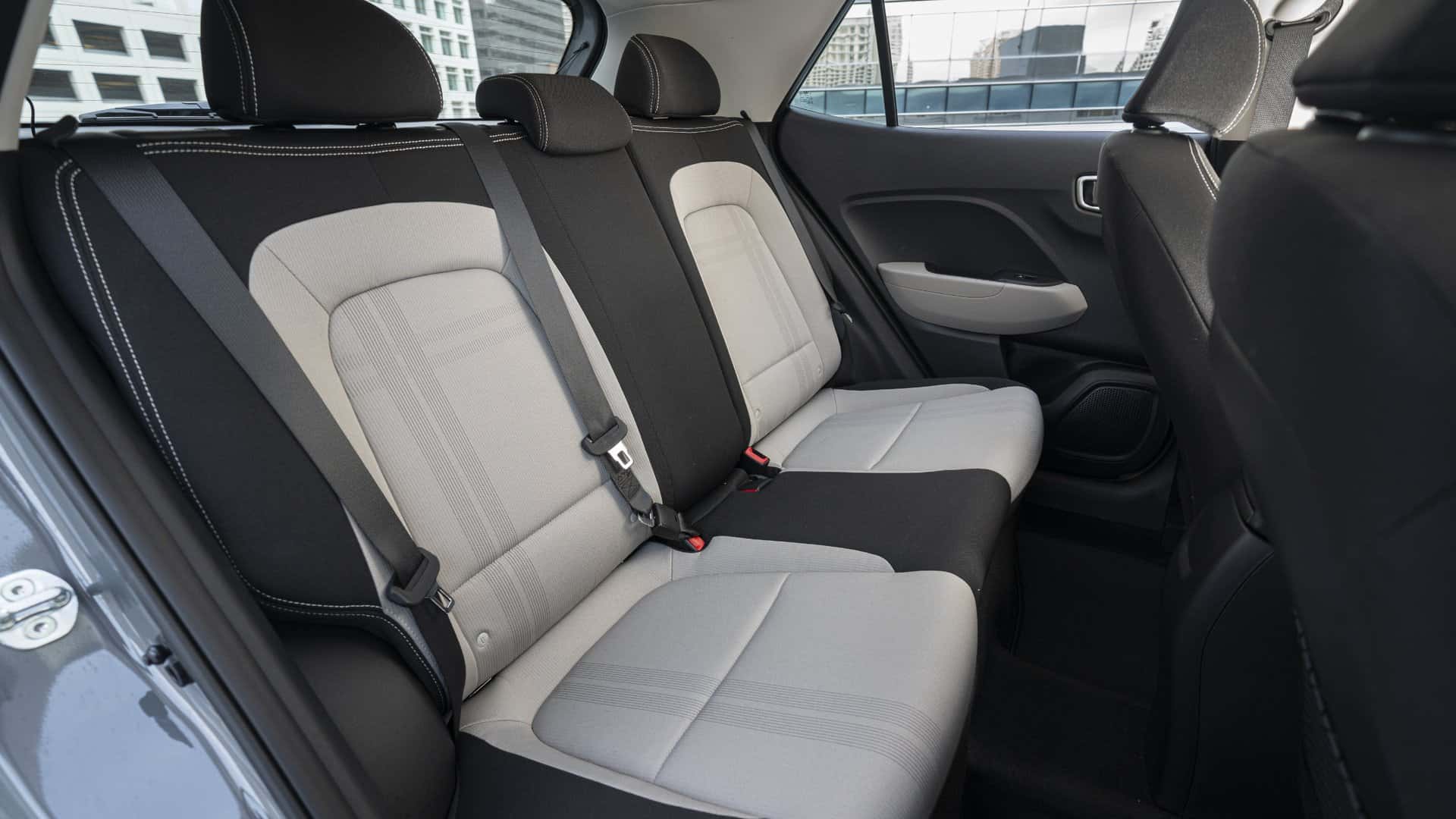
The interior of the 2026 Hyundai Venue is configured to accommodate five passengers. Seating surfaces include cloth upholstery and available cloth and H-Tex® combination materials. The driver seat offers six-way manual adjustment, including height adjustment and sliding functionality. A sliding armrest with integrated storage is included for the driver.
The front passenger seat includes seatback storage, and rear seating is configured with a 60/40 split-folding seatback to expand cargo capacity. Heated front seats are available on select trims. Seatbelt systems include three-point restraints for all seating positions, with emergency locking retractors and convertible locking retractors for rear seats.
Interior space measurements include 41.3 inches of front legroom and 34.3 inches of rear legroom. Headroom measures 39.4 inches in the front and 38.6 inches in the rear without a sunroof. Shoulder room measures 53.9 inches in the front and 53.7 inches in the rear, while hip room measures 52.1 inches in the front and 43.5 inches in the rear.
Infotainment System and Connectivity Features
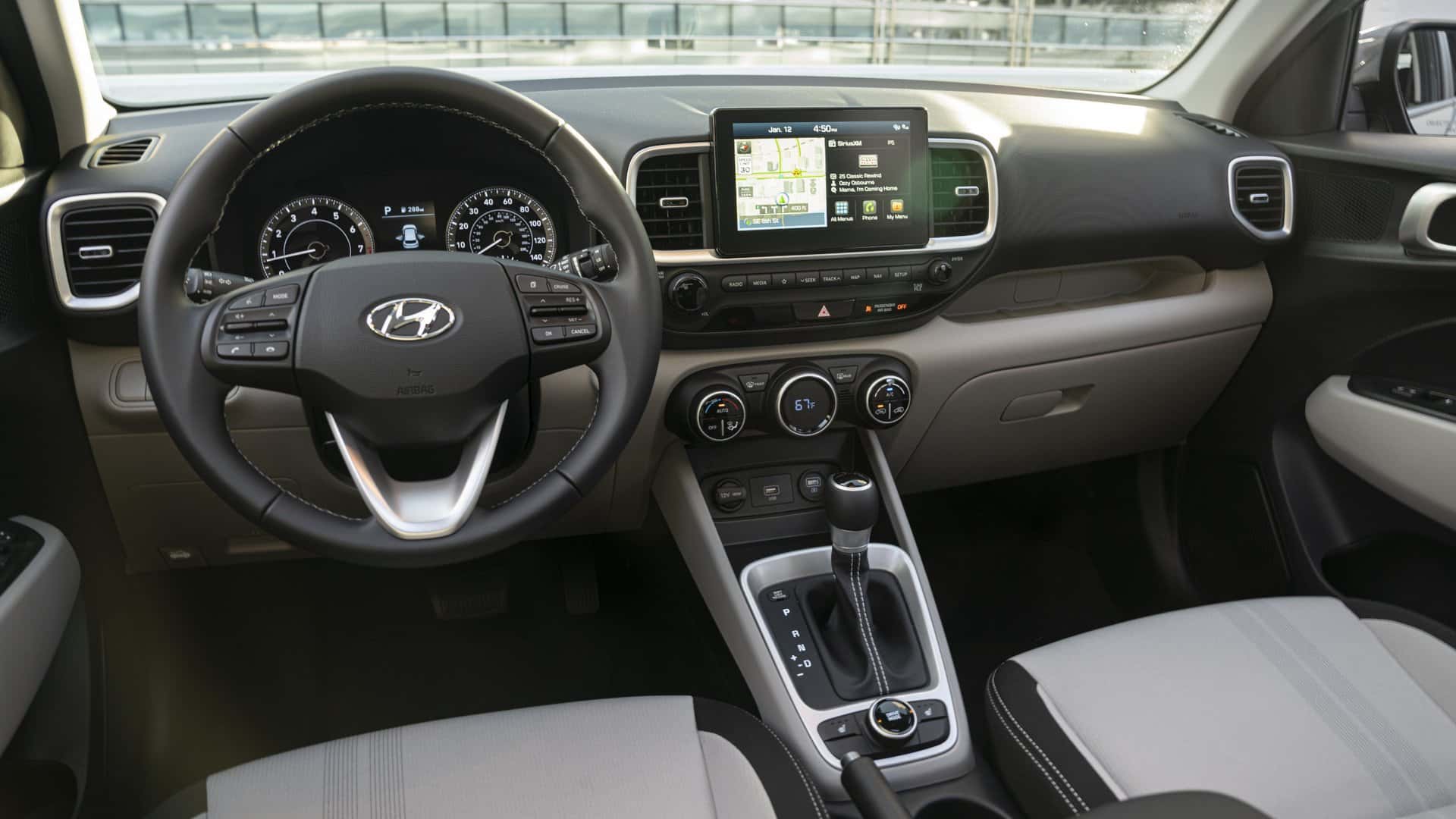
The infotainment system includes an 8-inch touchscreen display with integrated AM and FM radio functionality. Wireless Apple CarPlay® and Android Auto™ are supported, allowing smartphone integration without physical connections. The system includes six speakers positioned throughout the cabin for balanced audio output.
Bluetooth® hands-free functionality with voice recognition enables phone and audio control. Steering wheel-mounted audio controls provide direct access to system functions. Charging options include dual USB ports in the front, consisting of one Type-A and one Type-C port. Additional USB Type-C charging ports are available for rear passengers.
Wireless device charging using Qi standard technology is available on select trims. The system also includes a digital clock and a roof-mounted antenna for signal reception.
Climate Control and Driver Interface Systems
The climate control system includes manual air conditioning on standard trims and automatic temperature control on higher trims. A heater and Positive Temperature Coefficient heating system provide cabin warmth during colder conditions. A rear window defroster with a timer is included to maintain rear visibility.
The steering wheel includes tilt and telescoping adjustment to support driver positioning. Materials include polyurethane or leather depending on trim. Cruise control is included, along with integrated audio and phone controls.
Instrumentation includes a comprehensive gauge cluster with a speedometer, tachometer, fuel level, and water temperature indicators. Additional displays include drive mode indicators, distance to empty, ambient temperature, and odometer readings. Warning indicators cover systems such as oil pressure, battery charge, airbag status, and tire pressure monitoring.
Safety Systems and Driver Assistance Technologies
The 2026 Hyundai Venue includes a range of passive and active safety systems. Airbag coverage includes front advanced airbags, front side-impact airbags, and side curtain airbags for both front and rear occupants. An Occupant Classification System manages front passenger airbag deployment based on detected weight.
Seatbelt systems include pretensioners and load-limiting features. The vehicle structure incorporates front and rear crumple zones and body side reinforcements to absorb and distribute impact forces. Child safety locks and LATCH anchor systems are included for rear seating positions.
Active safety systems include Electronic Stability Control, Traction Control System, Vehicle Stability Management, and Brake Assist. A Tire Pressure Monitoring System provides continuous pressure data.
Driver assistance technologies include Forward Collision-Avoidance Assist with pedestrian detection, Lane Keeping Assist, Driver Attention Warning, and High Beam Assist. Additional available systems include Blind-Spot Collision Warning and Rear Cross-Traffic Collision Warning. Rear Occupant Alert monitors rear door activity to prevent unintended occupancy.
Cargo Capacity and Practical Measurements
Cargo capacity in the 2026 Hyundai Venue measures 18.7 cubic feet with the rear seats in the upright position. When the rear seats are folded, cargo volume increases to 31.9 cubic feet. Total interior volume is measured at 110.6 cubic feet, which includes passenger and cargo space.
The fuel tank capacity is 11.9 gallons. These measurements support extended driving range and practical storage capability for daily use. The compact exterior dimensions combined with interior volume optimization provide a balance between passenger comfort and cargo functionality.
Schedule a Test Ride near Conway, SC
We invite you to examine the technical capabilities of the 2026 Hyundai Venue in person at ALM Hyundai Florence near Conway, SC. Our team can guide you through the vehicle’s mechanical systems, technology interfaces, and safety features in detail. A test drive allows you to evaluate the engine performance, transmission response, and steering characteristics under normal driving conditions. You can also interact directly with the infotainment system and assess cabin space and seating configurations. Schedule your visit today to gain a clear understanding of how these specifications translate into everyday functionality.