

2027 Hyundai IONIQ 9 nearby Conway, SC
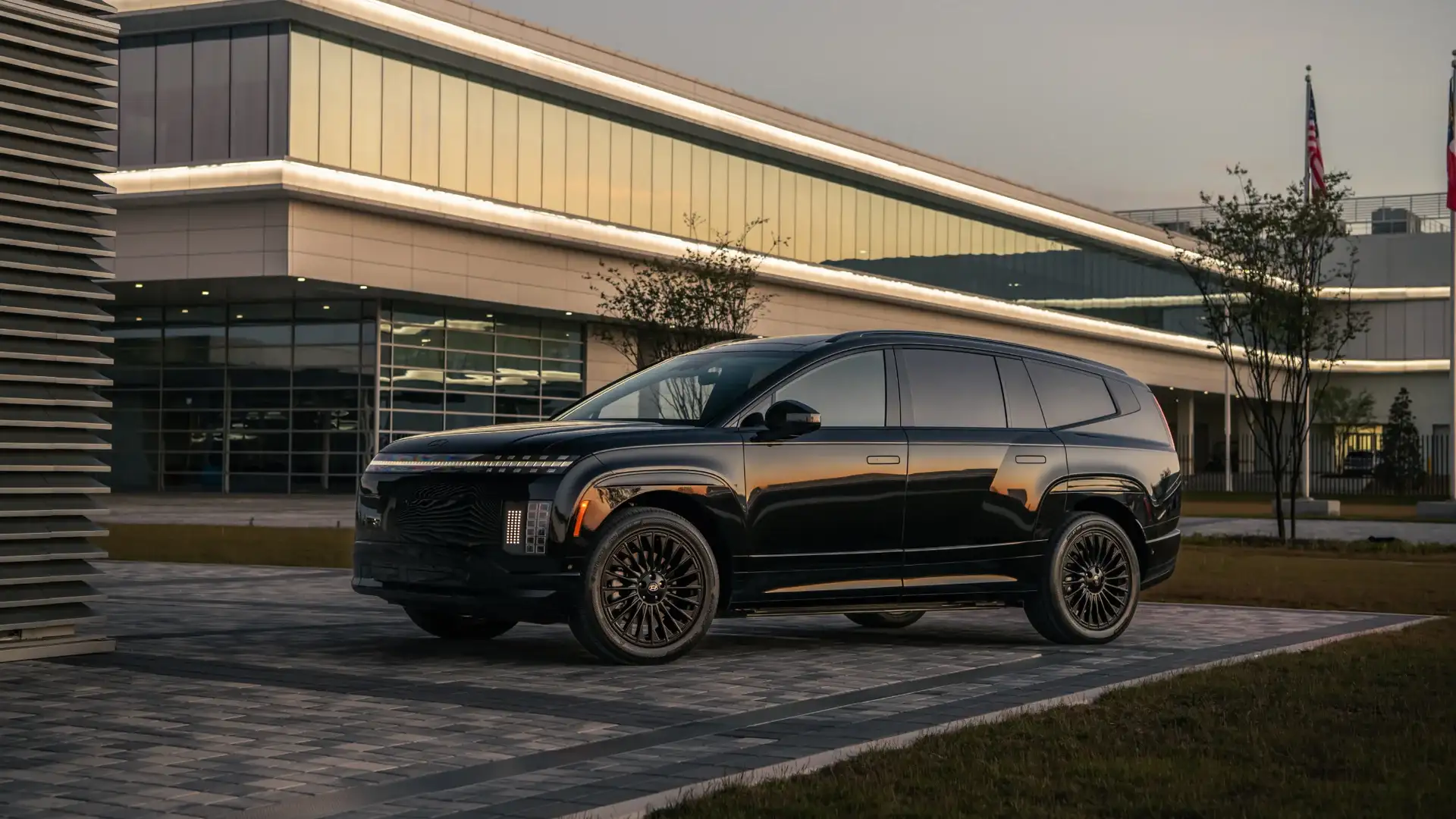
The 2027 Hyundai IONIQ 9 is a three-row electric vehicle offered in five trim levels with seating for six or seven occupants. Its technical configuration combines a 110.3-kWh lithium-ion battery with rear-wheel-drive and all-wheel-drive powertrain options, a single-speed reduction gear, and multiple charging methods. Depending on the configuration, the 2027 Hyundai IONIQ 9 provides an estimated combined driving range of up to 335 miles and a towing capacity of up to 5,000 pounds with trailer brakes. Its spacious cabin, three-zone seating accommodations, connected multimedia equipment, and extensive driver-assistance technologies support a broad range of transportation needs. The following sections examine the 2027 Hyundai IONIQ 9 powertrain, charging system, chassis, exterior equipment, passenger accommodations, technology, safety features, dimensions, and cargo capabilities.
Electric Powertrain, Charging, and Driving Systems
The 2027 Hyundai IONIQ 9 uses permanent-magnet synchronous motor technology and offers three output levels across its rear-wheel-drive and all-wheel-drive configurations. The rear-wheel-drive version produces 160 kW, or 215 horsepower, along with 350 Nm, or 258 pound-feet, of torque. One all-wheel-drive configuration develops 226.1 kW, or 303 horsepower, and 605 Nm, or 446 pound-feet, of torque. The higher-output all-wheel-drive configuration produces 314.6 kW, or 422 horsepower, and 700 Nm, or 516 pound-feet, of torque. Every configuration uses a shift-by-wire single-speed reduction gear designed for the electric propulsion system.
Battery Capacity and Charging Performance
Every 2027 Hyundai IONIQ 9 carries a 610-volt lithium-ion battery with 110.3 kWh of system capacity. The NACS charge port sits on the passenger-side rear quarter panel and incorporates a power-operated door. Charging from 10 to 80 percent takes 40 minutes through a NACS V3 Supercharger. A 50-kW DC fast charger used with a CCS adapter requires 109 minutes to complete the same charging interval, while a 350-kW DC fast charger with a CCS adapter reduces that time to 24 minutes. North American AC Level 2 charging at 240 volts and 48 amps, or 11 kW, requires 9 hours and 40 minutes to increase the battery charge from 10 to 80 percent.
An ICCB dual-voltage charging cable comes with every trim and supplements the vehicle’s standard charging equipment. A battery heating system with a battery preconditioning function also appears throughout the lineup. The Bluelink® Connected Car System and Bluelink® Remote Charge Access provide connected access to supported vehicle and charging functions. Limited and Calligraphy models add a Vehicle-to-Load two-way onboard charger in the cargo area. This feature allows compatible external equipment to draw power through the vehicle’s electrical system.
Range, Efficiency, and Drive Selection
The rear-wheel-drive configuration provides an estimated all-electric range of 335 miles and carries ratings of 103 MPGe city, 82 MPGe highway, and 92 MPGe combined. The 303-horsepower all-wheel-drive configuration provides an estimated 320 miles of driving range, with ratings of 98 MPGe city, 78 MPGe highway, and 88 MPGe combined. The 422-horsepower all-wheel-drive configuration delivers an estimated 311 miles of range and ratings of 91 MPGe city, 79 MPGe highway, and 85 MPGe combined. A center console button controls Drive Mode Select, which includes Eco, Normal, Sport, Snow, and My Mode settings. Regenerative-brake control paddles allow the driver to adjust energy-recovery settings, while the digital instrument cluster displays the selected regenerative-braking level.
Chassis, Steering, Brakes, and Exterior Engineering
The 2027 Hyundai IONIQ 9 uses a unibody structure constructed primarily from advanced high-strength steel and high-tensile steel. Its front suspension combines MacPherson® struts with gas dampers, while the rear uses a five-link layout with gas dampers. Rack-and-pinion steering works with rack-mounted motor-driven power assistance and has a 16.02 overall ratio measured at 360 degrees. The steering system requires 2.93 turns from lock to lock, and the vehicle has a 41-foot curb-to-curb turning diameter. These specifications establish the mechanical foundation for the vehicle’s three-row proportions and available all-wheel-drive configurations.
Braking Hardware and Regenerative Control
Ventilated disc brakes appear at all four wheels of the 2027 Hyundai IONIQ 9. The front discs measure 360 millimeters in diameter and 30 millimeters thick, while the rear discs measure 345 millimeters in diameter and 20 millimeters thick. Four-wheel anti-lock braking operates with Electronic Brake-force Distribution, Brake Assist, and an active hydraulic booster designed to work with the regenerative-braking system. Hillstart Assist Control helps manage the vehicle when starting on an incline. An electric parking brake with Automatic Vehicle Hold completes the standard braking and stationary-hold equipment.
Wheels, Lighting, and Aerodynamic Equipment
Wheel and tire specifications vary by trim, beginning with 19-by-8-inch alloy wheels and 255/60R19 tires on the S. The SE receives 20-by-8-inch alloy wheels with 275/50R20 tires, while Limited and Calligraphy models use 21-by-9-inch alloy wheels with 285/45R21 tires. A tire mobility kit replaces a conventional spare tire across the lineup. Standard exterior lighting includes automatic LED projector headlights, LED daytime running lights, LED taillights, High Beam Assist, and an LED center high-mount stop lamp. Active air flaps in the lower front grille, flush automatic door handles, an integrated rear spoiler, and aero-style wiper blades accompany a body with a lowest listed drag coefficient of 0.269.
Every trim also includes heated exterior mirrors with LED turn-signal indicators and Blind-Spot Collision-Avoidance Assist. SEL, Limited, and Calligraphy models add power-folding functionality to the exterior mirrors. Solar front glass covers the windshield and front doors, while laminated acoustic glass covers the windshield and first- and second-row side windows. Rain-sensing windshield wipers, flush roof side rails, and a power liftgate with automatic opening come standard. Limited and Calligraphy trims add a panoramic sunroof, while the wheel-arch finish varies by model.
Interior Space, Seating, and Climate Comfort
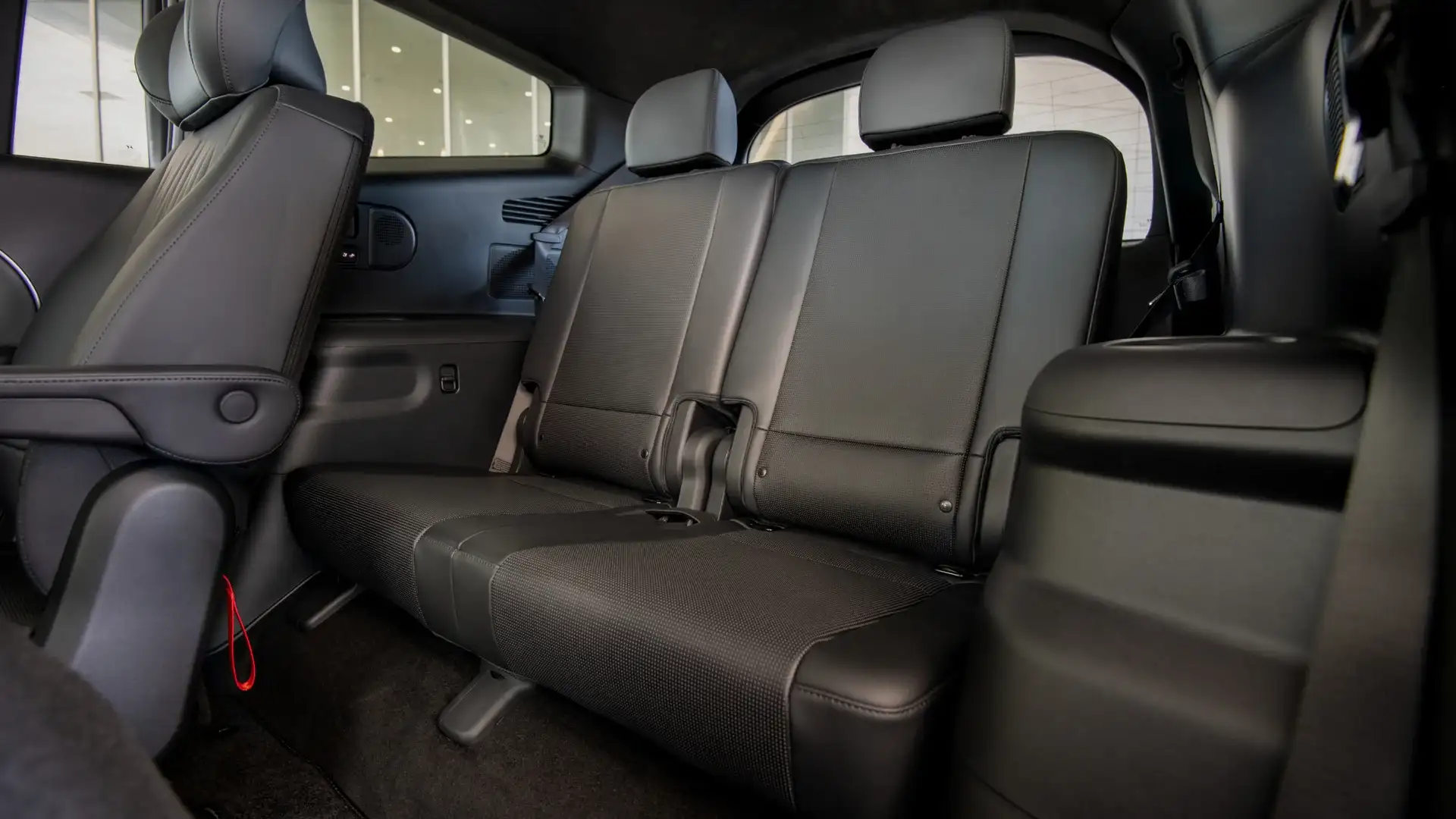
The 2027 Hyundai IONIQ 9 provides three seating rows and configures its cabin for seven occupants in S, SE, and SEL form. The Limited and Calligraphy models seat six occupants through the use of second-row captain’s chairs. Total interior volume measures 185.44 cubic feet, and the listed passenger volume for the seven-passenger configuration is 163.54 cubic feet. The cabin also provides 61.4 inches of front shoulder room, 61 inches in the second row, and 55 inches in the third row. These dimensions accompany seating and convenience features designed to serve occupants throughout all three rows.
Seat Configurations and Adjustment
S and SE models use stain-resistant cloth seating surfaces, while SEL, Limited, and Calligraphy trims feature H-Tex®-trimmed seating. An eight-way power driver’s seat and heated front seats come standard on every trim, and the SE and higher models add an eight-way power front-passenger seat. SEL, Limited, and Calligraphy models provide ventilated front seats, while Limited and Calligraphy add a driver-seat integrated memory system. Lumbar-support configurations vary by trim, ranging from two-way driver adjustment to four-way driver adjustment with two-way passenger adjustment. Seatback pockets are standard throughout the lineup.
The seven-passenger versions use a second-row bench with fore-and-aft sliding adjustment and manual entry assistance. Limited and Calligraphy models replace that bench with four-way power captain’s chairs equipped with one-touch walk-in operation, wing-type head restraints, and leg rests. These six-passenger trims also include ventilated second-row seats and power-folding third-row seats. S, SE, and SEL models use a manually folding third row instead. The Calligraphy adds heated third-row seating as a trim-specific comfort feature.
Passenger Dimensions and Climate Management
Without the panoramic sunroof, first-, second-, and third-row headroom measures 41.5, 41, and 39.7 inches, respectively. With the sunroof, the corresponding measurements are 39.5, 39.4, and 39.8 inches. Legroom measures 41.4 inches in the first row and 42.8 inches in the second row for both six- and seven-passenger configurations. Third-row legroom measures 32 inches in the seven-passenger layout and 31 inches in the six-passenger layout. Hip room measures 58.8 inches in front, 57.7 inches in the second row, and 41.7 inches in the third row.
Dual automatic temperature control appears in every 2027 Hyundai IONIQ 9. A separate second-row automatic temperature-control system gives rear occupants dedicated climate settings. Second- and third-row air vents distribute conditioned air throughout the passenger compartment. A heat pump also comes standard across the lineup. Heated front seats and the trim-dependent ventilation and heating functions add localized comfort controls to the main HVAC system.
Technology, Safety, Dimensions, and Utility
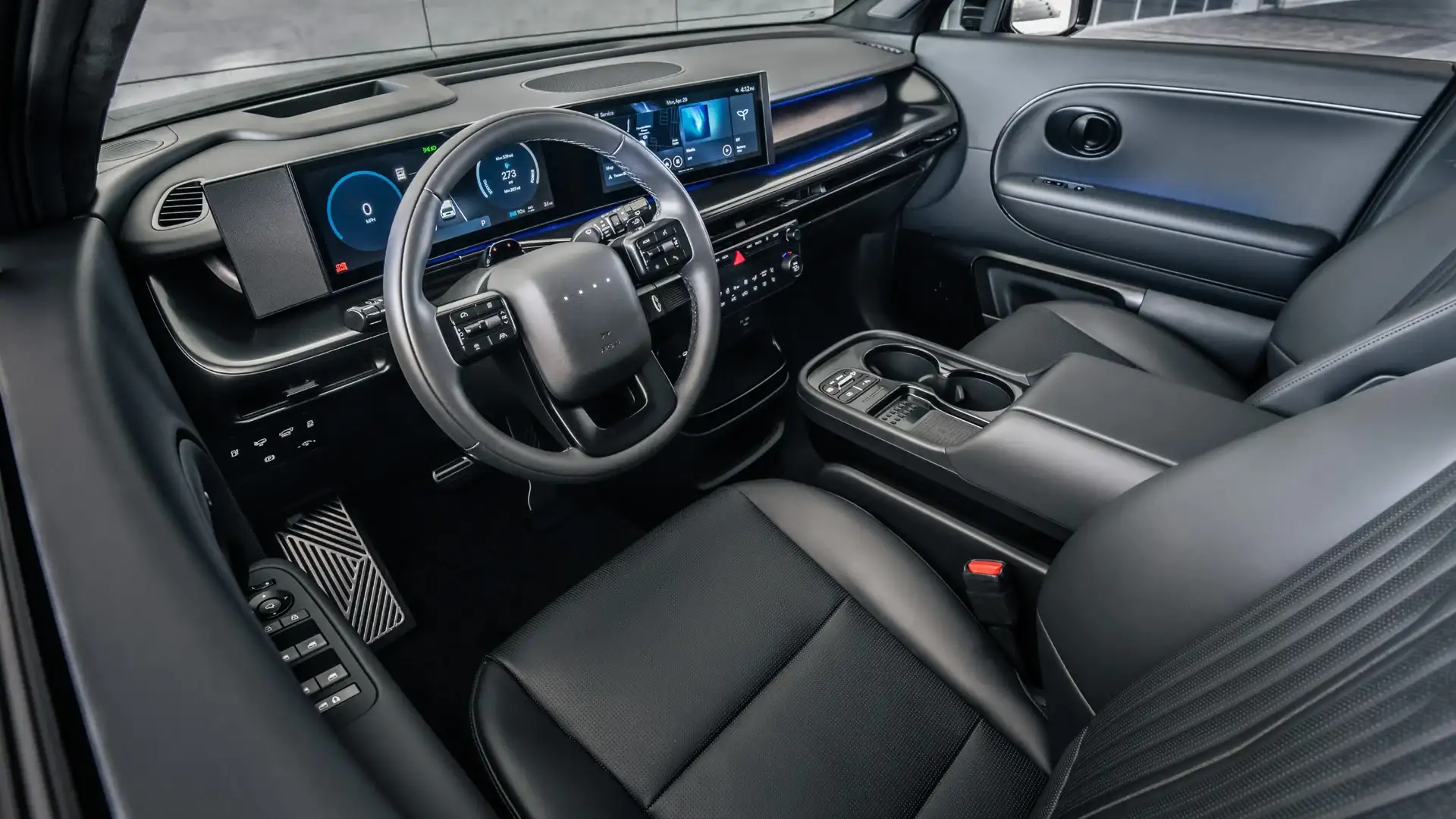
The 2027 Hyundai IONIQ 9 integrates its multimedia, instrumentation, convenience features, and driver-assistance systems throughout the cabin. Every trim receives a 12.3-inch connected-car Navigation Cockpit display with navigation, SiriusXM® satellite radio, HD Radio™, over-the-air updates, and Wi-Fi hotspot capability. Wireless Android Auto™ and Apple CarPlay® support compatible smartphone integration, while Bluetooth® multiple-device connection accommodates more than one paired device. Seven USB Type-C ports serve all three rows, with three in the first row and two in each rear row. A wireless phone charger and a rearview monitor with parking guidance also come standard.
Displays, Audio, and Cabin Controls
A 12.3-inch digital instrument cluster displays vehicle speed, power usage, charge level, drive mode, Ready to Drive status, and driver-assistance information. It also presents indicators for the transmission position, regenerative braking level, Smart Cruise Control, High Beam Assist, parking brake, and multiple vehicle warnings. Calligraphy models add a 10-inch head-up display, while Limited and Calligraphy trims receive Bose® premium audio. Steering-wheel audio and cruise controls are standard, and the wrapped steering-wheel material progresses from leatherette on S and SE to leather on SEL and Limited, with a two-tone leather design on Calligraphy. SEL and higher trims add steering-wheel heating, while Limited and Calligraphy use power tilt-and-telescoping adjustment instead of the manual system fitted to the lower trims.
Standard convenience equipment includes proximity-key entry with push-button start, power door locks, front auto-down and auto-up windows, and power releases for the hood, liftgate, and charge door. The glove compartment incorporates damping and illumination, and the cabin includes front and rear cupholders, illuminated sliding sunvisors, assist grips, and 12-volt outlets in the front and cargo areas. The Limited and Calligraphy models feature a sliding front center console, while the S, SE, and SEL models include a rear center armrest. Hyundai Digital Key 2 Premium is included on Limited and Calligraphy. Inside-mirror equipment ranges from a manual day-and-night mirror to an auto-dimming mirror with HomeLink or a Calligraphy-exclusive Full Display Mirror with HomeLink.
Occupant Protection and Driver Assistance
Every 2027 Hyundai IONIQ 9 includes three-point outboard seatbelts and adjustable front-seat shoulder-belt anchors. Seatbelt pretensioners and load limiters cover the first, second, and third rows, and the monitoring system provides reminders for the driver and all passengers. Rear child-safety locks and a power-window lockout button support passenger security. Vehicle Stability Management works with Electronic Stability Control, Traction Control, and Brake Assist. A Tire Pressure Monitoring System identifies pressure information for individual tires.
Standard driver-assistance equipment includes Blind-Spot Collision-Avoidance Assist and Rear Cross-Traffic Collision-Avoidance Assist. Forward Collision-Avoidance Assist can respond to cars, pedestrians, and cyclists, and its listed functions include junction turning and crossing support, lane-change oncoming and side detection, and Evasive Steering Assist. Lane Keeping Assist, Lane Following Assist, Driver Attention Warning, Forward Attention Warning, Safe Exit Assist, Highway Driving Assist 2, and Smart Cruise Control 2 also appear on every trim. Advanced Rear Occupant Alert uses radar-type detection, while Intelligent Speed Limit Assist and High Beam Assist provide additional monitoring and control functions. SEL, Limited, and Calligraphy add the Surround View Monitor, Blind-Spot View Monitor, side Parking Distance Warning, and reverse Parking Collision-Avoidance Assist, while Calligraphy also lists forward and side Parking Collision-Avoidance Assist and Remote Smart Parking Assist 2.
Exterior Size, Cargo Volume, and Towing Capacity
The 2027 Hyundai IONIQ 9 measures 199.2 inches long, 78 inches wide, and 70.5 inches tall on a 123.2-inch wheelbase. Minimum ground clearance measures 6.9 inches, while the approach and departure angles measure 20.1 and 22.9 degrees, respectively. Cargo capacity measures 21.9 cubic feet behind the third row and expands to 46.7 cubic feet behind the second row. With the rear seating areas folded to open space behind the first row, luggage capacity reaches 86.9 cubic feet. The standard power liftgate with automatic opening provides access to the cargo compartment.
Curb weight ranges from 5,507 pounds for the S to 6,008 pounds for the Calligraphy. The S has a listed gross vehicle weight rating of 6,900 pounds, while the SE, SEL, Limited, and Calligraphy configurations have a 7,319-pound rating. Rear-wheel-drive models can tow up to 3,500 pounds when the trailer has brakes. All-wheel-drive models increase that capacity to 5,000 pounds with trailer brakes. These capacities work with the three-row seating layouts, adjustable cargo space, and available cargo-area Vehicle-to-Load connection to support varied passenger and equipment requirements.
Visit ALM Hyundai Florence to Schedule a Test Ride
Visit ALM Hyundai Florence near Conway, SC, to examine the 2027 Hyundai IONIQ 9 and its three-row electric configuration in person. Our team can explain the available power outputs, charging equipment, seating layouts, digital displays, cargo functions, and driver-assistance technologies. A scheduled test drive provides an opportunity to experience the vehicle’s acceleration, regenerative-braking controls, steering response, ride characteristics, and selectable drive modes. You can also assess cabin comfort, multimedia operation, outward visibility, and the operation of its standard safety systems. Contact us to schedule your test drive and identify the 2027 Hyundai IONIQ 9 configuration that provides the performance, technology, comfort, handling, and functional equipment suited to your driving needs.