

Technology Differences Between the 2025 Hyundai Elantra and Toyota Corolla Near Columbia
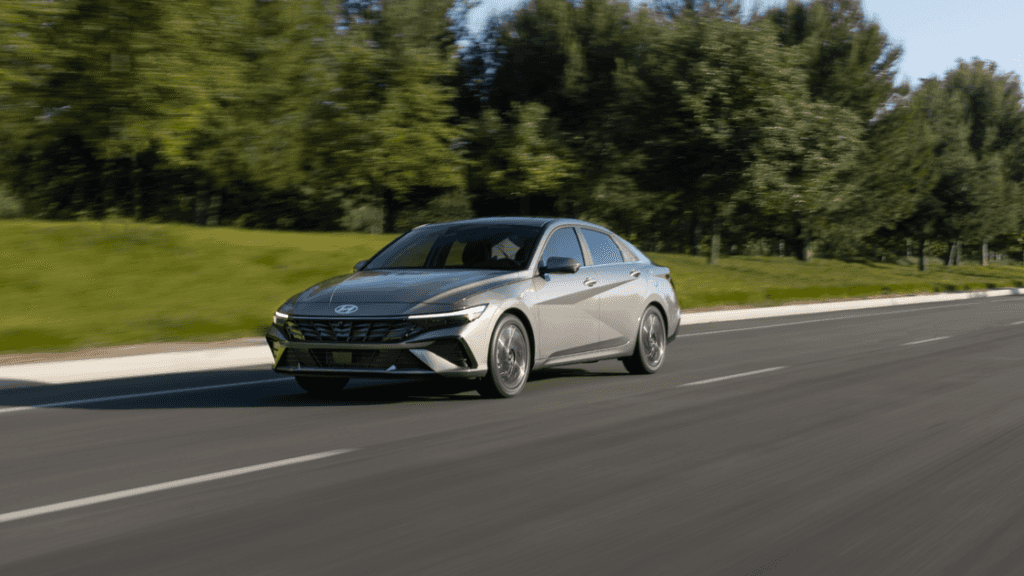
The roads around Columbia, SC, can say a lot about your car. Some days, it’s the smooth stretch down I‑77 heading into town. Other days, it’s crawling through downtown construction zones or dodging surprise potholes on your way to Forest Acres. That’s when the comfort, control, and tech features of your vehicle really get put to the test. And if you’re trying to decide between the 2025 Hyundai Elantra and the Toyota Corolla, you’ll want to know more than what looks good in a parking lot.
Let’s cut through the brochure noise and get into what really matters for drivers in the Midlands: the tech differences that shape your everyday experience behind the wheel.
Open the door to the 2025 Hyundai Elantra, and the first thing that grabs your attention is the curved dual-screen setup. It’s bold without being flashy and blends the 12.3-inch digital instrument cluster with a matching touchscreen display. Everything flows toward the driver, creating a cockpit-like feel that’s surprisingly intuitive. It feels like the tech is working with you, not around you.
By comparison, the Toyota Corolla plays things more conservatively. You’ll find an 8-inch display standard in most trims, with a 12.3-inch digital gauge cluster available in higher-end versions. It’s functional, sure, but it lacks the connected layout that Hyundai offers. There’s a sense that Toyota wants you to focus on driving first, tech second. That might appeal to some, but for drivers who enjoy a little more connection between touch, sight, and motion, the 2025 Hyundai Elantra offers a more modern setup.
In both cars, you get Apple CarPlay® and Android Auto™. But here’s where the 2025 Hyundai Elantra really leans into convenience. On most trims, wireless connectivity comes standard. You step into the cabin, the system syncs instantly, and you’re on your way without a cable in sight. Add to that a wireless charging pad tucked neatly into the center console, and your morning commute to downtown Columbia becomes a little less tangled.
The Corolla offers wireless smartphone integration, too, but only in select trims. Lower models require you to plug in, which feels a bit out of place in 2025. If you’ve ever juggled coffee, keys, and a charging cord at the same time, you’ll understand why going wireless is no small matter.
Here’s something that’s easy to overlook until you’ve used it: voice recognition. The 2025 Hyundai Elantra’s system, integrated with natural language understanding and cloud-based processing, lets you adjust climate settings, find local spots, or change music without shouting robotic commands. It’s the kind of feature that turns a routine drive to Lexington or Irmo into something smoother.
Toyota’s voice recognition works, but it still feels like a system you have to adapt to. Commands need to be structured a certain way, and there’s more repetition involved. In a tech world where we talk to devices like people, Hyundai’s system feels like it belongs in this decade. The difference goes beyond convenience; it’s about staying focused on the road while still getting the most out of your in-car features.
Touchscreens can be a hit or miss depending on how well the interface is designed. Hyundai’s layout is clean and customizable. Fonts are easy to read, navigation is snappy, and there’s minimal lag between touch and response. The icons are large enough to operate even when you’re bouncing over rough patches near Devine Street.
Corolla’s system works just fine, but it doesn’t quite match Hyundai’s speed or fluidity. The menu design is simpler, but at times, that simplicity means more screens to tap through. It’s a dependable setup, no doubt, but it doesn’t feel quite as smart or well-integrated.
Both cars come with an impressive list of safety and driver-assist features, but again, how those features work in real time matters. Hyundai’s SmartSense includes lane-keeping assistance, smart cruise control with stop-and-go, blind spot alerts, and a rear cross-traffic warning system. What’s different is how smoothly it all operates.
Smart Cruise Control in the 2025 Hyundai Elantra adjusts speed more naturally when traffic ebbs and flows. It doesn’t feel jumpy or overly sensitive, which matters when you’re dealing with stoplights on Garners Ferry or merging onto Two Notch. Lane following works well even on the curves and slight elevation changes of Columbia’s suburban roads. It’s technology doing its job without constantly reminding you it’s there.
The Corolla’s Toyota Safety Sense™ 3.0 brings a comparable list of features. Adaptive cruise, road sign assist, and pre-collision systems. But some of the systems, particularly lane keeping and cruise adjustments, can feel a little more mechanical in their reactions. The difference is subtle, but when you drive both back-to-back, you’ll notice that the 2025 Hyundai Elantra feels more like a second set of eyes, while the Corolla feels more like a backup plan.
For families or carpool warriors, tech in the back seat matters too. The 2025 Hyundai Elantra includes multiple USB-C ports in both front and rear rows, which means everyone gets power for their devices. Dual-zone climate control is available, and rear air vents are smartly placed to keep backseat riders from roasting in the Columbia summer.
Corolla’s rear tech is more limited. USB ports are typically front-only unless you spring for higher trims. And while the cabin stays comfortable enough, the tech spread doesn’t reach as far. For anyone who regularly travels with passengers or just likes to keep devices charged without playing musical cables, the 2025 Hyundai Elantra pulls ahead.
Hyundai’s connected car system includes over-the-air software updates. That’s a big deal for long-term ownership. Instead of visiting the dealership for every system tweak, the 2025 Hyundai Elantra can install updates automatically while parked in your driveway. It’s the kind of future-proofing that gives peace of mind.
Toyota hasn’t brought OTA updates to the Corolla line in the same way. While some features can be updated via USB or during maintenance visits, the system isn’t built for seamless wireless changes. That’s something to think about if you’re planning to keep your next car for a while and want it to grow with you.
Columbia is more than any southern city. It has its quirks, its hot summers, its charming old neighborhoods with uneven pavement, and its buzzing downtown streets that can turn into traffic puzzles during rush hour. A car’s comfort, tech, and adaptability matter more here than a spec sheet can show.
That’s where the 2025 Hyundai Elantra stands out. It’s built with the kind of thoughtful touches that make the everyday drive feel smoother. It’s not about bells and whistles; it’s about how those features integrate into real life. Steering through the tree-lined streets of Shandon or cruising down Sunset Boulevard, you’ll notice how quiet the cabin stays, how easy the menus are to swipe through, and how voice control just works.
The Toyota Corolla still does the job. It’s dependable, it’s well-built, and it won’t throw you surprises. But in this match-up, the 2025 Hyundai Elantra is simply better equipped to meet the needs of a modern driver. Especially one who spends real time behind the wheel every week, in all the conditions Columbia can offer.
Want to know what that curved display really looks like when the sun hits it? Or how it feels to cruise down I-26 with Smart Cruise Control doing the heavy lifting? The best way to find out is to get in and drive.
Schedule your test ride today at ALM Hyundai Florence near Columbia, SC. This is the simplest way to see how the technology in the 2025 Hyundai Elantra works in real life. Tap through the screens. Test the voice controls. Let the car show you what a difference smart tech can make. Because when you’re choosing your next ride, it’s not just about transportation. It’s about comfort, clarity, and confidence, mile after mile.
0 comment(s) so far on Technology Differences Between the 2025 Hyundai Elantra and Toyota Corolla Near Columbia